Written by:
Pierce J.
Published:
June 19, 2026
Learn how to pack for a move efficiently with our complete room-by-room guide. Practical tips on supplies, fragile items, labeling, and staying organized.
Knowing how to pack for a move is one of the most practical skills you can bring to a relocation — and one that most people never think to develop until boxes are stacked to the ceiling and moving day is a week away. Packing done well protects your belongings, makes the physical move faster, and means unpacking in your new home is an organized process rather than an exercise in archaeological guesswork. Packing done poorly results in broken dishes, lost items, and that particular frustration of opening the fifteenth unlabeled box just to find the one thing you needed first.
This guide walks you through every stage of packing a home: the supplies you need, the sequence that makes the most sense, how to approach each room, how to protect fragile and high-value items, and how to label boxes so that moving day and unpack day both go smoothly. Whether you are moving a studio apartment or a five-bedroom house, the framework here will help you pack with confidence.
Running out of boxes halfway through the kitchen or realizing you have no bubble wrap when you reach the china cabinet is a predictable way to lose momentum and create unnecessary stress. Getting your supplies together before you pack your first box removes that obstacle entirely.
The single most common packing mistake is putting heavy items in large boxes. A large box filled with books becomes so heavy it cannot be safely carried — and risks splitting at the bottom. The general rule is straightforward: heavy items go in small boxes, light items go in large boxes. Books, tools, canned goods, and records belong in small boxes. Linens, pillows, lampshades, and other lightweight bulky items belong in large boxes. Medium boxes handle the majority of everyday household items — kitchenware, clothing folded flat, small appliances, and décor.
In terms of quantity, most households underestimate how many boxes they actually need. A rough benchmark: plan for roughly ten boxes per room as a starting point, then adjust based on how storage-dense each room is. It is always better to have boxes left over than to run out mid-pack.
Beyond boxes, you will need packing tape and a quality tape gun (do not skip the gun — taping by hand is slow and exhausting), bubble wrap or foam wrap for fragile items, packing paper or unprinted newsprint for wrapping dishware and filling void space, stretch wrap for protecting furniture and bundling loose items, permanent markers for labeling, and labels or color-coded stickers if you prefer a visual system for tracking boxes by destination room.
The sequence in which you pack matters as much as how you pack. Starting in the wrong rooms leads to disruption earlier than necessary and creates situations where you have packed things you still need for daily life. A deliberate packing order keeps your home functional for as long as possible.
Begin your packing with spaces and items that have the least day-to-day impact on your life: attic storage, basement storage, garage shelving, holiday decorations, off-season clothing, guest room contents, and anything you know you will not need between now and moving day. These areas often hold a surprising volume of boxes and getting through them first builds momentum and gives you an accurate read on how long the rest of the process will take.
Once storage areas are handled, move into your living rooms, home office, and secondary bedrooms. Books, décor, artwork, non-essential electronics, and extra linens can all be packed well before your move date without affecting your daily routines. Leave only what you genuinely use each day unpacked in these rooms.
Pack your kitchen last among the main living spaces — it is the room most tied to daily function. Your primary bedroom, bathroom toiletries, and any items needed for work or school should also be packed in the final few days. Set aside an "open first" box or bag for the items you will need on arrival night: phone chargers, a change of clothes, basic toiletries, paper towels, toilet paper, a few kitchen items, and anything else that would cause real inconvenience if buried in a sea of boxes.
Each room in a home has its own packing logic based on what it contains, how fragile those contents are, and how they interact with other boxes in the truck. Working through each room with a specific approach produces better results than treating everything the same way.
The kitchen is typically the most labor-intensive room to pack. The volume is high, the fragile items are numerous, and nearly everything has an irregular shape. Start by wrapping each plate individually in packing paper and stacking them on their sides — not flat — in a medium box lined with crushed paper on the bottom. Plates are significantly less likely to break when stored vertically, a fact that runs counter to most people's instincts but is consistently true.
Glasses and cups should be wrapped in two to three layers of packing paper each, placed in divided dish-pack boxes if available, and cushioned with crushed paper on all sides. Pots and pans can be nested with a layer of paper between each piece to prevent scratching. Small appliances should be wrapped in bubble wrap and packed with their cords tucked inside or taped to the unit. Label every kitchen box clearly on the top and at least one side.
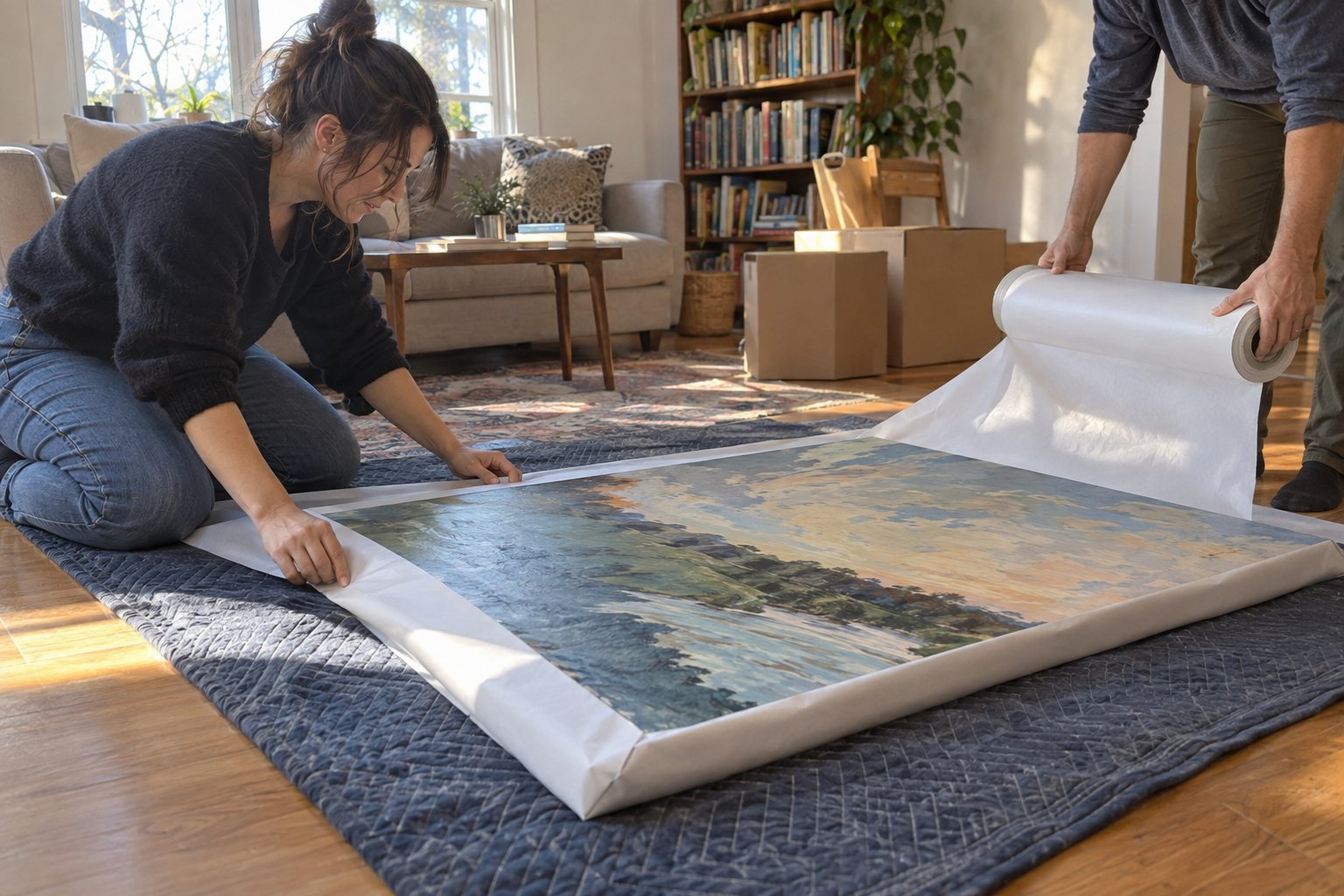
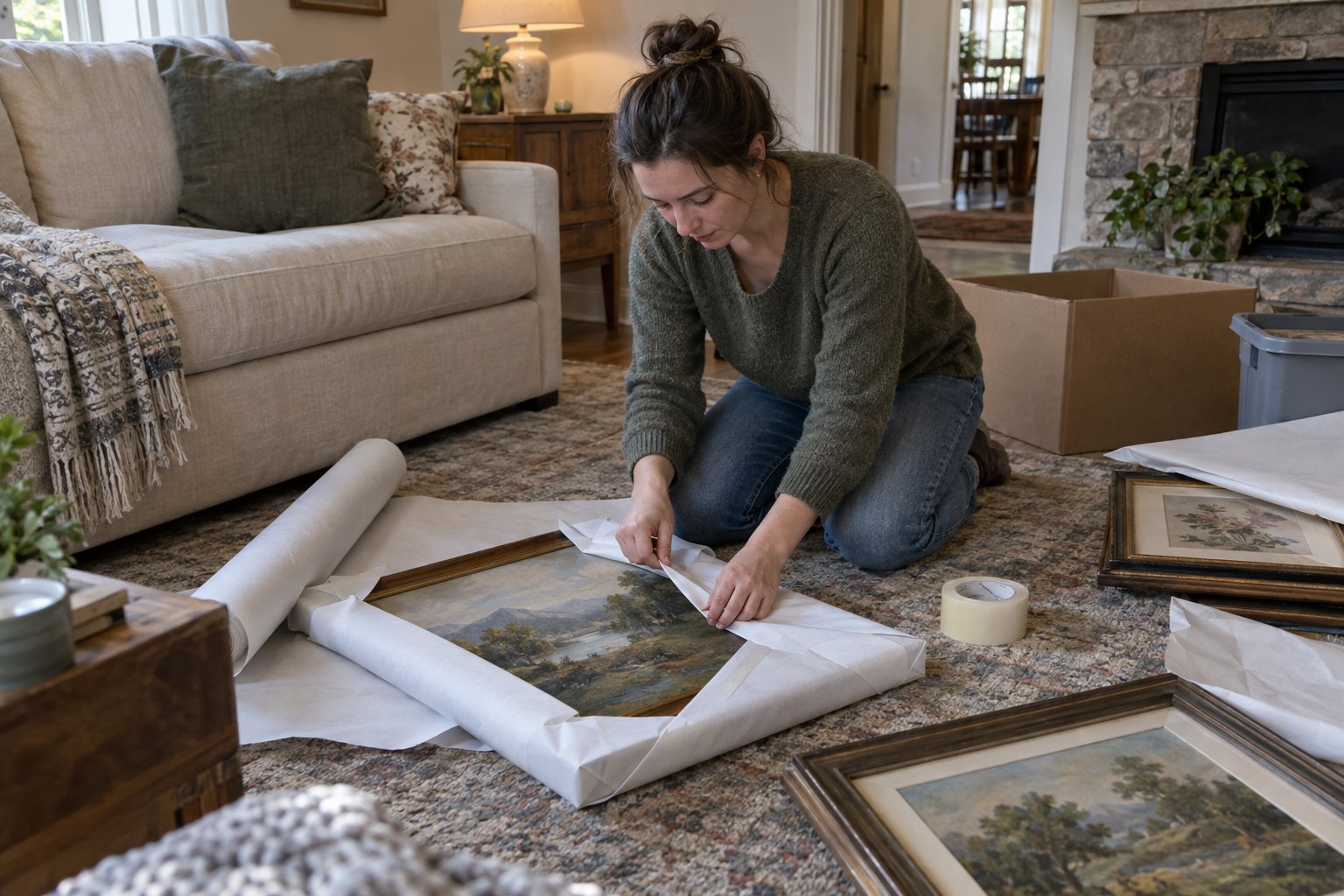
The living room's primary packing challenge is artwork, mirrors, and electronics. Framed art and mirrors should be wrapped in stretch wrap first, then in moving blankets or bubble wrap, and ideally transported in mirror boxes — flat, shallow boxes designed specifically for these items. Electronics should be packed in their original boxes whenever possible. When original packaging is unavailable, wrap each device in bubble wrap, fill any void space firmly with crushed paper so components cannot shift, and clearly mark boxes as fragile.
Books deserve a specific mention: they are genuinely heavy and should always go in small boxes. A small box of books is already at a reasonable carry weight; a medium or large box becomes dangerous quickly.
Clothing is one of the easiest categories to pack when you use the right approach. Wardrobe boxes allow hanging clothes to be moved directly from the closet rod to the box — no folding, no wrinkling, no unpacking hassle. For folded clothing, use medium boxes or large boxes only if you are keeping weight manageable. Shoes pack well in small boxes, either individually wrapped or grouped and cushioned.
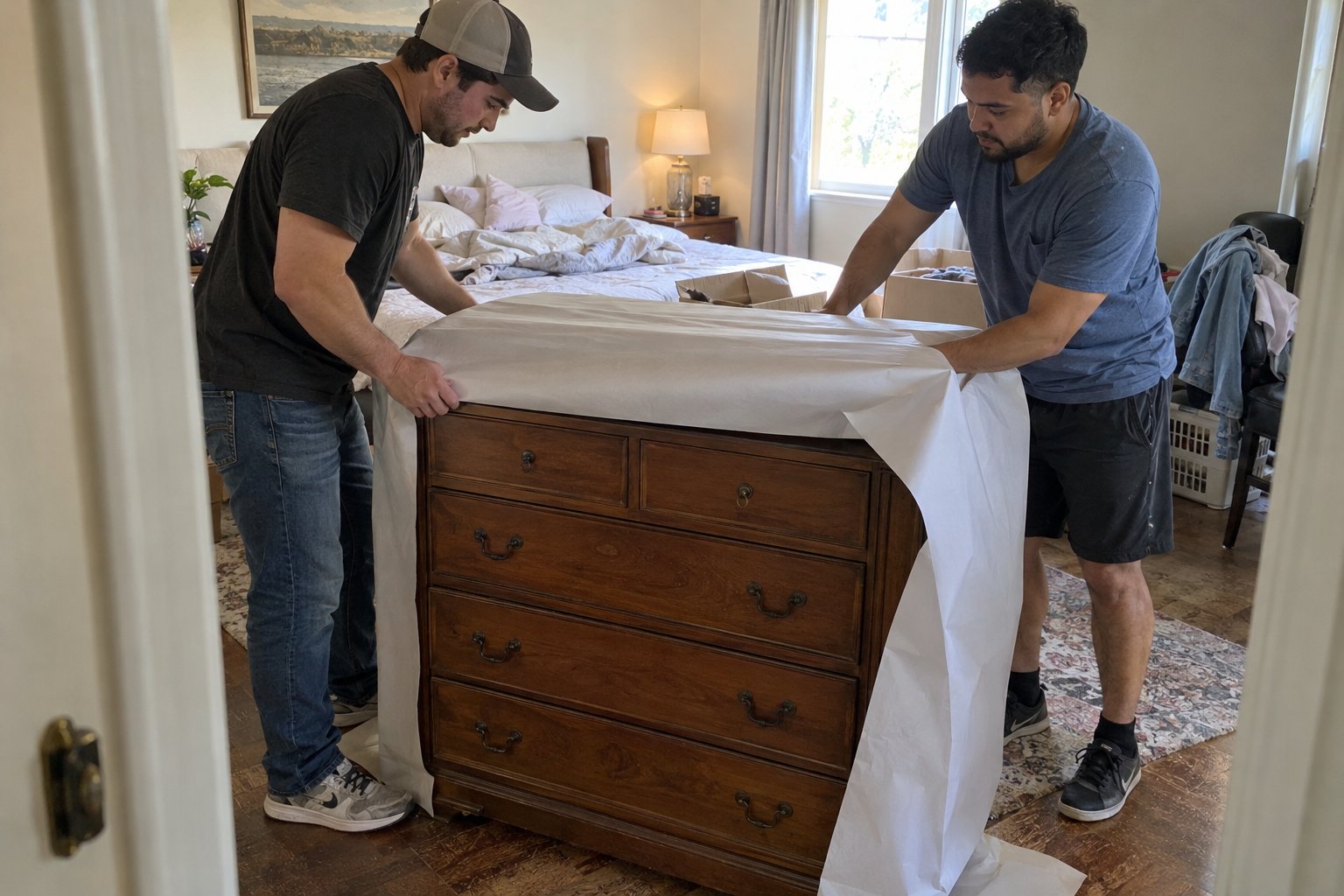
Bedding, pillows, and linens can go in large boxes or in clean plastic bags. They are soft, lightweight, and fill odd spaces in the truck well. Dressers can often be moved with clothing still inside drawers if the pieces are light enough — your movers may advise you on this based on the specific furniture.
Bathrooms have low volume but high potential for mess if liquids leak during transit. Seal any bottles, shampoos, and cleaning products in zip-lock bags before placing them in boxes. Consider taping over the tops of pump dispensers. Group bathroom items in small or medium boxes and label them clearly — bathroom boxes are among the most urgently needed when you arrive at your new home.
Labeling is the step most people either skip or do halfway, and it is the one that pays the clearest dividends on unpack day. A box labeled "Kitchen" tells you one thing. A box labeled "Kitchen — pots, pans, baking sheets — NOT FRAGILE" tells you exactly where it goes, roughly what is inside, and whether it can have weight stacked on top of it.
At minimum, label every box on the top and on at least two sides with the destination room and a brief content description. Add a "FRAGILE" marking in large, clear letters on all sides of any box containing breakable items, and mark it with arrows indicating the correct upright orientation. A color-coded sticker system — one color per room — makes it easy for movers to route boxes directly to the correct rooms without reading every label, which speeds up unload significantly.
Keep a master inventory list, either on paper or in a note on your phone, that matches each box number to its contents. This takes a few extra minutes per box but saves enormous time if you need to find something specific before you finish unpacking everything.
No amount of careful packing fully eliminates the risk of damage in transit, but the gap between careful packing and careless packing is enormous. For truly irreplaceable items — family heirlooms, fine art, antiques, high-value electronics — consider whether professional packing service is worth the additional cost. Professional packers use materials and techniques calibrated to the specific item, and their work often comes with a level of liability coverage that DIY packing does not.
For items you are packing yourself, the two rules that prevent the majority of damage are: fill every void space in a box so nothing can shift in transit, and never let a box be too heavy to carry safely. Damage during moves almost always comes from one of two causes — shifting inside boxes, or boxes being dropped because they were too heavy to control. Address both, and you will arrive at your new home with far fewer unpleasant surprises.
For most households, beginning four to six weeks before your move date gives you enough time to work through the process without feeling rushed. Start with storage areas and rarely used rooms first, then move through living spaces, saving daily-use rooms like the kitchen and primary bedroom for the final few days. Starting early also reveals any gaps in your supply of boxes or packing materials before they become a problem.
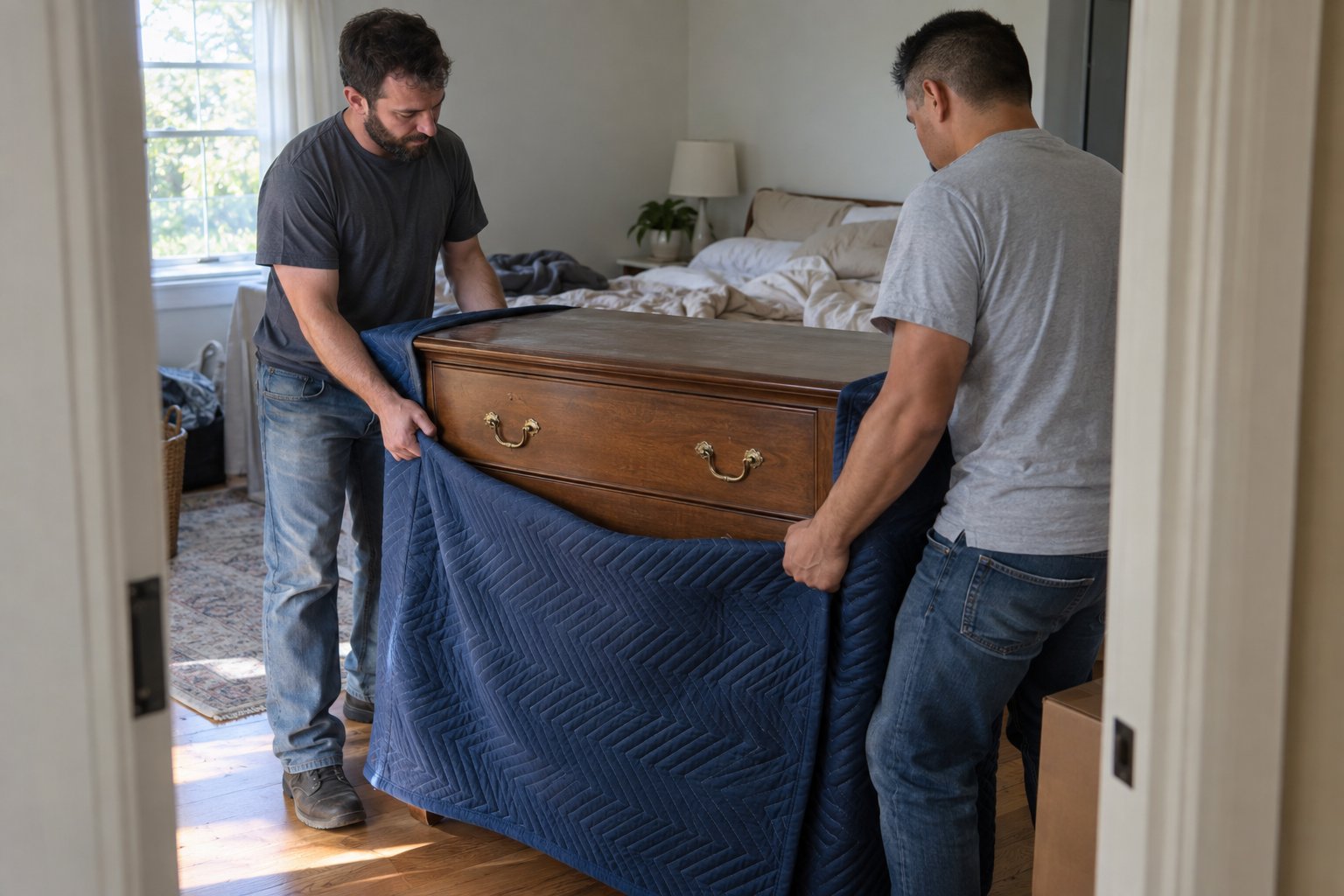
At minimum you will need small, medium, and large boxes in sufficient quantity, a tape gun and packing tape, packing paper or unprinted newsprint, bubble wrap for fragile items, stretch wrap for furniture and bundles, and permanent markers for labeling. Divided dish-pack boxes are worth buying for glasses and china. Wardrobe boxes are highly efficient for hanging clothing. Renting or buying moving blankets is also advisable if you are transporting furniture yourself.
Wrap each plate individually in packing paper and stack them vertically — on their edges rather than flat — in a box lined with crushed paper. Vertical stacking significantly reduces breakage compared to laying plates flat. Wrap glasses in two to three sheets of paper each, place them upright in divided boxes when possible, and fill all void space with crushed paper. Mark every box containing dishware as fragile on all sides and the top.
It depends on the dresser. For lighter-weight dressers, leaving folded clothing inside the drawers can save time and boxes — just remove the drawers during transport to reduce weight and prevent them from sliding open. For heavy solid-wood dressers or any piece that will be handled on stairs, emptying the drawers is safer for both the furniture and the movers. When in doubt, ask your moving crew for their preference before loading day.
Your open-first box or bag should contain everything you will need on arrival night and the following morning before you begin unpacking: phone and laptop chargers, a change of clothes, basic toiletries, toilet paper and paper towels, a few kitchen items like a coffee maker and one set of dishes, any medications, your children's or pets' essentials, and important documents. Keep this box with you in your vehicle rather than loading it into the truck so it is always accessible.
Whether you’re moving a home, apartment, office, or just a few heavy items, We Haul Nashville is ready to help make the process easier.