
Written by:
Pierce J.
Published:
June 20, 2026
Use this moving day checklist to stay organized and stress-free. We Haul Nashville walks you through everything to do before, during, and after the truck arrives.
A solid moving day checklist is the single most effective tool you can bring to relocation day — and one of the most underused. Most people arrive at moving day with a general sense of what needs to happen and then spend the next several hours in reactive mode: answering questions, hunting for items that should have been packed, realizing the utilities are still on at the old address, and trying to brief a moving crew that has never seen the floor plan. A detailed checklist converts all of that chaos into a sequence of manageable steps you can work through with confidence.
This guide covers everything you need to handle on moving day itself, organized by timing: what to do the night before, what to tackle in the first hour of the morning, how to manage the loading process, and what to confirm before you hand over the keys. Whether you are moving across Nashville or just a few neighborhoods over, this framework will help you arrive at your new home without the sinking feeling that something important was forgotten.
The decisions you make the evening before moving day have an outsized impact on how smoothly the morning goes. Treating the night before as preparation time — not just the end of a long packing stretch — is one of the highest-leverage habits you can build into your relocation plan.
Call or message your moving company the afternoon or evening before to confirm the appointment, the arrival window, and the crew size. Reputable movers will often reach out to you first, but it costs nothing to confirm from your end and removes any ambiguity. Make sure you have a direct contact number for the crew lead or dispatcher in case of any morning-of communication.
Set aside a clearly labeled bag or box containing everything you will need from the moment the truck is unloaded through your first morning in the new home: phone and laptop chargers, a change of clothes, toiletries, medications, toilet paper, paper towels, a few basic kitchen items, snacks, and any critical documents. Keep this with you in your personal vehicle — not on the truck — so it is always within reach regardless of when the unloading is complete.
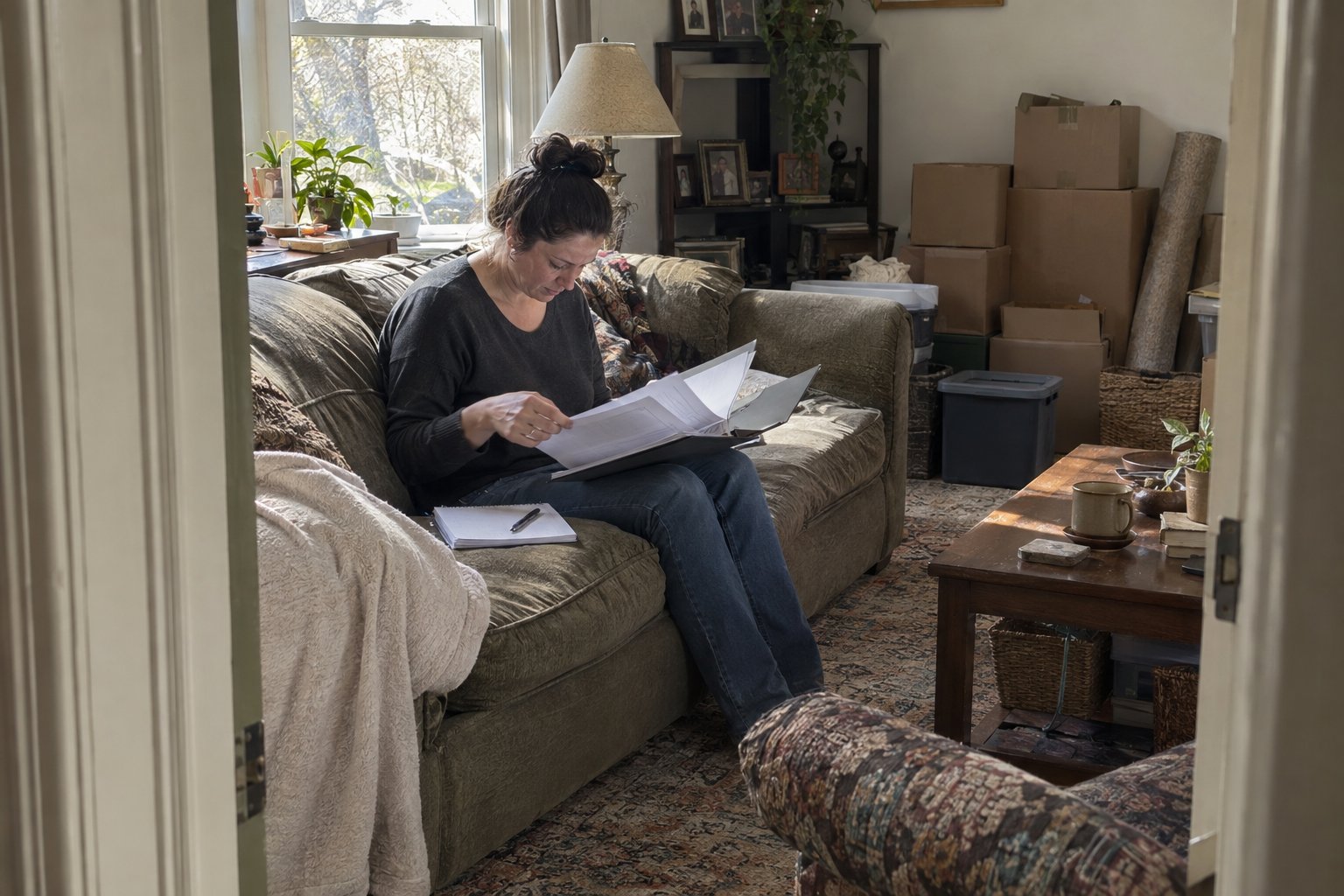
Walk through the entire home the night before with a critical eye. Check inside every closet, cabinet, and drawer. Look under beds and behind doors. Check the garage, attic, basement, and any outdoor storage. Items left behind on moving day are surprisingly common — not because people are careless, but because unfamiliar corners of a home become invisible after years of living there. A systematic walk-through the night before catches those items while you still have time to pack them properly.
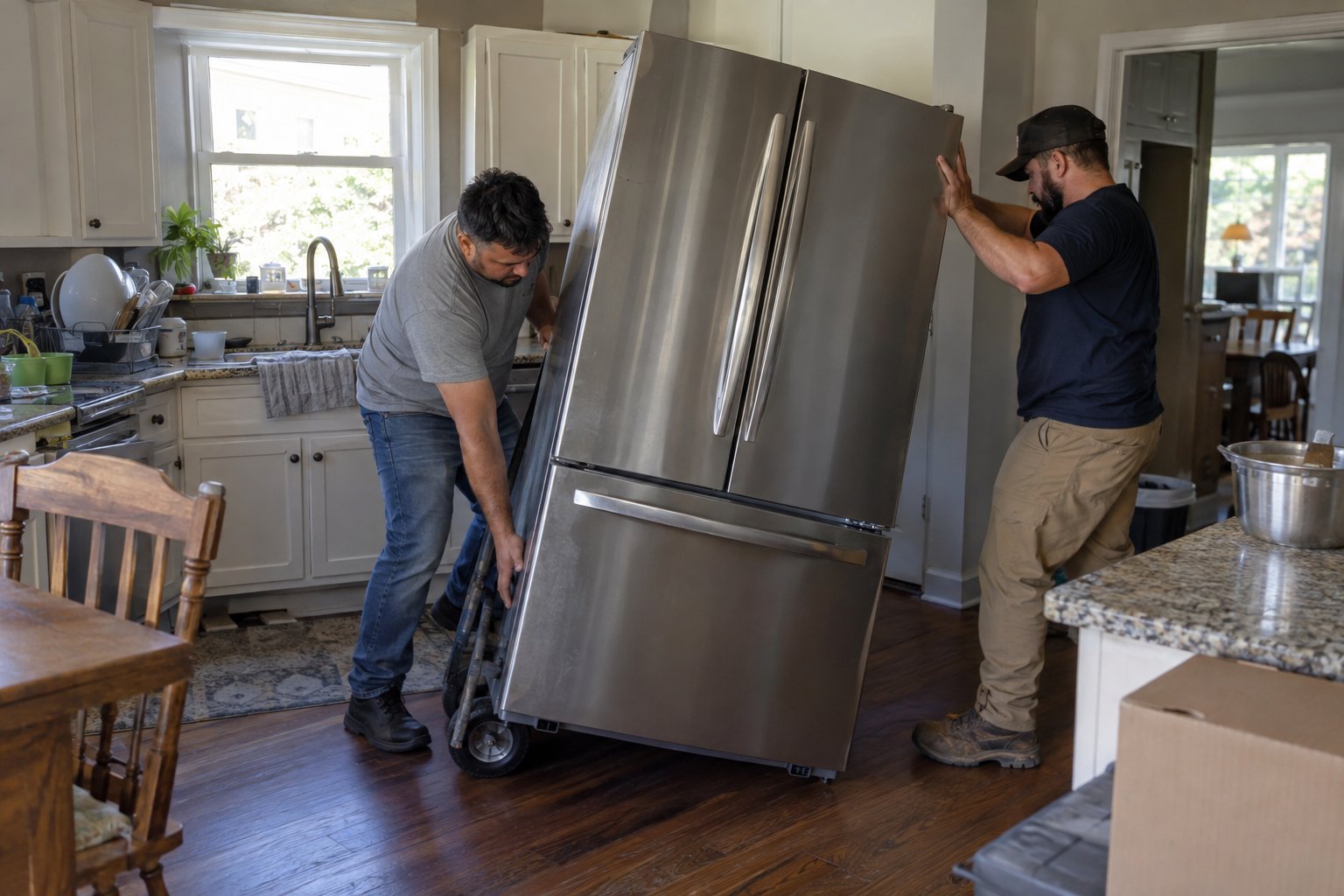
If you are taking a refrigerator, washer, or dryer to your new home, they need preparation time that cannot happen on moving morning. Refrigerators should be defrosted and dried out at least 24 hours in advance. Washers should have their water hoses disconnected and the drum secured if you have the transit bolts. Confirm with your moving company whether appliance disconnection and reconnection is included in your service or requires a separate arrangement.
The first two hours of moving day set the pace and tone for everything that follows. A structured morning routine means your crew can start loading efficiently the moment they arrive, rather than waiting while you scramble to finish last-minute tasks.
Before a single box or piece of furniture leaves the home, walk through and photograph every room. Capture the walls, floors, and any existing scuffs or marks. Do the same when you arrive at the new home — photograph its condition before anything is moved in. These photos protect you in the event of any dispute about pre-existing damage, and they take less than ten minutes to complete.
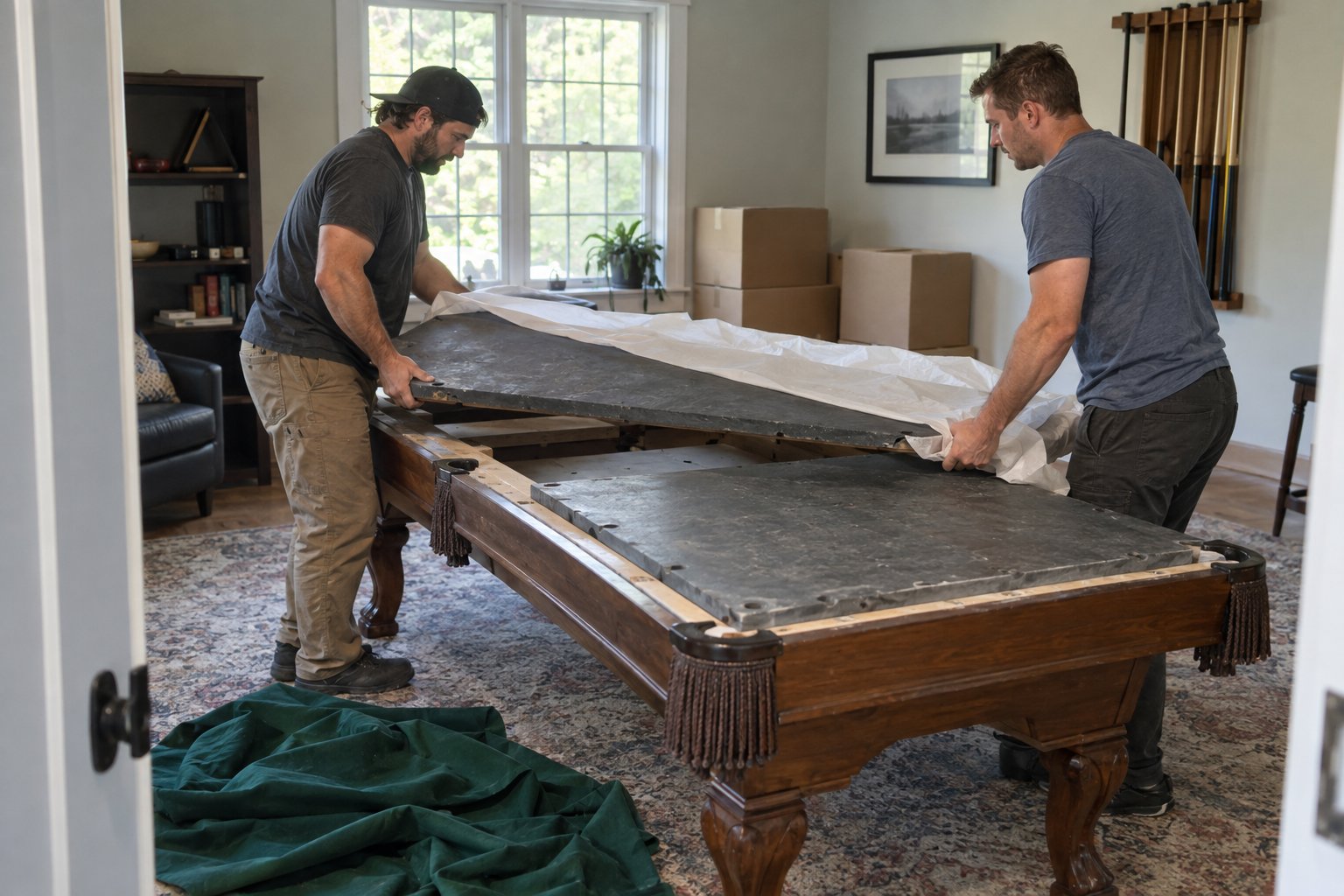
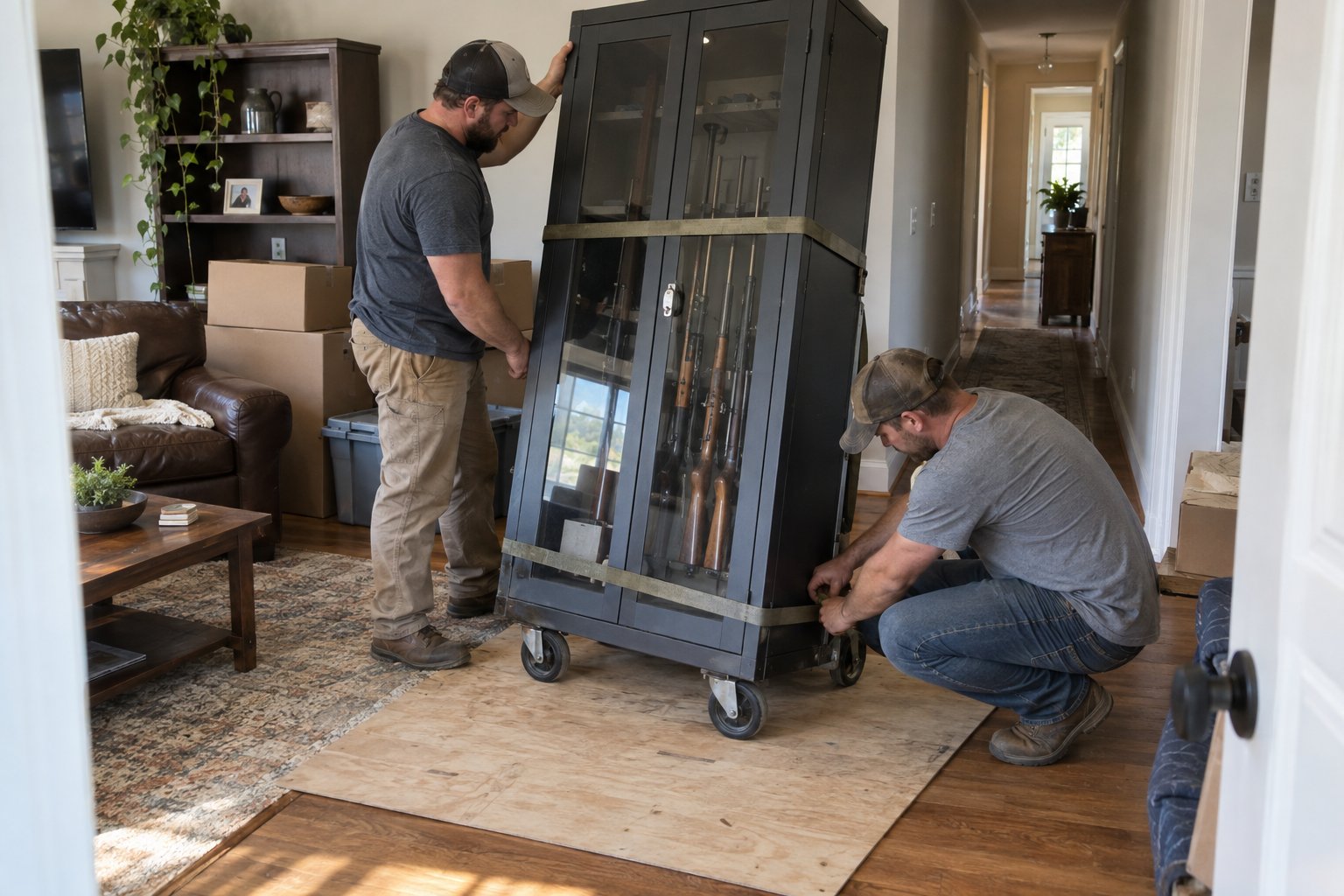
When the crew arrives, take five minutes to walk them through both locations if possible, or at minimum describe the new home's layout: which floor things are going to, whether there are stairs, where the elevator is, any parking restrictions, and which items are highest priority. Point out anything fragile, valuable, or awkward. A well-briefed crew works faster and handles your belongings with more context about what they are handling.
Identify a clear staging zone near your front door or garage where packed boxes and wrapped furniture can accumulate before being loaded. Keeping this zone organized — boxes stacked neatly, pathways clear — prevents the bottlenecks that slow down loading and create safety hazards. If you have children or pets, this is also the morning to have them cared for off-site or confined to a single room that will be loaded last.
Once loading is underway, your job is not to step back entirely — it is to stay available, observant, and ready to answer questions without micromanaging. There are a few specific things worth actively monitoring throughout the loading process.
If you created an inventory list during packing — even a rough one — reference it as items leave the home. High-value items like electronics, artwork, and jewelry warrant particular attention. If you are handling these yourself rather than putting them on the truck, set them aside early and move them in your personal vehicle. Moving companies may have declared value limits on certain categories of items, so review your coverage before loading day.
Slips, trips, and dropped items are the most common sources of damage and injury on moving day. Keep hallways, doorways, and staircases free of loose items. If it has rained or snowed, put down protective floor runners or old towels to catch tracked-in dirt and moisture. Alert your crew to any steps, low ceilings, or tight corners they may not immediately see.
As each room empties, do a quick final check before leaving it. Open every door, every cabinet, and every drawer one more time. Check the walls for anything still hanging. Check outlets for anything still plugged in. This rolling room-by-room confirmation is far more reliable than a single walk-through at the end, when fatigue and distraction are at their highest.
Once the truck is loaded and you are preparing to leave the home for the last time, there is a short but important list of tasks that need to happen before you lock the door and drive away. Skipping any of these creates problems that can range from minor inconvenience to significant expense.
Confirm that your utility transfer or cancellation requests are active. Electric, gas, water, and internet services at the old address should be scheduled for cancellation as of your move-out date — not weeks later. If you have not already updated your address with the USPS, your bank, your employer, your insurance providers, and any subscription services, moving day is the deadline. Address updates missed in the first week of a move tend to get forgotten entirely.
Collect every key, garage door remote, mailbox key, pool fob, and parking pass associated with the property and return them to your landlord or leave them as arranged for the new owners. Missing a key return can result in a locksmith charge billed against your security deposit or create delays for the incoming occupants.
Walk through the empty home one last time and compare its condition to the photos you took that morning. Note any damage that occurred during the move that was not present before loading. If a landlord or property manager is present for a move-out inspection, walk through with them and request written confirmation of the home's condition. This protects your security deposit and creates a clear record if any disputes arise later.
The energy and attention you invested in the loading process needs to carry through to the unload. Arriving at your new home with a clear plan — rather than simply pointing at rooms as boxes come off the truck — makes unpacking significantly faster and more organized.
Post simple signs on the doors of each room in the new home so that crew members can deliver boxes to the right destination without asking you every time. A sticky note that says "Primary Bedroom," "Kitchen," or "Office" on each door allows the crew to work independently and reduces the number of decisions you need to make in real time during an already demanding afternoon.
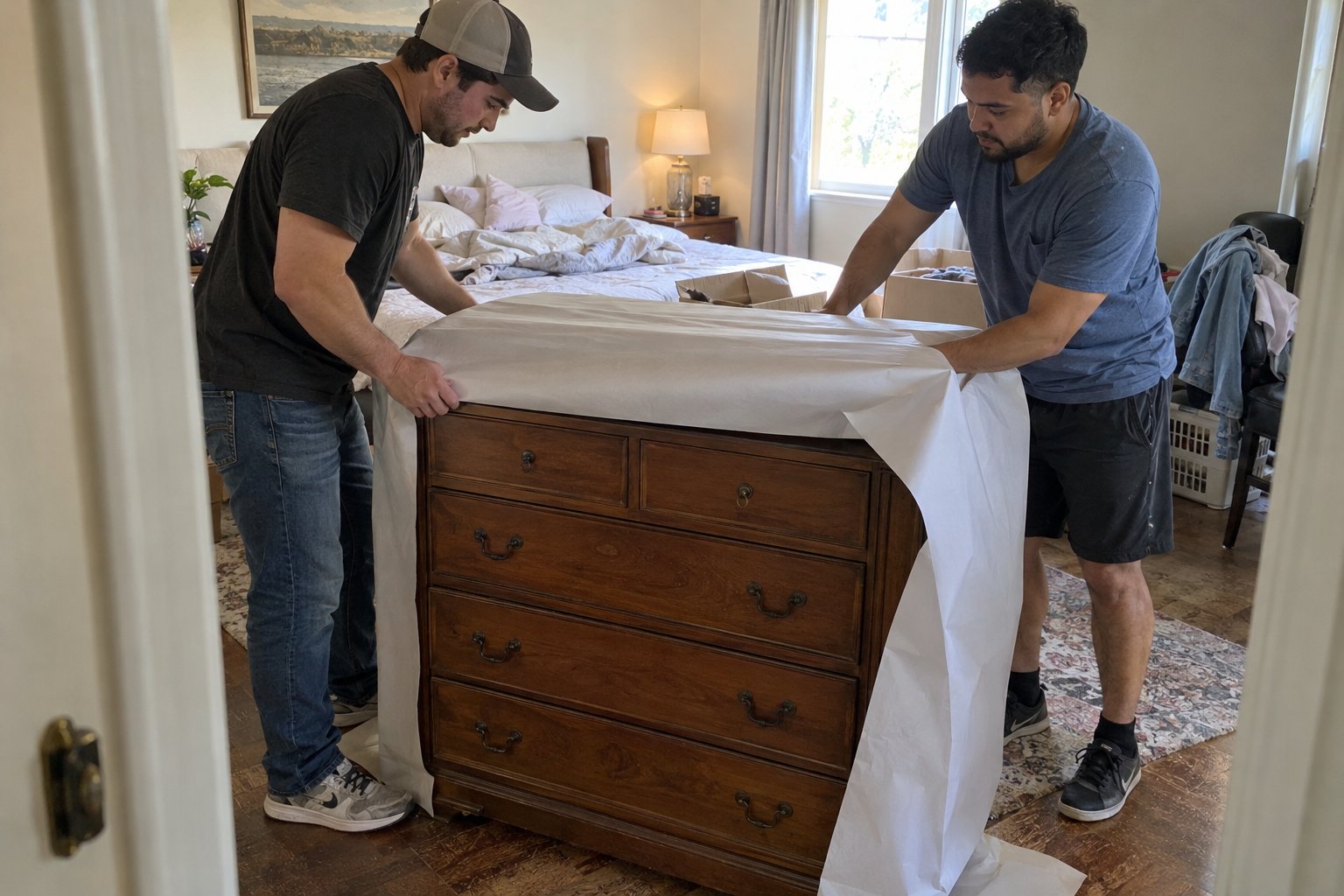
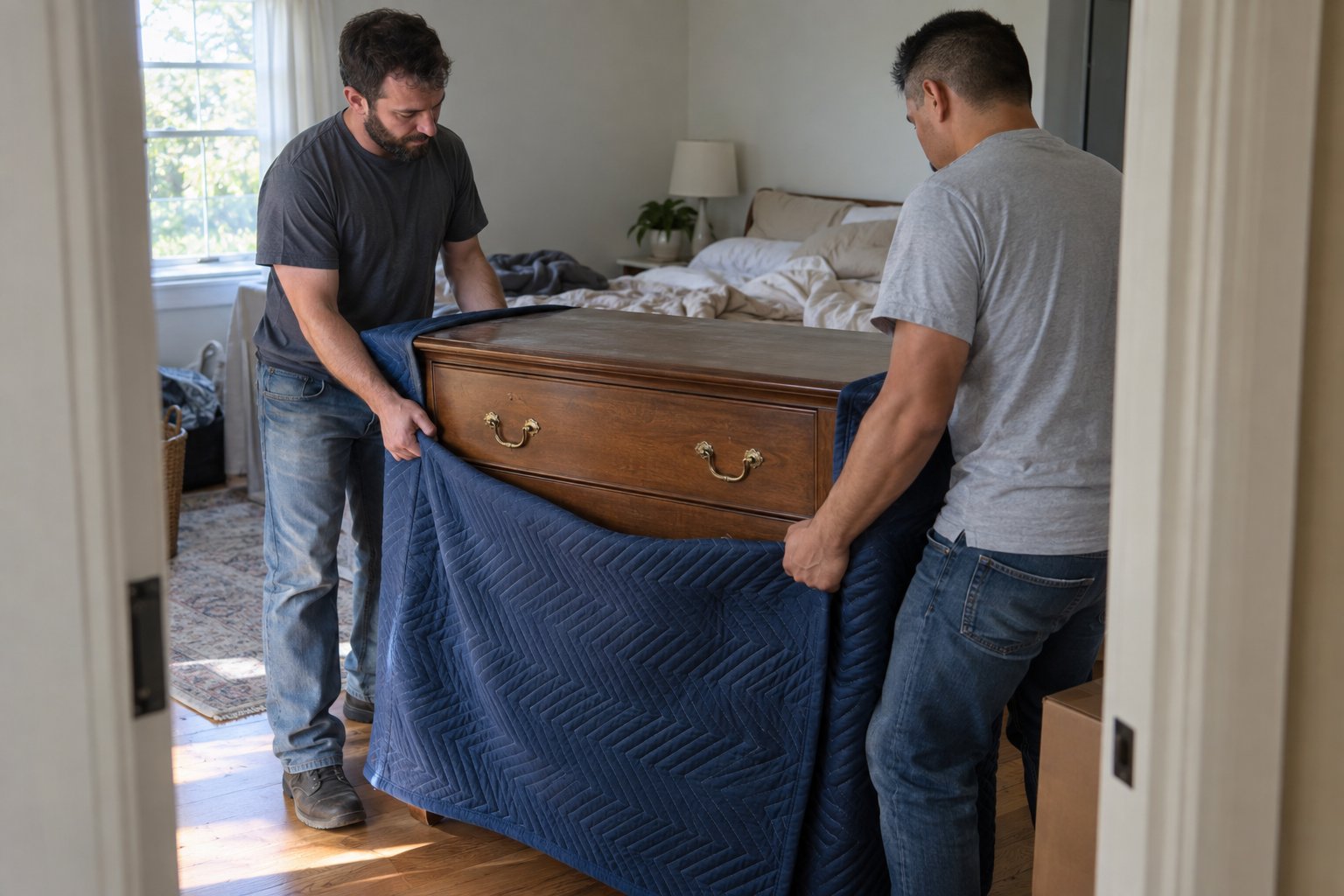
Large furniture — beds, sofas, dining tables, dressers — should be placed before boxes start stacking up in the same rooms. Once a room is half-full of boxes, maneuvering a king-size bed frame through the door becomes significantly harder. Walk each room with your crew lead before unloading begins and confirm where the major pieces should go. Repositioning heavy furniture after the crew has left is far more effort than placing it correctly on the first pass.
If you kept an inventory, reference it again as items come off the truck. This is your opportunity to catch anything that may have been left behind or identify any damage that occurred during transit. Note any concerns in writing before the crew departs and review your moving company's claims process so you know the next steps if anything needs to be addressed.
The night before moving day, confirm your moving crew's arrival window and get a direct contact number, prepare an open-first bag with essentials for your first night in the new home, complete a final walk-through of every room including closets and storage areas, and make sure any appliances being moved — particularly the refrigerator — have been defrosted and disconnected with enough lead time. Setting up a smooth morning starts with the decisions you make the evening before.
Your open-first box or bag should contain everything you will need before unpacking begins in earnest: phone and laptop chargers, a change of clothes, toiletries, any prescription medications, toilet paper, paper towels, basic kitchen items like a coffee maker and one set of dishes, snacks and drinks, and any important documents. Keep this bag with you in your personal vehicle rather than loading it on the moving truck so it is accessible as soon as you arrive.
Tipping is not required but is widely considered an appropriate way to recognize a crew that worked carefully and efficiently. A common benchmark is roughly $20 to $50 per mover for a standard local move, adjusted upward for particularly difficult jobs involving stairs, long carry distances, heavy specialty items, or moves that run significantly longer than expected. Tips are typically given in cash at the end of the job directly to each crew member, though some companies allow tips through their app or invoicing system.
Photograph every room in your current home before loading begins — walls, floors, and any existing marks or scuffs. Then photograph every room in your new home before unloading starts. These photos document the pre-move condition of both properties and protect you in the event of any dispute about damage to walls, floors, or doorframes during the move. The whole process takes under ten minutes and provides meaningful protection.
Before handing over the keys, confirm your utility cancellations or transfers are active, return all keys, remotes, mailbox keys, and access cards associated with the property, and do a final room-by-room walk-through comparing the home's current condition to the photos you took that morning. If a landlord is present for a move-out inspection, walk through together and request written confirmation of the property's condition. Also verify that your USPS mail forwarding and address updates with banks, insurers, and subscription services are in place.
Whether you’re moving a home, apartment, office, or just a few heavy items, We Haul Nashville is ready to help make the process easier.