
Written by:
Pierce J.
Published:
November 10, 2026
Not sure what to expect on moving day? Here's a clear checklist of what happens from crew arrival to final walkthrough, so nothing catches you off guard.
What to expect on moving day comes down to four stretches of time: the crew's arrival, the loading process, the drive or carry to your new place, and the unload and walkthrough. Each one has its own rhythm, and knowing what happens in each keeps you from standing around wondering if something is wrong when it's actually just normal.
Most of the stress people describe after a move isn't about anything going wrong. It's about not knowing what was supposed to happen next. The checklist below walks through the day in order, with a rough sense of timing and what to actually do at each stage, so you can hand the day over to the crew and still feel in control of it.
The crew typically arrives within a set window, does a short walkthrough of your home, and confirms the plan before anything gets carried out the door. This first 20 to 30 minutes sets the tone for the rest of the day, so it's worth paying attention to.
This is the moment to flag anything unusual: a piece of furniture that needs to be carried a specific way, a pet that needs to stay in one room, or parking restrictions at your building. Telling the crew now is far easier than redirecting them mid-carry.
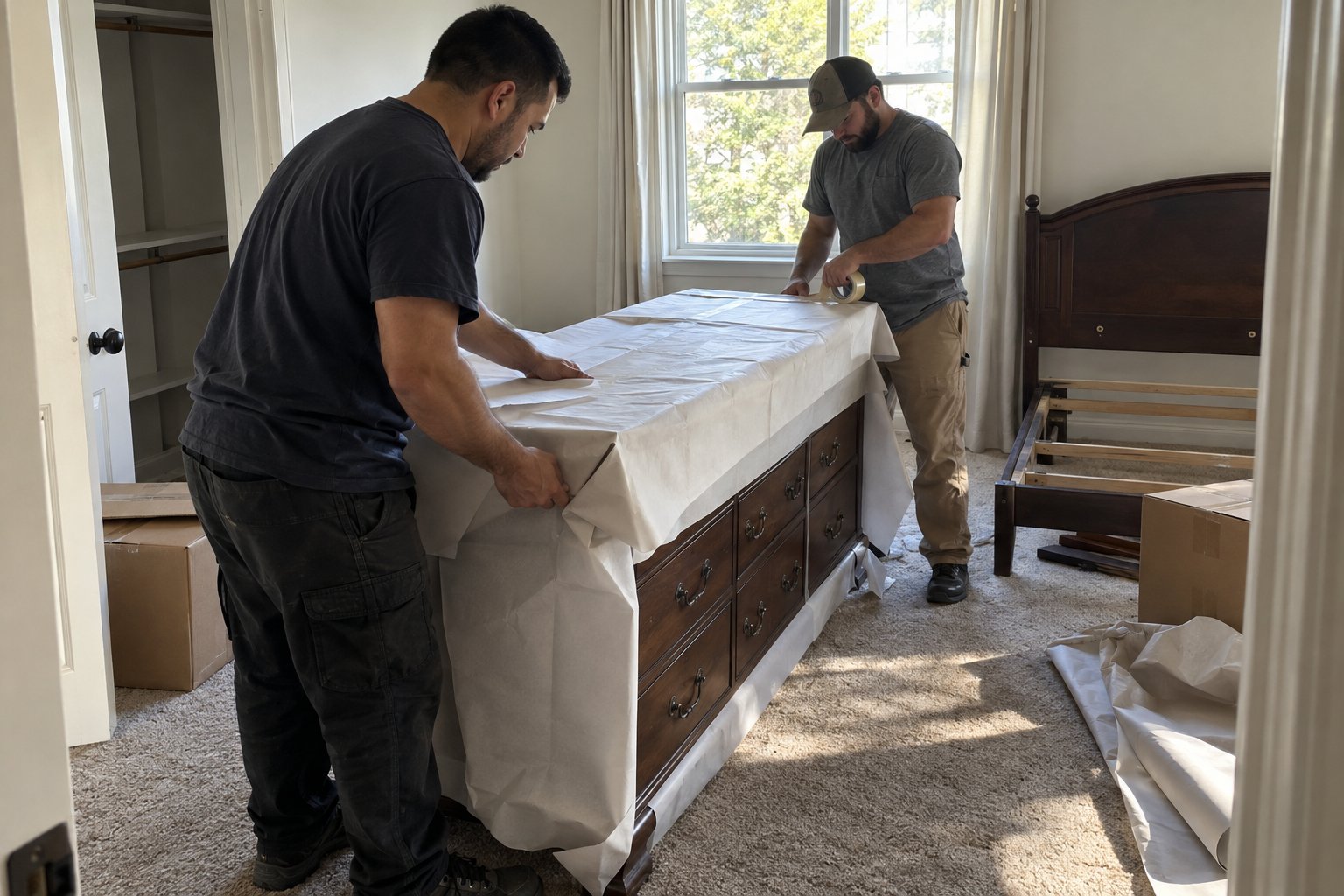
Loading is the longest single stretch of moving day, and it goes room by room rather than randomly. Movers generally load heavier, less fragile items first and work in a sequence designed to keep the truck balanced and protect what goes in last.
As a rough rule of thumb, allow about an hour of loading time per room of average-sized furniture and boxes, though a home with a lot of heavy or oversized pieces will run longer. You don't need to supervise every box, but staying reachable in the house means the crew can ask you quick questions instead of guessing.
Once the truck is loaded and secured, there's a gap between leaving your old place and arriving at the new one. For a move within the area, this is usually a short drive; for anything farther, it's worth planning your own travel time separately from the truck's.
A final walkthrough happens at both ends of the move: once before the crew leaves your old home, and once after everything is unloaded at the new one. Both are your chance to catch anything left behind or anything that needs attention before the crew drives off.
If you noticed any damage during loading or unloading, point it out on the spot rather than waiting. It's much easier to document and resolve while the crew is still there.
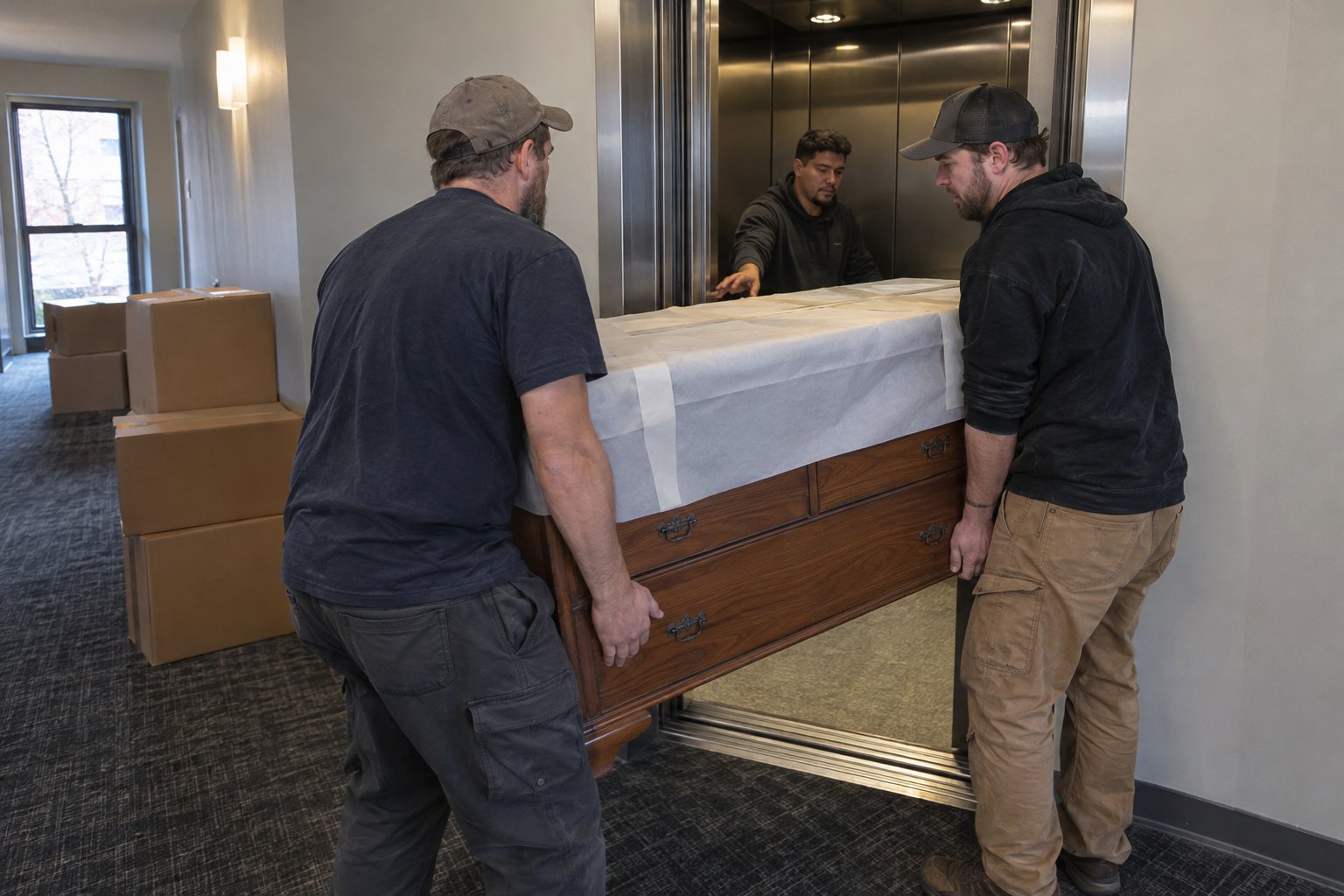
A move with stairs, a narrow hallway, or a long carry from the truck to the door generally takes longer than a single-level home with a short walk, and it helps to flag this to the crew ahead of time rather than let them discover it. If you know your building requires an elevator reservation, confirm it well before moving day, since some buildings require written notice and a specific arrival window.
If you're moving in or out of an apartment in Nashville, TN or a house with tight parking in Brentwood, TN, mention it when you book so the crew can plan for extra carrying time or a different parking setup rather than adjusting on the fly.
Moving day is really four predictable stages: arrival, loading, the gap in between, and unloading with a walkthrough. Once you know what happens in each one, the day stops feeling like a series of surprises and starts feeling like a sequence you're simply moving through. Keep essentials with you, stay reachable during loading, and walk both homes carefully before the crew leaves. That's most of what it takes to get through moving day without anything catching you off guard.
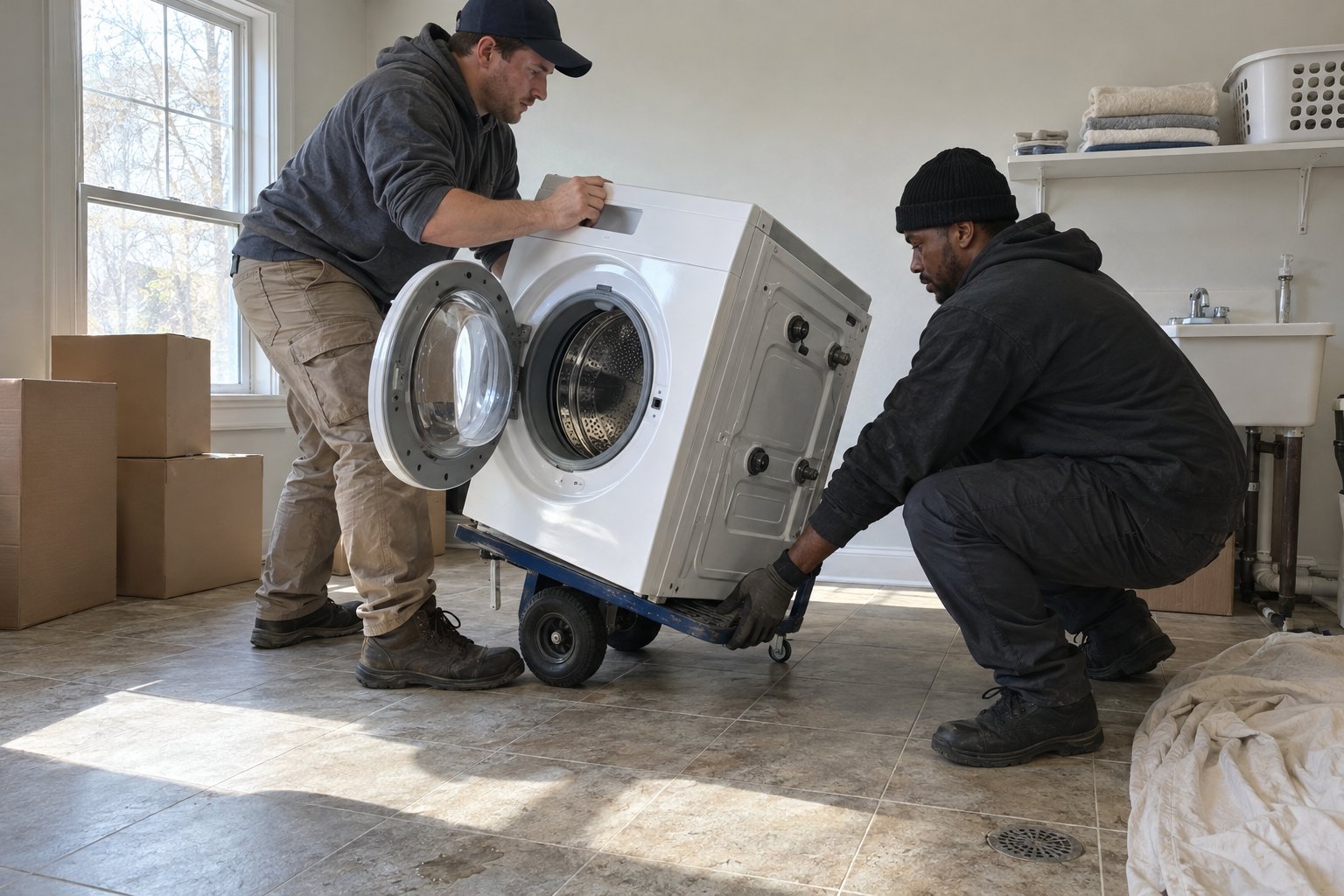
If your move involves a piece that needs special handling, it's worth asking about specialty item moving when you book, so the crew arrives prepared for it rather than improvising.
Once your new address is set, it's also worth starting your change of address updates with USPS around the same time, so your mail isn't delayed while you're settling in.
Planning your move? Request a quote from We Haul Nashville.
It depends on the size of the home and how far the truck has to travel between locations, but a rough rule of thumb is about an hour of loading per room, plus unloading time at the new place. A local move usually wraps in a single day.
Have a clear path to the door, large furniture accessible, and any fragile or specialty items pointed out before loading starts. It also helps to have cash or a tip ready if you plan to tip the crew.
You don't need to watch every box get carried, but staying reachable in the home during loading and being present for both walkthroughs is important so the crew can ask questions and you can confirm everything at the end.
Mention any stairs, narrow hallways, or long carries from the truck to the door when you book, not on the morning of the move. It gives the crew time to plan the right equipment and approach.
Point it out to the crew on the spot rather than waiting until later. It's much easier to document and address damage while the crew is still there than after they've left.
Whether you’re moving a home, apartment, office, or just a few heavy items, We Haul Nashville is ready to help make the process easier.