Written by:
Pierce J.
Published:
October 27, 2026
Learn how to move a washing machine the right way: shipping bolts, water lines, dollies, and loading tips that prevent drum damage and leaks.
Moving a washing machine safely comes down to three things: disconnecting it correctly, locking the drum in place with shipping bolts (or an equivalent), and keeping it upright through transport. Skip any of these and you risk a cracked water line, a drum that bangs around for months afterward, or a machine that simply won't balance once it's reinstalled. None of it is complicated, but the order matters, and it's easy to miss a step when you're focused on everything else happening on moving day.
This guide walks through what to do before, during, and after the move so your washer arrives at the new place working exactly like it did before you unplugged it.
A washing machine's drum hangs on springs or shock absorbers so it can spin smoothly without walking across your laundry room. Those same springs let the drum swing freely in transit, and enough movement can snap suspension rods, dent the cabinet, or throw the drum permanently out of balance. Shipping bolts (sometimes called transit bolts) lock the drum in place for exactly this reason, and most manufacturers include a set, or sell a replacement kit, specifically for moving.
If you no longer have the original bolts, rolled towels or foam blocks wedged between the drum and the cabinet opening can work as a temporary substitute, though a manufacturer's kit is always the safer bet for longer moves. If your move also involves a dryer, refrigerator, or dishwasher, it's worth reading the full large appliance moving checklist alongside this guide, since several steps (disconnecting utilities, protecting floors, loading order) overlap across machines.
Start by unplugging the unit and shutting off both hot and cold water supply valves before touching the hoses. Water left in the lines under pressure is the most common cause of a surprise spray when you disconnect a fitting, so relieving that pressure first saves you a mess.
If your washer is a front-loader, double check the door seal (gasket) for trapped water or debris and wipe it dry before closing the door for transport.
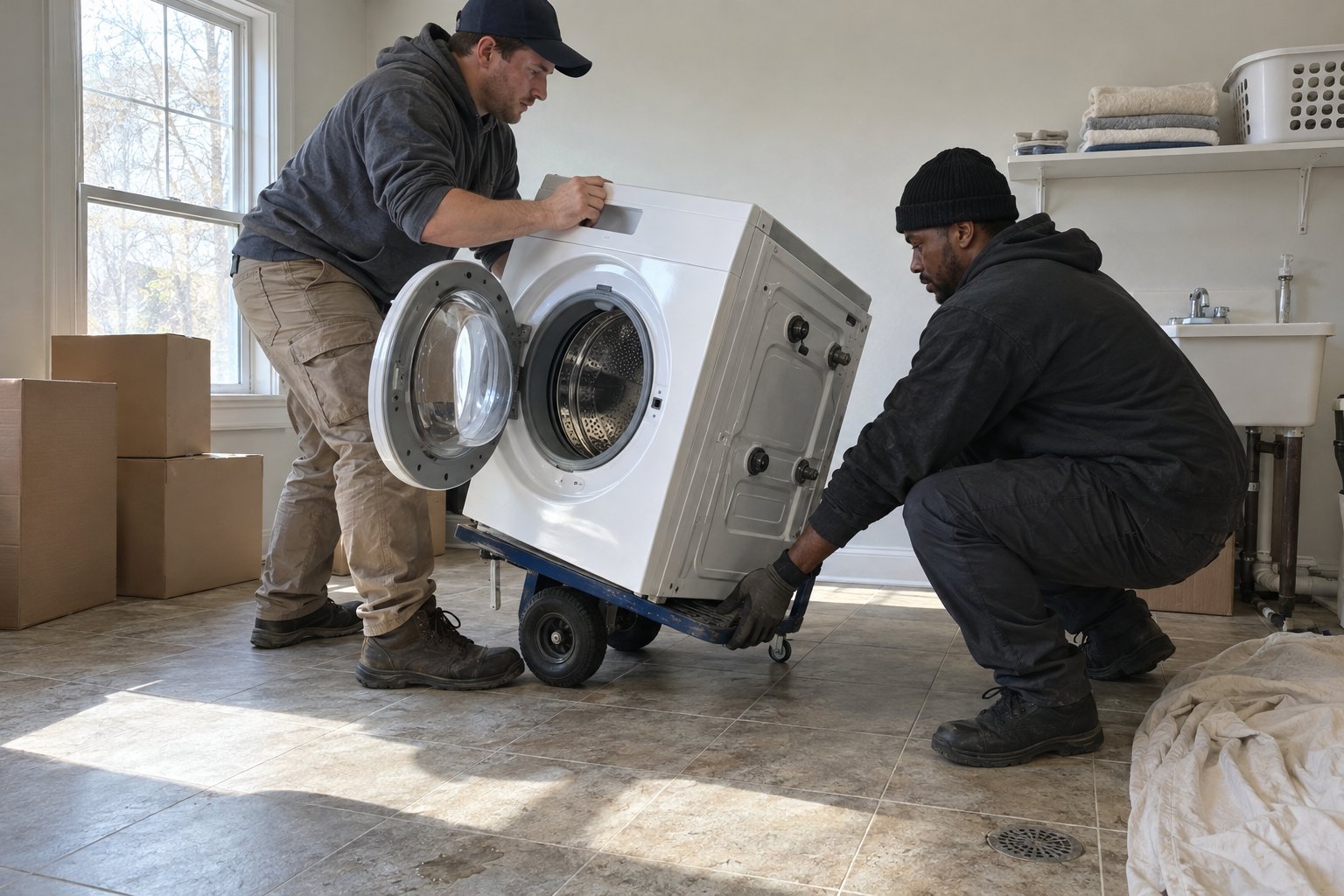
A washing machine should travel on an appliance dolly with a strap, tilted back only as far as needed to clear the floor, never dragged or walked on its own feet. Washers are top-heavy and unevenly weighted because of the concrete counterweight many models use to reduce vibration, so an unsecured unit can tip faster than it looks like it should.
Slide furniture sliders or a moving blanket under the front feet before tilting it back onto the dolly, strap it securely, and keep it upright for the full trip up the hallway or stairs. Once it's in the truck, stand it on a moving blanket, keep it upright, and brace it against a wall or heavy furniture so it can't slide or tip during transport. Laying it on its side is sometimes unavoidable in a tight truck, but it increases the odds that any residual water finds its way into the motor or electronics, so keep it upright whenever the load allows.
No, a dryer (and a washer) should always be moved upright rather than on its back or side. Laying either appliance down can shift internal components out of alignment, strain the drum supports, and in gas dryers, risk damaging the gas valve or line fittings. If you're moving both machines together, treat the dryer with the same dolly-and-strap approach as the washer, and keep any gas line disconnected and capped by a professional before moving day.
Before you reconnect anything at the new place, remove the shipping bolts you installed, since running the machine with them still in place can damage the drum and suspension almost immediately. Keep the bolts; you'll want them again for the next move.
Reconnect the hot and cold hoses to the correct valves (hot to hot, cold to cold), hand-tighten and then snug with pliers, and check for leaks before pushing the unit fully into place. Reattach the drain hose securely to the standpipe, making sure it's not kinked, and level the machine using its adjustable feet so it doesn't walk or vibrate excessively during the spin cycle. Run a short cycle with no clothes inside to confirm everything is sealed and balanced before you load your first real wash.
If you're already navigating narrow hallways, stairs, or a tight loading path, having a second set of trained hands lowers the odds of a dropped appliance or a scratched floor. A washer in the 150 to 200 pound range handled alone on stairs is one of the more common ways people hurt themselves or their flooring during a move.
A labor-only moving crew can handle the dolly work, strapping, and careful loading for just the appliances if you've already got a truck or container and don't need a full-service move. It's a practical middle ground between doing it entirely yourself and booking a complete moving package.
Moving a washing machine safely is mostly about sequence: shut off the water, drain and disconnect the hoses, lock the drum with shipping bolts, and keep the unit upright on a dolly the whole way. Skipping the bolts or laying the machine down are the two mistakes that cause most of the damage we see after a move, so if you only remember two things, remember those.
If you'd rather not handle a few hundred pounds of top-heavy appliance on your own, request a written moving quote to see what help would cost before your move date arrives.
The original manufacturer bolts are ideal because they're sized for your exact model, but if you've lost them, a universal shipping bolt kit or securely wedged towels and foam blocks between the drum and cabinet can work for a shorter, careful move. For a long-distance or professional move, it's worth ordering a replacement kit from the manufacturer first.
No. Water left in the supply hoses is under line pressure and will spray when disconnected if you don't shut off the valves first. Always turn off both hot and cold shutoff valves and let the lines drain before detaching any hose.
There's no strict time limit, but it's best to reconnect and run a test cycle within a day or two so you can catch any leaks or loose fittings while you still remember how everything was set up. Leaving hoses disconnected for weeks also increases the chance of a fitting or gasket drying out.
It's possible with an appliance dolly and straps on a flat, short path, but washers commonly weigh 150 to 200 pounds and are top-heavy, so a second person for stairs, tight turns, or loading onto a truck significantly reduces the risk of dropping or tipping it.
Running the machine with the shipping bolts still installed restricts the drum's normal movement and can quickly damage the suspension, motor mounts, or drum bearings. Always remove the bolts before the first wash cycle at the new location and store them for next time.
Whether you’re moving a home, apartment, office, or just a few heavy items, We Haul Nashville is ready to help make the process easier.