
Written by:
Pierce J.
Published:
June 30, 2026
Learn how to safely move large appliances including refrigerators, washers, dryers, and stoves. Step-by-step prep, equipment, and loading tips from We Haul Nashville.
Knowing how to move large appliances is one of the most underestimated challenges in any home relocation. Appliances are heavy, awkward to grip, and often connected to water lines, gas lines, and electrical circuits that require careful disconnection before a single inch of movement happens. A refrigerator that gets tilted at the wrong angle can damage its compressor. A washer that gets moved without being secured internally can arrive with a broken drum. A gas range that gets disconnected improperly is not just a logistics problem — it is a safety hazard. Getting appliance moves right requires the right preparation, the right equipment, and a clear sequence of steps before and during the move.
This guide walks you through how to move large appliances from start to finish: how to prepare each major appliance type before moving day, the equipment you need to move them safely, how to protect your floors and door frames during the process, and when it makes sense to call in a professional moving crew. Whether you are relocating a single appliance across Nashville or moving an entire kitchen and laundry room, these steps will keep your appliances — and your back — intact.
Attempting to move a large appliance without the proper tools is how refrigerators end up denting hardwood floors and how people end up with back injuries. The equipment that makes appliance moving safe is not expensive, and most of it can be rented from a hardware or moving supply store if you do not want to purchase it outright.
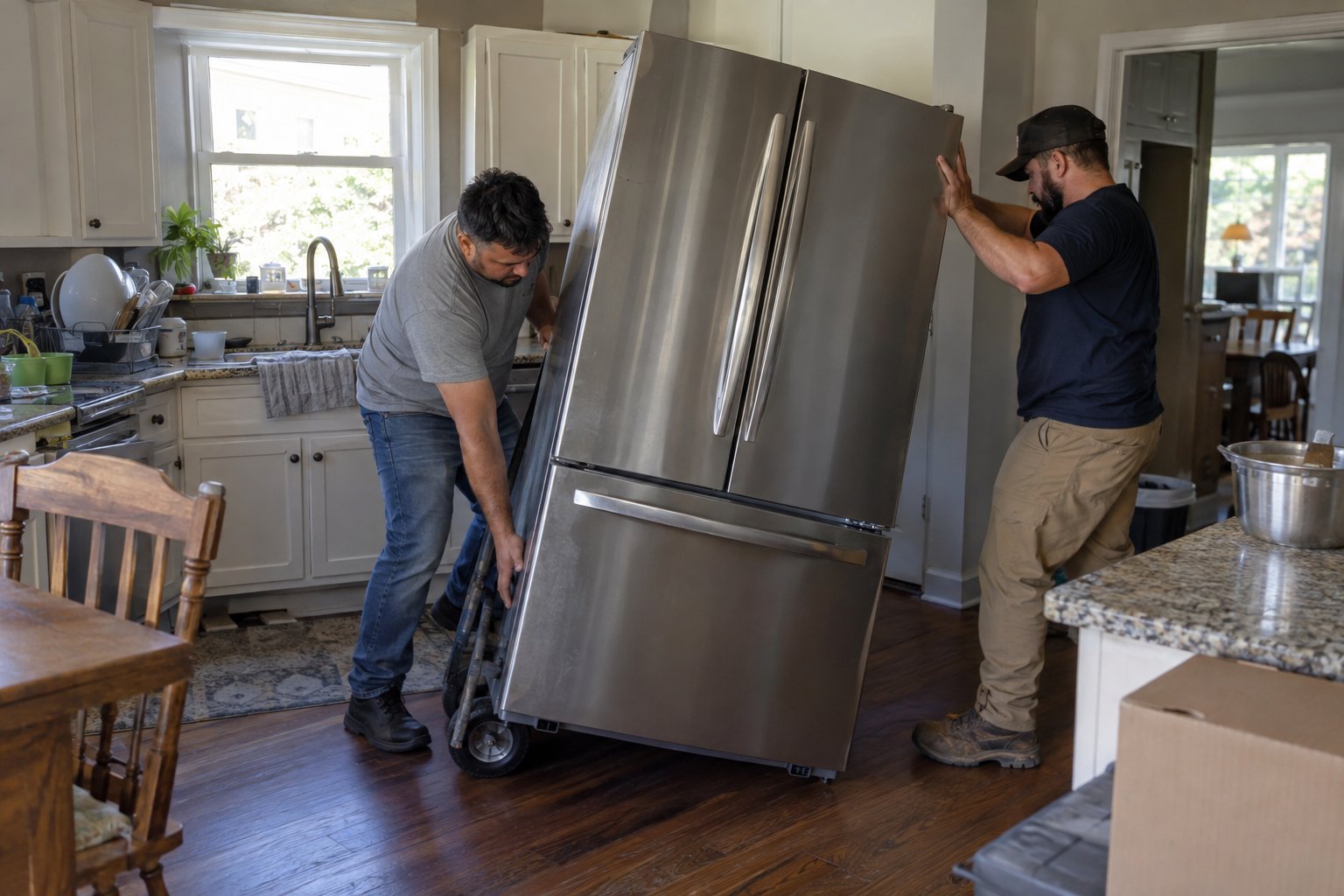
An appliance dolly — sometimes called a hand truck — is the single most important piece of equipment for moving heavy appliances. Unlike a standard two-wheel hand truck, an appliance dolly typically has a longer frame, a more substantial toe plate, and a built-in strap system to secure the appliance against the dolly's upright. This prevents the appliance from sliding or tipping during movement. Most full-size refrigerators, washers, and dryers should not be moved across a floor without one. If you are renting rather than buying, make sure the dolly you select is rated for the weight of your heaviest appliance.
Moving straps — including both the kind that attach to a dolly and the forearm-style straps worn by two movers — distribute the weight of an appliance across your body more effectively than grip alone. For appliances that need to be carried up or down stairs rather than rolled, forearm moving straps make a significant difference in control and reduce the strain on your lower back.
Heavy appliances dragged across hardwood, tile, or vinyl flooring will scratch or dent the surface. Lay down floor protection — cardboard, Masonite boards, or thick moving blankets — along the entire path the appliance will travel before you move it an inch. On carpet, plastic furniture sliders can help the appliance glide rather than drag. Protect door frames with foam padding or thick moving blankets secured with stretch wrap to prevent edge damage as wide appliances pass through.
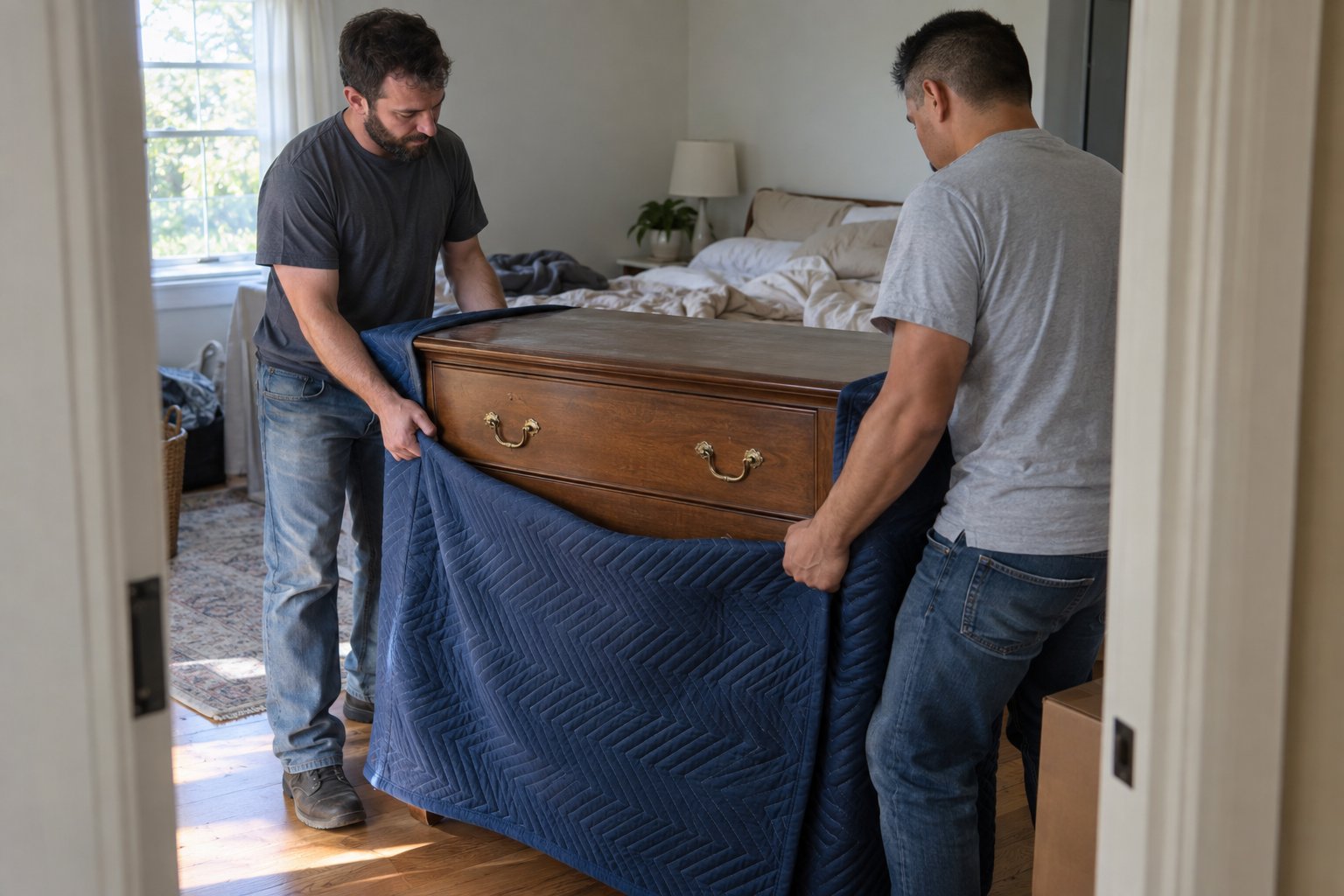
Wrap every appliance in moving blankets before it goes onto the truck. Stainless steel refrigerator doors scratch easily, and the plastic control panels on modern appliances are fragile under contact load. Apply stretch wrap over the blankets — never directly against the appliance finish — to hold the blankets in place during transit.
Every major appliance type has specific preparation steps that must be completed before it is safe to move. Skipping these steps is the most common reason appliances arrive damaged or stop functioning after a move.
Begin preparing your refrigerator at least 24 hours before moving day. Empty all contents and remove any shelves, drawers, and bins — these should be packed separately, as they can crack or shift during transit if left inside. Defrost the freezer completely; ice and standing water in the drain pan add weight and create a mess in the truck. Disconnect the water line if your refrigerator has an ice maker or water dispenser — turn off the water supply, disconnect the line from the back of the unit, and have towels ready for residual water. Secure the doors with stretch wrap or rope to prevent them from swinging open during the move.
One of the most important rules for refrigerator transport: keep the unit upright whenever possible. If a refrigerator must be tilted — for example, to fit through a narrow doorway — tilt it toward the hinge side, and allow the refrigerator to stand upright for several hours after it arrives before plugging it back in. This allows any compressor oil that may have shifted to settle back into place. Plugging in a tilted or recently tilted refrigerator immediately can damage the compressor.
A washing machine drum moves freely on a suspension system, and if that drum is allowed to shift during transport, it can damage the suspension mounts or internal components. Most modern washers come with transit bolts — long threaded bolts that lock the drum in place — that were installed at the factory and removed during initial setup. If you still have the original transit bolts, reinstall them before moving. If you do not, shipping bolts are available at appliance stores for most major brands. Do not move a washing machine without drum stabilization.
Disconnect the water supply hoses (both hot and cold), drain any residual water from the drum by running a spin cycle, and disconnect the drain hose. Cap or tape the hose ends to prevent dripping. Leave the door open for a few hours before moving to let the interior dry out.
Electric dryers require disconnecting the 240-volt power cord from the outlet. If you are not comfortable with this, have an electrician or experienced handyman disconnect it. Do not attempt to disconnect a 240-volt outlet by simply pulling on the cord — turn off the breaker first, then remove the plug. Gas dryers require disconnecting the gas supply line — this step should only be performed by a licensed professional. Gas line work is not a DIY task, regardless of how straightforward it may appear.
Remove the vent hose from the back of the dryer and from the wall vent. Vent hoses are inexpensive and often damaged during moves — plan to replace it at the new location rather than trying to move it carefully. Clean the lint trap and interior drum before the move.
For electric ranges, turn off the breaker and disconnect the power cord. For gas ranges, the gas supply line must be disconnected by a licensed professional — no exceptions. Once disconnected, remove all burner grates, burner caps, and oven racks and pack them separately. Clean the cooktop and oven interior to prevent grease from shifting during transport. If the range has a drawer at the bottom, tape it closed or remove it entirely.
Freestanding ranges are typically rolled out from their position between counters — use appliance rollers or a dolly to do this carefully, as the anti-tip bracket at the back must be disengaged before pulling the unit forward. Check behind and below the range for any utility connections before moving it away from the wall.
Dishwashers are built-in appliances that require more disassembly than freestanding units. The unit is typically secured to the underside of the countertop with mounting screws and may have side-panel attachments as well. Disconnect the power supply, the water supply line, and the drain hose before removing the mounting hardware. Have towels ready — even after the water is shut off, residual water in the drain hose and supply line will drip. Once free, a dishwasher can usually be moved on an appliance dolly after wrapping it in moving blankets.
The loading sequence matters as much as the preparation when it comes to appliances. Heavy appliances should be loaded last among large items if they will be offloaded first, or first if they will be against the cab wall. The goal is to place appliances directly against the truck walls and strap them in place so they cannot shift during the drive.
As noted above, refrigerators should ride upright in the truck whenever possible. If the truck ceiling is too low to accommodate a full-height unit, lay it on its side as a last resort — tilt it toward the hinge side, not the handle side — and allow it to stand upright for the appropriate settling period before plugging it in at the destination.
Every appliance on the truck should be strapped to the truck's tie-down rings using ratchet straps. A 200-pound appliance that is not secured can shift significantly in a sudden stop or sharp turn, and an unstrapped washer or refrigerator can damage everything else in the truck. Loop the strap over the moving blanket rather than around the appliance body directly to avoid denting or creasing the cabinet.
Place moving blankets between appliances and any adjacent furniture or boxes. Appliances have hard, square edges that will damage wood furniture and crush softer boxes if they make contact during transit. Create a buffer zone around every large appliance on the truck.
Appliances are one of the item categories where the case for professional help is strongest. The combination of significant weight, fragile internal components, utility disconnection requirements, and floor-damage risk makes appliance moves genuinely different from moving furniture or boxes — and the consequences of getting it wrong are expensive.
Consider hiring a professional moving crew for appliances if any of the following apply: you have gas appliances that require licensed disconnection, your home has stairs or narrow doorways that require precise maneuvering, you do not have an appliance dolly or the physical help needed to operate one safely, or you are relocating high-value appliances like a built-in refrigerator, commercial-grade range, or front-load washer and dryer set where replacement costs are significant.
A professional Nashville moving crew will arrive with the right dollies, blankets, and straps, handle floor protection as part of the process, and know how to navigate tight spaces without damaging the appliance or the home. For most households, the cost of professional appliance moving is a straightforward trade against the risk of a $1,500 refrigerator repair or a scratched hardwood floor.
If you are moving a combination of household goods and large appliances, coordinating it all under one crew is typically the most efficient approach — the crew can assess each appliance's specific requirements on-site and sequence the load properly from the start.
Getting appliances to the new location is only part of the job. Proper reinstallation matters as much as the move itself.
Refrigerators that were transported upright can typically be plugged in within a few hours of arrival. Those that were tilted or laid on their side should stand upright for at least four hours — and ideally 24 hours — before being powered on. Check your appliance's owner manual for the manufacturer's specific recommendation, as settling times vary by model.
Reconnect water lines, drain hoses, and power cords carefully before pushing appliances back into place — it is much easier to confirm a secure connection when you have clearance behind the unit. For gas appliances, have a licensed professional handle the gas line reconnection. Test each appliance through a full cycle before considering the move complete. Check water supply connections for leaks after the first wash cycle. Make sure the refrigerator is level so the doors seal correctly and the compressor does not run unnecessarily.
If you reinstalled transit bolts in your washing machine before the move, remove them before running the first load. A washer run with transit bolts installed will vibrate violently and can damage the drum. Keep the bolts in a labeled bag — you will need them again if the washer is ever moved in the future.
You can move a refrigerator on its side if necessary, but upright is strongly preferred. When a refrigerator is laid on its side, the compressor oil can flow into the refrigerant lines. If you must transport it on its side, tilt it toward the hinge side rather than the handle side, and allow it to stand upright for at least four to 24 hours before plugging it in — the settling time lets the oil drain back where it belongs. Moving a refrigerator upright eliminates this risk entirely and is always the better option when the truck and doorways allow it.
Yes. Gas line disconnection should always be handled by a licensed professional — a plumber, gas technician, or HVAC technician depending on your area. This applies to gas ranges, gas dryers, and any other gas-connected appliance. Improperly disconnected gas lines create a serious safety hazard, and the cost of a professional disconnection is minimal compared to the risk. Many moving companies can recommend qualified trades or coordinate the disconnection as part of the overall move process. Do not attempt to disconnect a gas line yourself unless you are a licensed professional.
The key is to secure the drum with transit bolts before the move. Most washing machines ship with transit bolts installed — long bolts that lock the drum in place — which are removed during the initial installation. If you still have the original bolts, reinstall them before moving. If you have lost them, replacement shipping bolts are available at appliance stores for most major brands and are inexpensive. Moving a washing machine without drum stabilization risks damaging the suspension system, which can be expensive to repair. After the move, remove the transit bolts before running any laundry.
At minimum, two people are needed to move a full-size refrigerator safely — one to guide and one to control the dolly. For a refrigerator over 300 pounds, a staircase, or a tight doorway, three people makes the process significantly safer and more controllable. The most important tool is a proper appliance dolly with a securing strap — attempting to move a refrigerator by carrying it without a dolly significantly increases the risk of injury and damage. If you are moving multiple large appliances in a single day, a professional crew is worth considering, as fatigue increases the risk of accidents on later lifts.
Yes — all appliances should be completely empty before moving day. Refrigerators and freezers should be emptied and defrosted at least 24 hours in advance. Washers should be run through a final spin cycle to drain residual water. Dryers should have the lint trap cleaned and the drum dried out. Ovens and ranges should have grates, racks, and burner components removed and packed separately. Moving companies will not move appliances with contents inside, and items left in appliances during transport can shift, cause damage, or create safety hazards. Preparing appliances fully before the crew arrives also speeds up the overall move significantly.
Whether you’re moving a home, apartment, office, or just a few heavy items, We Haul Nashville is ready to help make the process easier.