
Written by:
Pierce J.
Published:
June 24, 2026
Moving out of an apartment involves more than boxes and a truck. Follow this complete guide to handle lease-end duties, protect your deposit, and move out stress-free.
Knowing how to move an apartment is a different challenge from moving a house — and most renters discover that difference the hard way. An apartment move comes with a distinct set of obligations: a landlord or property manager to satisfy, a security deposit that may or may not come back to you, lease-end inspection requirements, building-specific rules about elevator reservations and move-out windows, and the logistical puzzle of navigating hallways, stairwells, and parking restrictions with a full truckload of furniture. Miss any of these details and a move that should be straightforward turns into a drawn-out dispute or an unexpected expense.
This guide walks you through every stage of moving out of an apartment — from the notice you give your landlord weeks in advance to the final walkthrough the day you hand over the keys. Whether you are relocating across Nashville or moving to a new neighborhood across town, this framework will help you move out cleanly, protect your deposit, and start fresh in your new place without loose ends following you there.
The apartment move-out process begins well before moving day. The earlier you start, the more control you have over timing, costs, and the condition you leave the unit in.
Pull out your lease agreement and read through the move-out provisions carefully. Most leases specify a required notice period — commonly 30 to 60 days — and outline exactly what the landlord expects in terms of cleaning, repairs, and the return of keys and access cards. Some leases also require professional carpet cleaning, professional window cleaning, or a specific paint condition. If your lease requires these things and you skip them, your landlord can deduct the cost from your security deposit. Reading the lease first means no surprises later.
Give your landlord written notice of your intent to vacate by the deadline specified in your lease. Do this in writing — email works and creates a timestamp — even if your landlord also accepts a verbal conversation. The written record protects you if there is any dispute later about whether notice was given on time. Late or missing notice can cost you an additional month of rent under many lease agreements, which is a significant and entirely avoidable expense.
As soon as you know your move-out date, do a full walkthrough of the apartment and photograph everything. Capture the condition of walls, floors, appliances, fixtures, windows, and any areas of existing wear or damage. This documentation establishes a baseline and protects you from being charged for damage that pre-existed your tenancy. If you still have your move-in inspection report, compare it against current conditions so you know what has changed.
Moving companies in Nashville book up quickly, especially on weekends and at the end and beginning of months — which is when the majority of leases turn over. If you are planning to hire professional movers, reach out and book your date as soon as your move-out date is confirmed. Waiting until two weeks before your move frequently means fewer options, less flexible scheduling, and in some cases, higher prices for remaining availability.
Apartment buildings — especially multi-story or managed residential buildings — often have specific rules that govern how and when residents can move out. These rules are easy to overlook and can significantly affect your moving day if you do not account for them in advance.
Many larger apartment buildings require residents to reserve the service elevator or freight elevator for moves rather than using the passenger elevators. These reservations are often available in limited windows — sometimes just a few hours — and they may require a refundable deposit to hold. Contact your building management office as soon as your moving date is confirmed to find out the building's specific requirements and to secure your slot. Showing up on moving day without a reservation can mean waiting for an available window while your moving crew's time — which you are paying for — ticks away.
Find out where a moving truck is permitted to park during your move-out. Many apartment buildings and urban Nashville neighborhoods have limited street parking, loading zones with time restrictions, or dedicated loading docks. Your moving company will need a clear place to stage the truck close to the building entrance. If a parking permit or temporary no-parking sign is required to reserve a loading zone, arrange that with the city or your building management well in advance of moving day.
Some managed apartment communities specify acceptable move-out hours — for example, no moves before 8 a.m. or after 5 p.m. on weekdays, or no moves at all on Sundays. Make sure your scheduled moving time aligns with these rules. Scheduling a crew to arrive at 7 a.m. when the building does not permit moves until 9 a.m. wastes the first two hours of your moving day and potentially creates friction with building management that you do not want right before you return your keys.
The fundamentals of packing an apartment are the same as packing any home, but a few things specific to apartment living are worth addressing directly.
Large, unwieldy items that are manageable in a house with wide doorways and direct garage access become real problems in an apartment with narrow hallways, 90-degree turns, and shared stairwells. Pack boxes on the smaller and medium side rather than filling large boxes to the brim. For furniture, mentally map the path from your apartment door to the building exit and consider in advance whether any large pieces — a sectional sofa, a king-sized bed frame, a tall wardrobe — can navigate that path. Disassembling large furniture before the moving crew arrives saves significant time and protects building common areas from damage.
An apartment move is an excellent opportunity to reduce what you own before you pay to transport it. Every item you move costs time and effort. Furniture that barely fit in your current apartment may not fit at all in your next one. Clothing you have not worn in a year, kitchen equipment you never use, décor that does not reflect your current taste — all of these items are worth evaluating before you tape them into boxes. Donate what is in good condition, discard what is not, and arrive at your new apartment with only what you actually want there.
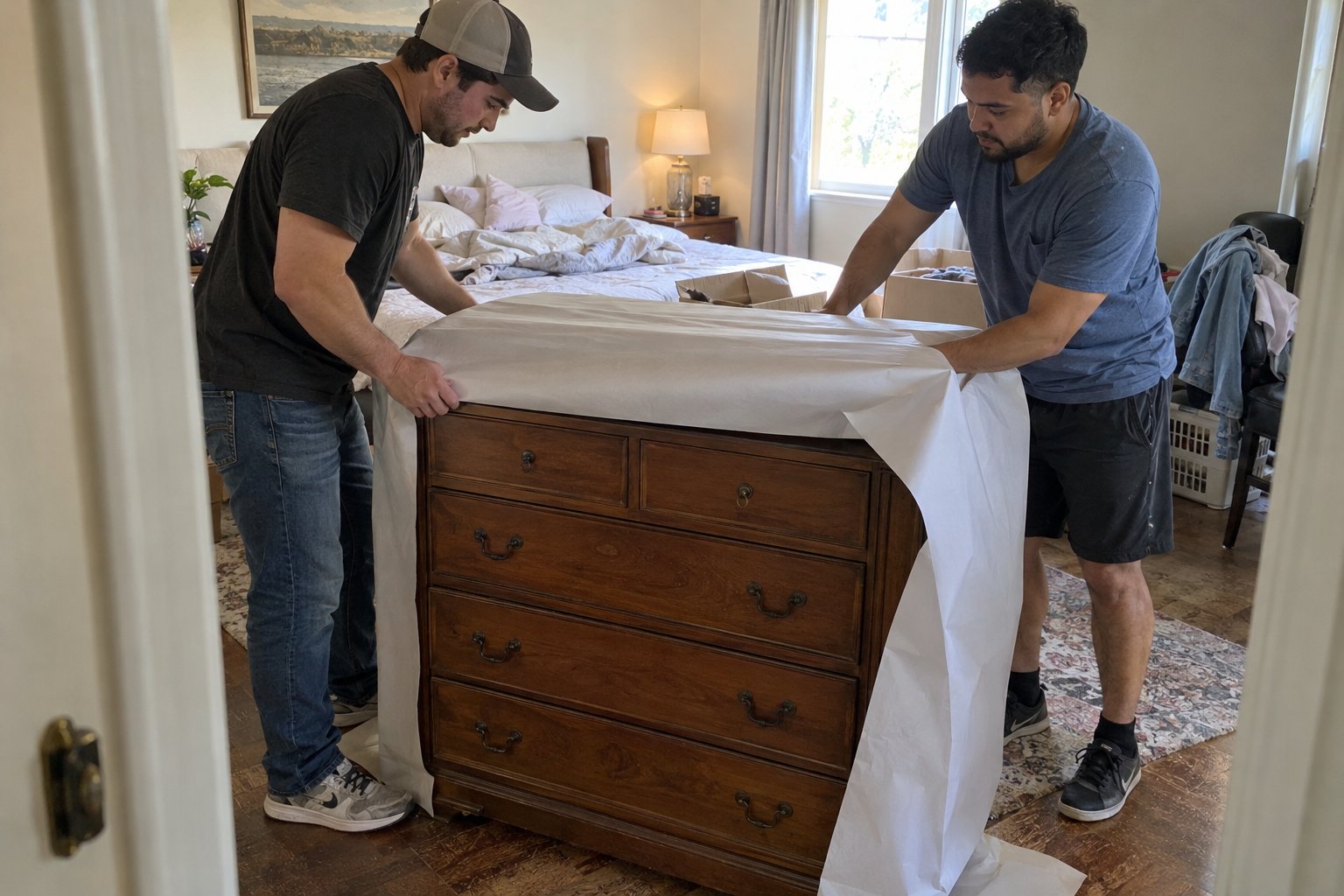
Moving furniture through an apartment inevitably creates opportunities for scratched floors, scuffed baseboards, and wall dings — all of which can be charged against your security deposit. Use moving blankets or furniture pads on any item being carried through the unit. If you have hardwood or luxury vinyl floors, consider laying down floor runners or cardboard along the main path from your apartment door to the exit. These small precautions are far less expensive than deposit deductions for floor damage.
The cleaning you do after the last box leaves the apartment is one of the most direct factors in whether you get your full security deposit back. Most landlords expect the unit to be returned in the same general condition it was in when you moved in — clean, functional, and free of damage beyond normal wear and tear.
Normal wear and tear typically includes things like minor scuffs on walls from furniture placement, small nail holes from picture hanging, and gradual carpet wear in high-traffic areas. These things are generally not deductible from a security deposit under Tennessee landlord-tenant law, though you should review your specific lease for any language that differs from the legal standard. Damage that goes beyond normal wear — large wall holes, stained carpet, broken fixtures, burns on countertops — is a different matter and can legitimately be deducted.
A thorough move-out cleaning means more than a quick sweep. Clean the inside of every cabinet and drawer. Wipe down appliances inside and out — including the oven interior, refrigerator shelves and drawers, and the microwave. Clean bathroom surfaces, grout, and fixtures. Wipe window sills and blinds. Sweep and mop hard floors. Vacuum carpets. Check the tops of cabinets and refrigerators, which accumulate dust and grease and are often inspected. If your lease requires professional carpet cleaning, keep the receipt — it is documentation that the work was done.
Small repairs done before the landlord's walkthrough are nearly always less expensive than having the landlord charge you for them. Patch small nail holes in drywall with lightweight spackle — it is inexpensive, widely available, and takes minutes per hole. Touch up scuffed paint if you have leftover paint from the original application or can closely match the existing color. Replace any burned-out light bulbs. Tighten any loose fixtures or cabinet hardware. These small investments protect a security deposit that may represent one or two months of rent.
The final walkthrough with your landlord or property manager is the critical moment in the move-out process. How you handle it directly affects whether your deposit comes back in full, in part, or not at all.
Tennessee law generally gives landlords a set period — typically 30 days after possession is returned — to return the security deposit or provide an itemized list of deductions. Request your final walkthrough in writing and be present for it so you can address any issues the landlord raises in real time rather than finding out about them on a deduction statement weeks later. Being present at the walkthrough is one of the most effective things a tenant can do to protect their deposit.
Bring your move-in inspection report and the photos you took at the start of your tenancy to the walkthrough. If the landlord identifies something as damage during the walkthrough, having documentation of the unit's condition at move-in allows you to determine whether that condition pre-existed your occupancy. Pre-existing damage documented at move-in is not your financial responsibility.
Return every key, access card, parking pass, garage remote, and mailbox key the building issued to you. Missing items are often charged at replacement cost, which can be surprisingly expensive — especially for electronic key fobs or programmable access cards. Gather all of these items before your final walkthrough day so nothing is accidentally packed or left behind.
Once the truck is loaded and the keys are returned, a few final steps ensure the move is fully complete rather than just mostly done.
Update your mailing address with the USPS as soon as possible so that mail forwarding from your old address begins without delay. Notify your bank, insurance providers, employer, and any subscription services of your new address directly — mail forwarding is a useful backstop, but it is not a substitute for updating your address with the organizations that send you important correspondence.
If any portion of your security deposit is wrongfully withheld, familiarize yourself with Tennessee's landlord-tenant statutes, which provide specific remedies for tenants when deposits are not returned properly. Keeping thorough documentation throughout the move-out process gives you the clearest possible position if a dispute arises.
Moving an apartment well is largely a matter of giving the process the same attention and preparation you would give any significant logistical undertaking. The renters who walk away with their full deposit, their belongings intact, and a clean break from their old address are the ones who started planning early, documented carefully, and finished thoroughly. That outcome is fully achievable with the right approach.
Most residential leases in Tennessee require 30 to 60 days of written notice before vacating, but your specific lease may differ. Read your lease agreement carefully for the required notice period and the format required — most landlords require written notice, and email creates a timestamped record. Giving notice late or failing to give it in the required form can result in an automatic month-to-month renewal charge, which is one of the most common and costly move-out mistakes renters make.
The most effective steps are to document the apartment's condition thoroughly at move-in and again at move-out, clean the unit to the standard specified in your lease, repair minor damage before the final inspection, and be present for the walkthrough so you can address any landlord concerns directly. Tennessee law generally gives landlords 30 days after possession is returned to either refund the deposit or provide an itemized written statement of deductions — knowing this timeline helps you follow up appropriately if the deposit is delayed.
Many multi-story apartment buildings require residents to reserve the service or freight elevator for moves rather than using passenger elevators. Availability is often limited to specific time windows, and some buildings require a refundable deposit to hold the reservation. Contact your building management office as soon as your move-out date is confirmed to find out the requirements and secure your time slot. Arriving on moving day without a reservation can mean delays that cost real money if you are paying professional movers by the hour.
Normal wear and tear generally includes minor wall scuffs from furniture placement, small nail holes from hanging pictures, and gradual carpet wear in high-traffic areas. These are typically not deductible from a security deposit under Tennessee landlord-tenant law. Damage that goes beyond normal use — large holes in walls, stained or burned carpet, broken fixtures, or damaged appliances — can legitimately be charged to the tenant. When in doubt, compare the current condition against your move-in inspection documentation to determine what changed during your tenancy.
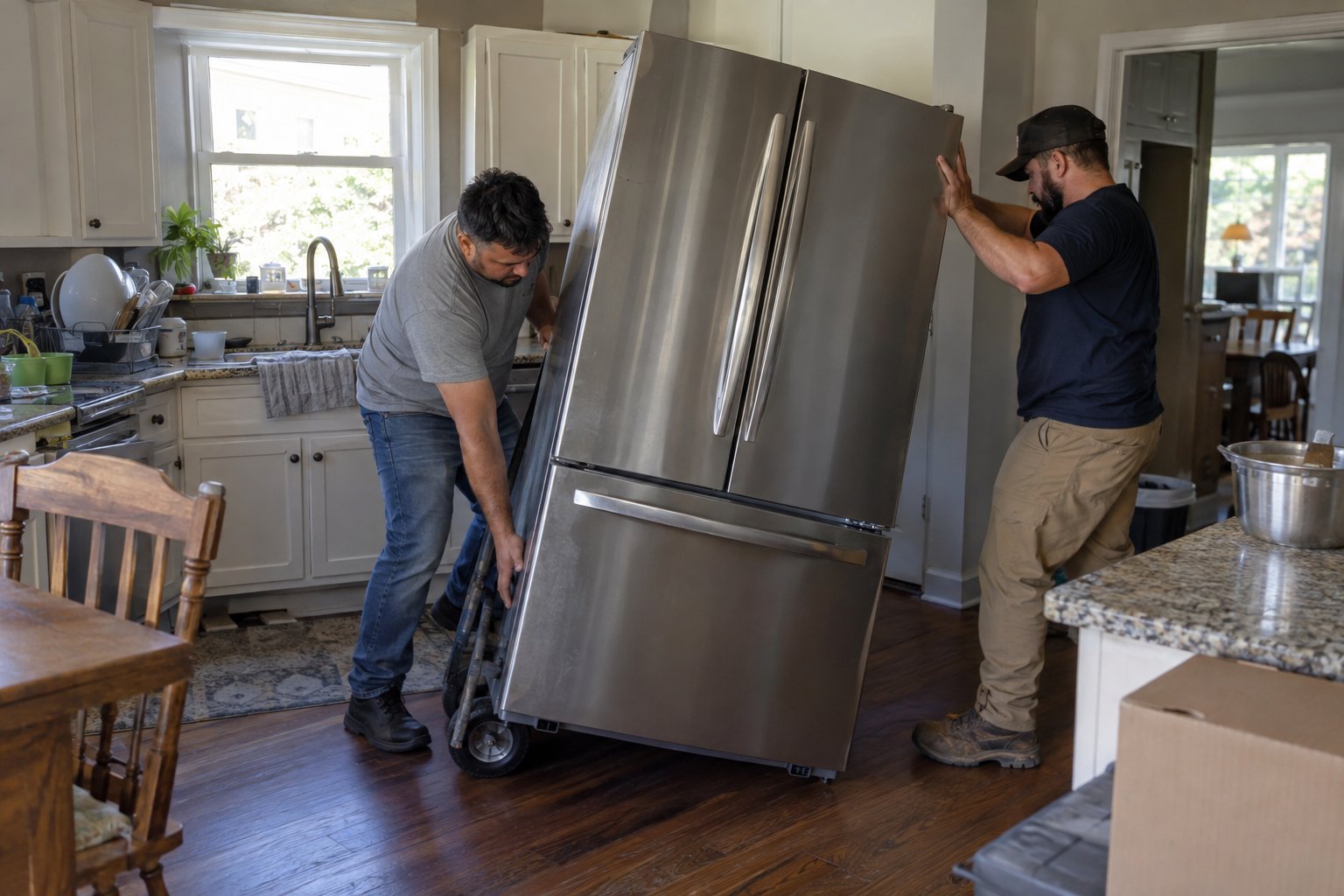
Professional movers are often well worth the cost for apartment moves, especially if your building has service elevator requirements, limited parking, multiple flights of stairs, or large furniture that is difficult to navigate through hallways and tight corners. The value of hiring a professional crew is not just the physical labor — it is the equipment, the experience navigating challenging building layouts, and the liability coverage for your belongings in transit. If you are moving in Nashville and need help evaluating your options, getting quotes from reputable local movers is a low-cost way to understand what the service would cover and what it would cost.
Whether you’re moving a home, apartment, office, or just a few heavy items, We Haul Nashville is ready to help make the process easier.