Written by:
Pierce J.
Published:
September 29, 2026
Learn how to pack canvas paintings and large artwork for a move so canvases stay taut, frames stay square, and nothing cracks in transit.
Packing a canvas painting for a move comes down to protecting three vulnerable points: the painted surface, the corners of the frame or stretcher bars, and the canvas itself from ever flexing or bowing during transit. Skip any one of those and you risk a crease in the canvas, a dented corner, or paint that has quietly cracked by the time you unwrap it at the new place.
Most people wrap a painting the way they would wrap a picture frame: paper, tape, box, done. Canvas does not behave like glass or a framed print. It is fabric stretched drum-tight over wood, and that fabric can stretch, sag, or puncture in ways a photograph under glass never will. If you are searching for how to pack canvas painting pieces correctly, the goal is rigidity and isolation: keep the canvas from touching anything, keep it from moving inside its wrapping, and keep pressure off the painted face entirely.
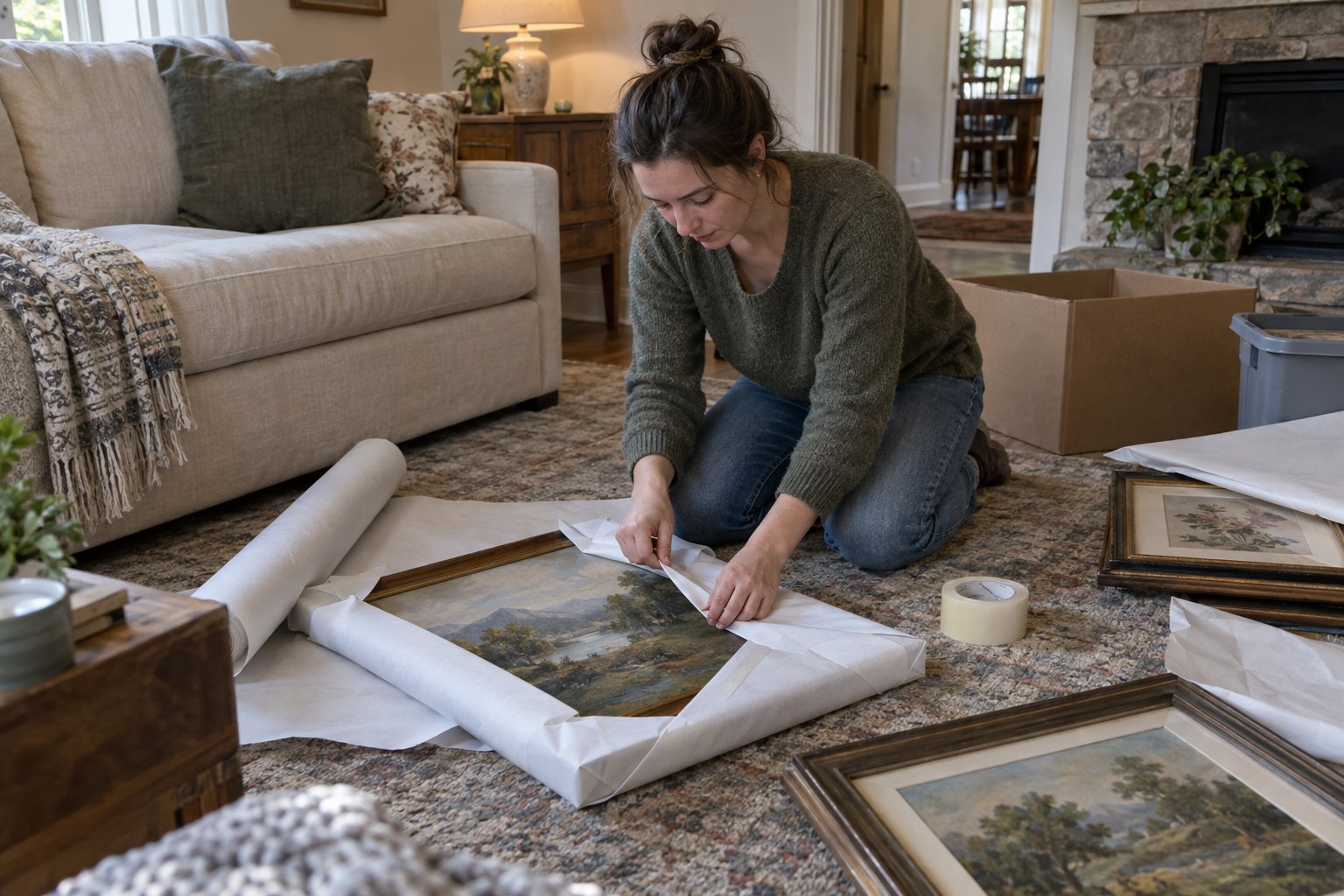
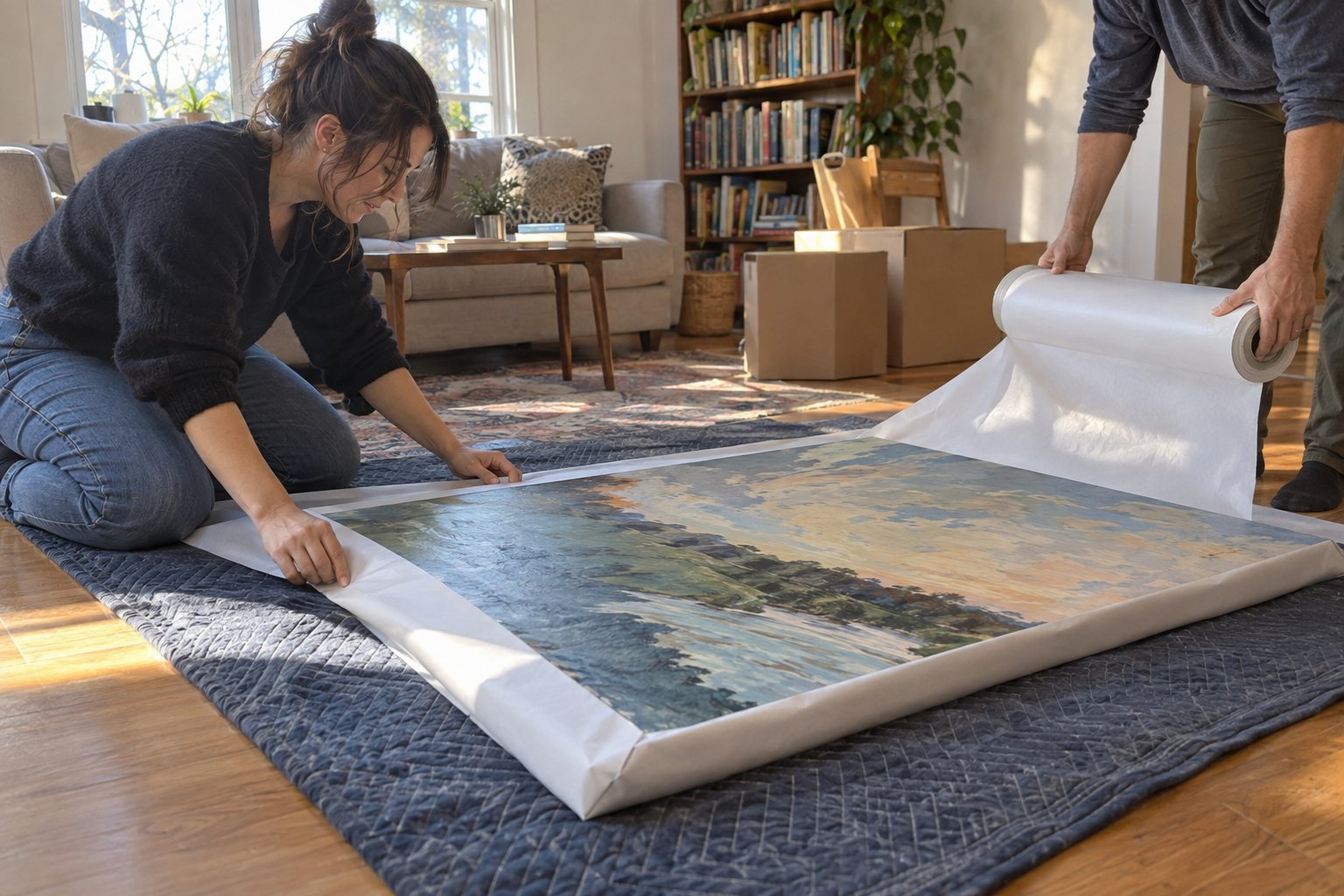
Cover the painted face first with a barrier that will not stick to paint, then box the piece so nothing presses against that surface during the move. Glassine paper or acid-free tissue is the standard choice because it will not transfer ink, adhesive, or fibers onto the paint even after months in storage.
Lay the painting face up and cut a sheet of glassine large enough to fold over all four edges. Never use regular packing paper directly against the paint, since newsprint ink can bleed onto a surface that has not fully cured, and even paintings finished years ago can pick up texture from paper pressed against them under weight. Once the glassine is on, add a layer of clean, unprinted cardboard cut slightly larger than the piece, and tape the cardboard corners together into a simple sandwich rather than wrapping tape directly around the painting. This keeps adhesive off the frame.
Corner protectors are the single most important piece of hardware for this job, because corners take almost all the impact damage in a move. Cardboard corner guards, foam corner blocks, or even folded cardboard triangles taped in place will absorb bumps that would otherwise bend a stretcher bar or crack dried paint at the frame edge.
Slide a protector over each of the four corners before the piece goes into its box or crate. For anything larger than roughly 24 by 36 inches, add a second layer of protection along the entire top and bottom edge, not just the corners, since long unsupported edges can flex and stress the canvas where it meets the stretcher frame. If the painting has an ornate or gilded frame, wrap the frame separately in bubble wrap before adding corner guards, keeping the bubbled side facing out so it does not texture the finish.
Large canvases need to travel flat or on edge inside a rigid outer container, never loose or leaning against other items. A canvas that is only protected on its face but left to flex under its own weight can develop a permanent bow or a stress crease along the stretcher bars within a single trip.
For anything over about 30 inches on its longest side, build or rent a flat crate sized to the piece with roughly one inch of clearance on all sides, then fill that clearance with foam blocks so the painting cannot shift. If a custom crate is not practical, sandwich the wrapped painting between two sheets of rigid foam board cut to the same dimensions and secure the whole assembly with painter's tape, never packing tape directly on the frame. Inside the moving truck, this flat package should stand upright, wedged between soft-sided items like mattresses, never laid flat under other boxes and never stacked with anything on top. If you are moving several pieces at once alongside other fragile décor, our guide to packing wall art and framed mirrors covers glass-front pieces that need a different approach than raw canvas.
Yes, whenever the trip involves extreme heat, cold, or long time in a truck. Canvas and oil or acrylic paint react to temperature and humidity swings by expanding and contracting, which over enough cycles can cause fine cracking called craquelure or cause a canvas to loosen on its stretcher.
Avoid leaving wrapped paintings in a hot car, garage, or moving truck overnight, especially in a Tennessee summer where cargo areas can climb well past outdoor temperatures. If your move involves any storage gap between homes, ask about climate controlled options rather than a standard unit. Valuable or irreplaceable pieces, including inherited artwork or investment-grade paintings, are also worth mentioning specifically when you request a quote so the crew can plan the right equipment and handling from the start.
For anything irreplaceable, oversized, or professionally framed, hiring movers experienced with specialty items is worth it because the risk of a DIY mistake, a torn canvas, a cracked frame corner, a warped stretcher, usually costs more to fix or replace than the move itself. A small print in a simple frame is reasonable to handle yourself with the steps above.
Once a piece gets into the range of a gallery-wrapped canvas over three feet, an antique gilt frame, or a painting with real sentimental or appraised value, the calculation changes. Professional crews carry purpose-built crates, corner protection, and the extra hands needed to carry a large flat object through doorways and stairwells without ever setting it down on its face. Our specialty item moving service handles artwork alongside pianos and other pieces that need custom crating and careful routing through a home, and it pairs naturally with a standard local moving crew handling the rest of the house on the same day.
Pull artwork off walls and out of storage a day or two before the move, not the morning of, so you have time to wrap each piece properly instead of rushing. Photograph each painting before wrapping, both for insurance purposes and so you know exactly what is inside each package when you unpack.
Group wrapped paintings together in one clearly labeled zone of the house, away from foot traffic, so movers or helpers are not stepping around them or setting other boxes on top by accident. If you are downsizing and some pieces will not be coming with you, sort those out before packing day rather than wrapping art you plan to sell or donate. Label every package "artwork, this side up" on the face side so it never ends up flat on the truck floor by mistake.
Rolling is only safe for unstretched canvas that has been removed from its frame, and even then it should be rolled face out around a large-diameter tube (at least 4 inches) with acid-free tissue between layers. A stretched canvas on wood bars should never be rolled, since the stretcher will crack or the canvas will tear at the tack points.
No. Bubble wrap can stick to paint that has not fully cured and the raised bubble texture can imprint onto the surface under pressure. Use glassine or acid-free tissue against the paint itself, and save bubble wrap for the outer frame or as cushioning between the wrapped painting and the box.
A painting should cure for at least several weeks, and ideally longer for oils, before it is wrapped or boxed for a move. If you have no choice but to move a recently finished piece, use small spacers or corner blocks to hold any wrapping away from the paint surface so nothing touches it directly.
Standard mover's liability coverage often has limits that do not reflect a painting's actual value, so pieces with real appraised or sentimental worth may need separate coverage. Ask your moving company what their liability covers before moving day and consider a rider through your homeowner's or renter's policy for anything irreplaceable.
A flat, rigid mirror or picture box sized specifically to the painting's dimensions with about an inch of clearance on all sides works best, since it prevents the piece from shifting or flexing inside the box. Avoid square or deep boxes that let a flat painting tilt or slide during transport.
Whether you’re moving a home, apartment, office, or just a few heavy items, We Haul Nashville is ready to help make the process easier.