
Written by:
Pierce J.
Published:
September 15, 2026
Wondering what it costs to move a piano in Nashville? See what drives the price up or down, from piano type to stairs, and when to get a specialty quote.
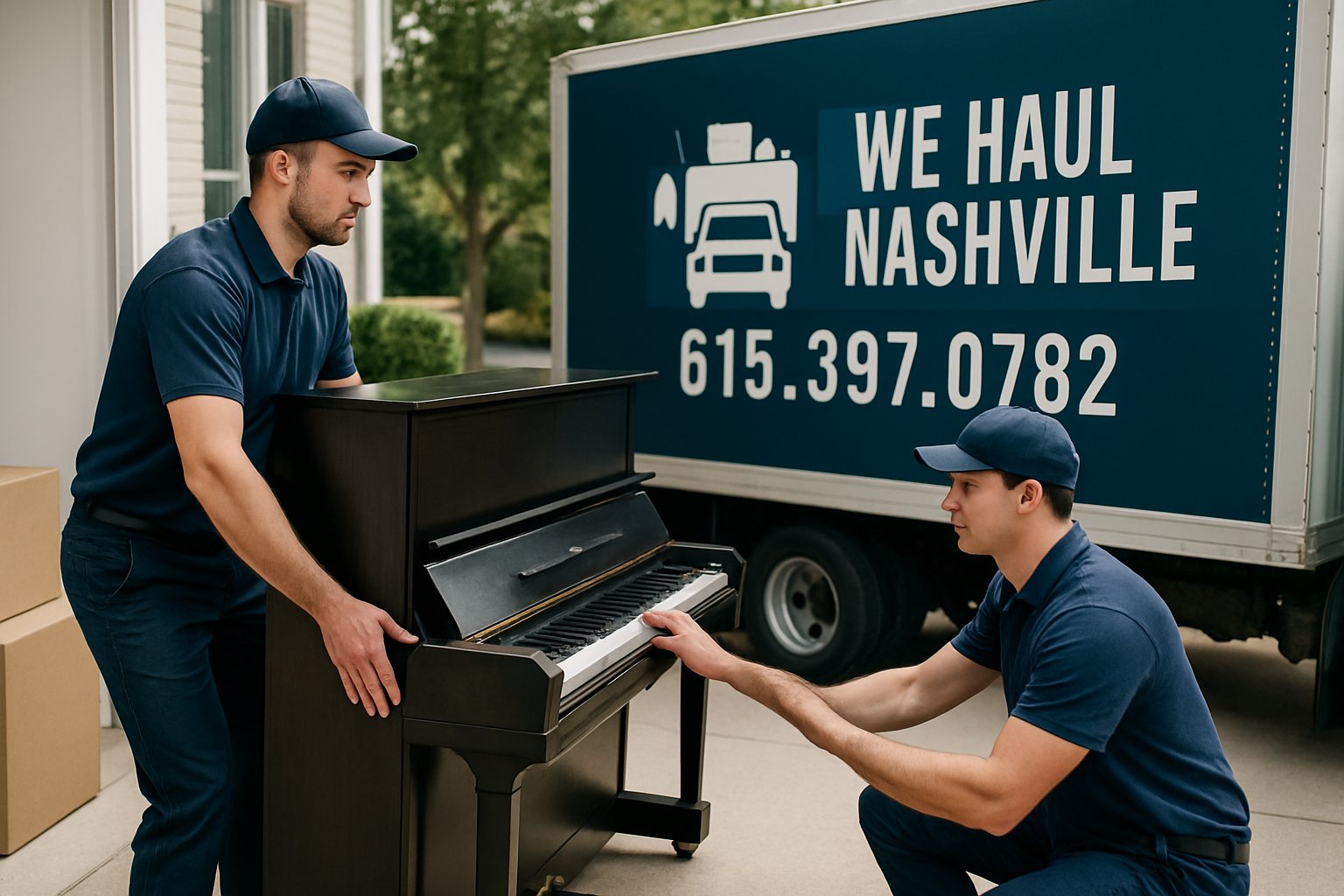
Piano moving cost in Nashville typically runs anywhere from a couple hundred dollars for a short, ground-floor upright move to well over a thousand dollars for a grand piano that has to navigate stairs, tight turns, or a long carry to the truck. The exact number depends less on the size of your move and more on the piano itself and the path it has to travel. Here is what actually moves that price up or down.
If you are getting quotes and one company is quoting $250 while another wants $900 for what sounds like the same job, you are probably not comparing the same job. Piano pricing is one of the least standardized parts of the moving industry, because so much of the cost comes from variables that only show up once someone looks at your specific piano, your specific staircase, and your specific driveway. Knowing what those variables are lets you ask better questions and spot a lowball quote before it turns into a surprise invoice on moving day.
Most local piano moves in the Nashville area fall somewhere between $200 and $600 for an upright piano and $400 to $1,200 or more for a grand or baby grand, assuming a relatively straightforward path with no more than a flight of stairs. Long-distance piano moves, or moves requiring extra crew for narrow staircases, run higher.
Those ranges are wide on purpose. A spinet piano carried across a flat driveway into a garage costs a fraction of what it takes to bring a nine-foot concert grand down a spiral staircase and around a landing. Any quote you get without someone asking about your piano type, your stairs, and your parking situation should be treated as a rough placeholder, not a real number.
Some companies price piano moves as part of a general labor only hourly job, which can work fine for a simple upright on one level. But pianos are dense, awkwardly balanced, and easy to damage in ways that do not show up until you try to tune them later. A flat, specialty-item rate that accounts for the right equipment and trained hands is usually the safer comparison, even if the sticker price looks higher up front.
Grand and baby grand pianos cost more to move than upright or spinet pianos because they require disassembly of the legs and lyre, specialized skid boards, and more people to carry and load them safely. A concert grand is the most expensive piano type to move in almost every case.
Upright and console pianos are tall and heavy but keep a relatively small footprint and do not need to be taken apart, which keeps labor time down. Grands have to be tipped onto their side, secured to a padded board, and carried as a flat, wide load, which takes more coordination and more space to maneuver through doorways and around corners. That extra handling time is where most of the price difference between piano types comes from, not the weight alone.
Yes. Stairs, narrow hallways, and long carries from the door to the truck are some of the biggest cost drivers in piano moving, often adding more to the bill than the piano type itself. Movers price these factors separately because they change both the crew size needed and the risk of damage.
A piano that has to go up or down even one flight of stairs usually needs an extra person and more time than the same piano on a single level. Tight turns, low doorframes, or a long walk from the front door to where the truck can park all add labor time. If your home has a spiral staircase, a narrow apartment hallway, or steps at both the pickup and drop-off address, mention this when you request a quote so the price you receive actually reflects the job.
The most reliable way to avoid a surprise is to have someone assess the piano and the path in person or over a detailed phone call and video walkthrough, rather than accepting a flat number sight unseen. A company that asks about piano type, stair count, doorway widths, and parking distance before quoting is doing the pricing correctly.
Moving a piano yourself is rarely actually cheaper once you account for equipment rental, the risk of damaging floors, walls, or the instrument, and the real chance of a serious injury. Pianos weigh anywhere from 300 pounds for a small upright to over 1,000 pounds for a full concert grand, and they are top-heavy and unevenly balanced in ways that furniture is not.
Renting a piano dolly and straps for a weekend can look cheap on paper, but most homeowners underestimate how much specialized handling a piano needs to survive a move without internal damage to the soundboard, pinblock, or action mechanism. Repair costs for a piano damaged in a DIY move often exceed what a professional specialty move would have cost in the first place. For instruments with real monetary or sentimental value, this is one area where the math consistently favors hiring it out.
Getting an accurate quote means providing your piano type, the number of stairs or steps at both locations, the distance from the piano to where a truck can park, and any known tight spots like narrow doorways. Reputable movers will ask for this information before giving you a firm number rather than a vague range.
It also helps to ask directly whether the quote includes disassembly and reassembly (for grands), blanket padding, floor protection, and insurance coverage specific to high-value items. A quote that skips these details is one that can change once the crew shows up and sees the actual conditions. If you have already researched what movers generally charge in the area, our guide on moving costs in Nashville covers how labor rates and flat-rate pricing work for a full household move, which is useful context if your piano move is part of a bigger relocation.
Piano moving is one of the few jobs where paying for genuine specialty experience is worth the premium. If you are planning a move that includes a piano, along with other delicate or oversized items like antiques, safes, or pool tables, our piano and specialty item moving team handles the assessment, equipment, and crew sizing so you get an accurate number instead of a guess. For moves inside the metro area, our Nashville, TN service page has details on typical response times and coverage.
Whatever you decide, get the quote in writing and confirm what happens if the crew discovers a staircase or doorway that was not part of the original walkthrough. A little extra clarity before moving day is what keeps a piano move from turning into the most expensive surprise in your relocation budget.
A local upright piano move typically costs between $200 and $500 depending on stairs, distance to the truck, and whether the move is a standalone job or part of a larger household move. Ground-floor moves with easy truck access sit at the lower end of that range.
Grand pianos have to be disassembled, tipped onto a padded skid board, and carried as an oversized flat load, which takes more crew, more time, and more specialized equipment than an upright, which can usually be moved upright on a piano dolly.
Yes, most movers charge more for stairs because they require additional crew members and slower, more careful handling to keep the piano balanced and protect the walls and stair treads along the way.
Both models exist. Some companies quote piano moves as flat specialty-item rates that account for equipment and crew size, while others fold it into hourly labor. Ask which model you are getting quoted so you can compare offers accurately.
For an instrument with real monetary or sentimental value, yes. Standard moving coverage often has limits that would not cover full replacement or repair of a piano, so ask specifically about specialty-item coverage before booking.
Whether you’re moving a home, apartment, office, or just a few heavy items, We Haul Nashville is ready to help make the process easier.