
Written by:
Pierce J.
Published:
October 9, 2026
Real cross-country moving tips covering timing, inventory, truck loading, and what to ask a long distance mover before you book. No fluff, just what matters.
The tips that actually move the needle on a cross-country move are the unglamorous ones: lock your date early, build a real inventory before you call anyone for a quote, and separate what goes on the truck from what travels with you in the car. Most of the stress people associate with long distance moves traces back to one of those three things being skipped, not to some exotic packing trick nobody told them about.
If you are gathering cross-country moving tips because a move is already on the calendar, you likely already have the basics: you need boxes, you need a truck, you need to update your address. What follows is the layer underneath that, the decisions that determine whether moving week feels manageable or feels like damage control. If you want a dedicated crew handling the actual transport rather than renting a truck yourself, that is the kind of job long distance moving services are built around, and it changes several of the decisions below.
Start locking in logistics eight to twelve weeks out, and start the inventory and decluttering pass even earlier than that. Long distance capacity, especially during summer and around month-end, books up faster than local moves because trucks are running fixed routes with multiple stops.
The eight-to-twelve-week window is about more than courtesy. Long distance moves are often priced and scheduled around weight and cubic footage, and a crew needs lead time to plan a route that can include other customers' shipments on the same truck. Waiting until three weeks out does not just limit your options, it can mean paying more for the same job simply because the easy dates are gone. If your timeline is already compressed, it is worth reading what is realistic on a tight moving timeline before you assume every long distance mover can accommodate a rush.
Get your written estimate, confirm whether it is binding or non-binding, and start your decluttering pass. A cross-country move is the worst time to discover you are paying to ship items you were going to replace anyway.
Walk every room and list large furniture, appliances, and any high-value or oversized items by name, not by box count. Long distance pricing is driven heavily by total weight and cubic feet, so an inventory that undercounts your belongings leads to a quote that will not hold once the truck is loaded.
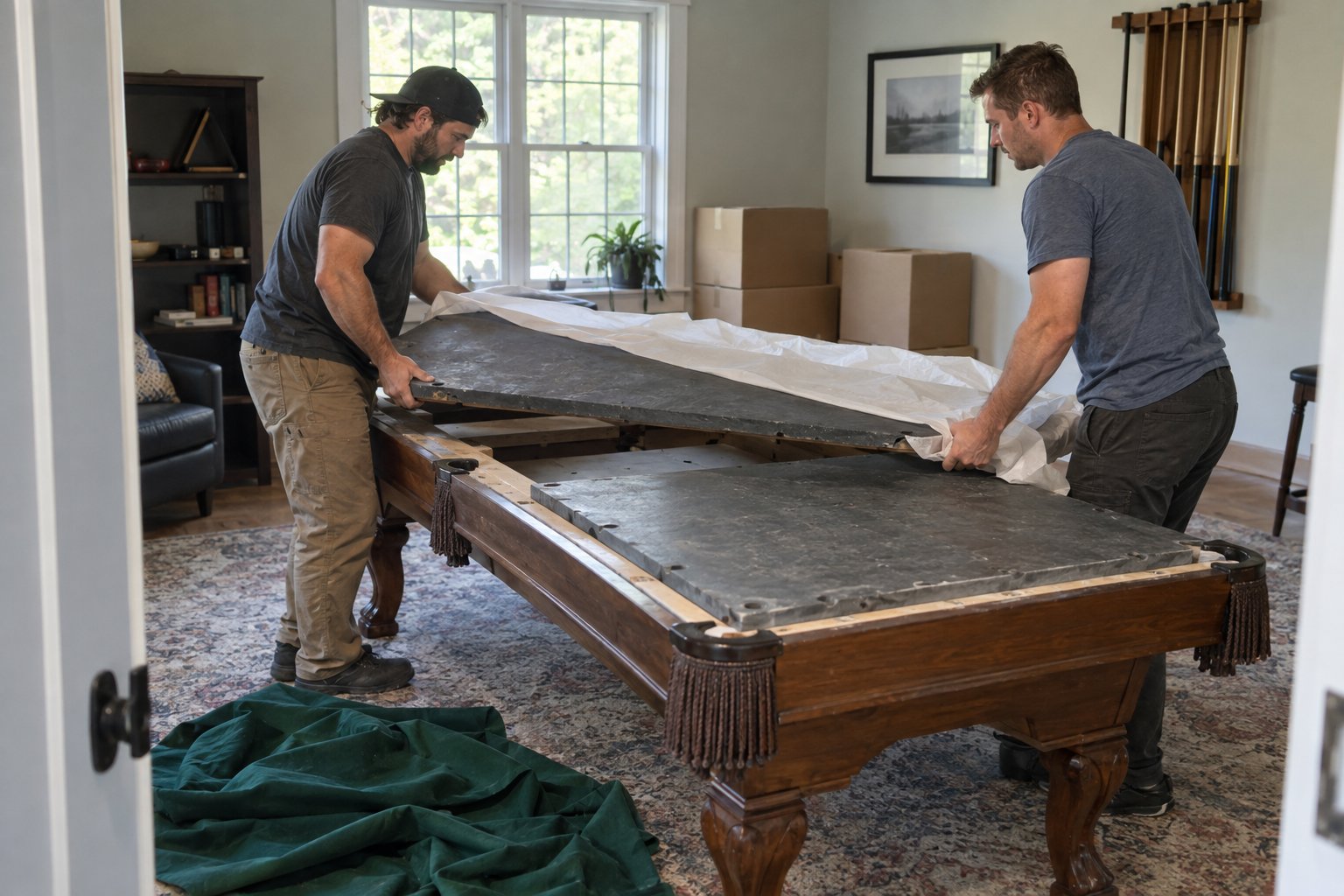
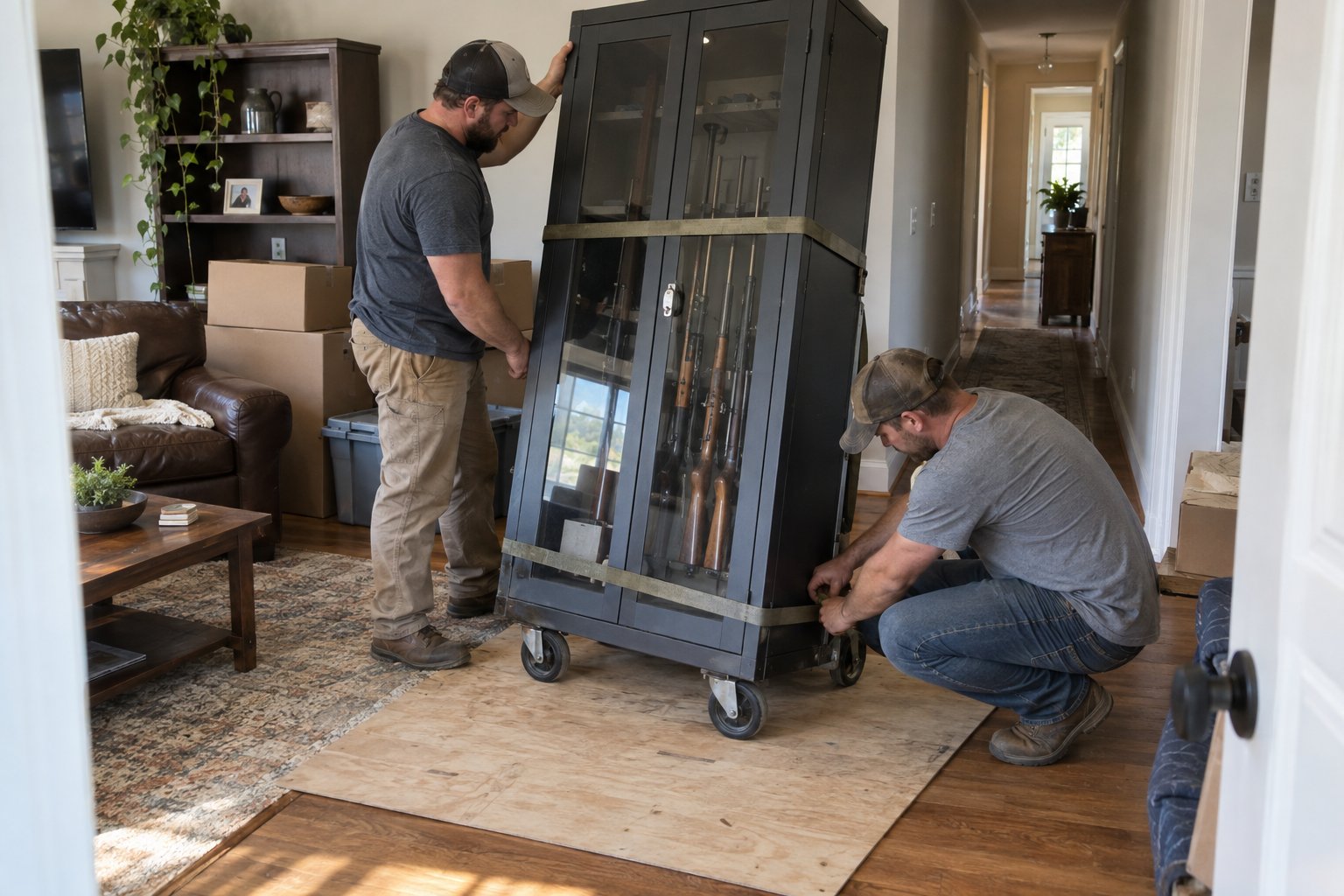
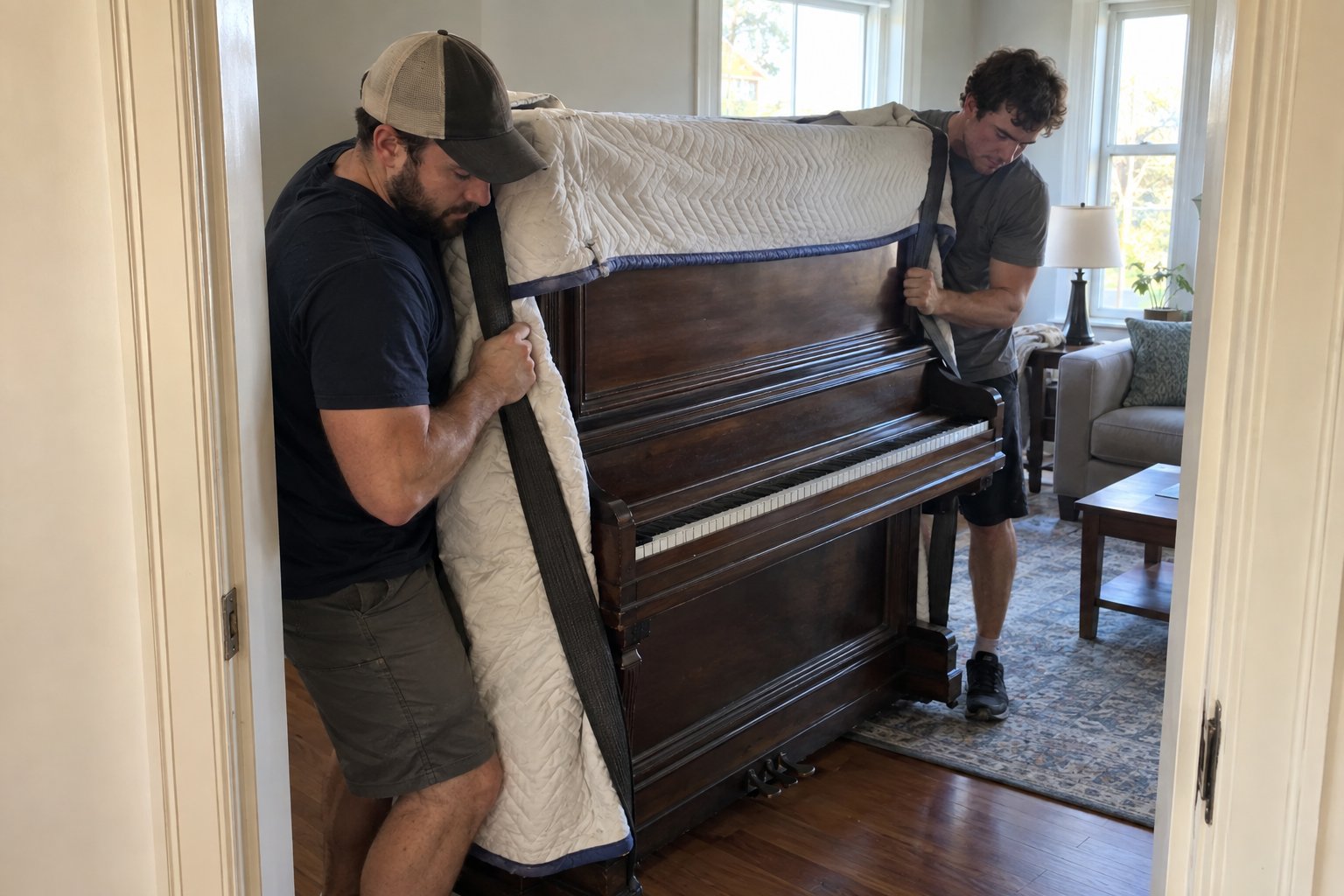
Photograph anything that is already damaged or worn before it gets wrapped, and flag specialty items separately: a piano, a gun safe, a large sectional, exercise equipment that needs disassembly. These items change how a crew plans the load and sometimes change the equipment they bring. If your home includes a piano or similarly oversized specialty piece, mention it when you request your estimate rather than at the door on moving day, since specialty item moving is typically quoted and staffed differently than general household goods.
Medications, documents, jewelry, a few days of clothing, and anything irreplaceable should never go on the moving truck. Pack these into a bag or box that rides in your own vehicle or carry-on, not because movers are careless, but because a cross-country shipment can be in transit for days and you do not want to be without essentials during that window.
Confirm the company is licensed for interstate moves, get the estimate in writing, and ask directly how they handle delivery windows, since long distance deliveries are usually quoted as a date range rather than a single day. A company that is vague about any of these three is worth a second look before you commit.
Ask specifically what happens if your new home is not ready to receive the shipment on the estimated delivery date, how they price additional stops, and whether the same crew that loads your home also drives and unloads it, or whether it changes hands partway through. None of these questions are unusual to ask, and a reputable long distance crew will have straightforward answers. For a broader rundown of what to vet before signing with any moving company, see how to choose a moving company.
A binding estimate locks your price based on the inventory you provided. A non-binding estimate can shift once the crew sees and weighs your actual belongings. Ask which type you are getting, and if it is non-binding, ask what triggers a price change so there are no surprises at delivery.
Pack heavier than you would for a local move, and treat large furniture as its own category rather than an afterthought. Items that survive a twenty-minute drive across town without much padding can shift, rattle, and wear against each other over a multi-day haul, so reinforce boxes, wrap furniture corners, and avoid overfilling any single box past what you can comfortably lift.
Loading order matters more here too. Heavy, stable items go in first and low, furniture gets positioned to distribute weight evenly, and anything fragile is loaded last so it comes off first and is not holding the weight of everything else over hundreds of miles of highway. If you are tackling this yourself rather than using a full crew, a room-by-room approach to loading a moving truck will save you from the most common mistakes.
Large sectionals, bed frames, and tables may need partial disassembly not just to fit through doorways but to pack more securely for a long haul. Keep hardware bagged and taped to the piece it belongs to, and photograph assembled furniture beforehand so reassembly at the other end is fast.
Utility and mail transitions rarely line up perfectly with a long haul, and the overlap between leaving one state and arriving in another can leave a gap of a few days where you are without internet or a forwarded address. Plan for a short gap rather than assuming everything switches over the moment you leave.
It is also worth deciding early whether you are handling the full move yourself, hiring help for loading and unloading only, or booking a full-service long distance crew. Each option changes your timeline and what you need to arrange in advance. If you are still weighing that decision, our breakdown of labor-only moving help covers what a loading-and-unloading-only crew actually takes on versus a full-service team. Whichever route you choose, request your written estimate early enough that you are not making the decision under pressure. You can get a moving quote once you have your inventory ready.
Aim for eight to twelve weeks before your target date, especially if you are moving during summer or near a month-end. Long distance trucks run fixed multi-stop routes, so availability on popular dates disappears faster than it does for local moves.
A binding estimate locks in your price based on the inventory you gave the mover. A non-binding estimate can change once the crew sees and weighs your actual belongings, so always ask which type you are receiving and what could cause the price to shift.
It depends on the item's value, condition, and how it is priced relative to weight and space on the truck. Solid wood furniture and anything sentimental or expensive to replace is usually worth shipping; inexpensive particleboard pieces often are not.
Transit time depends on distance and route, but long distance shipments commonly take several days to a couple of weeks door to door, especially when your shipment is combined with other customers' loads on the same truck. Your mover should give you an estimated delivery window, not a single fixed day.
Keep medications, important documents, jewelry, and a few days of clothing with you rather than on the truck. A cross-country shipment can take days to arrive, and you do not want to be without essentials during that window.
Whether you’re moving a home, apartment, office, or just a few heavy items, We Haul Nashville is ready to help make the process easier.