Written by:
Pierce J.
Published:
August 7, 2026
Learn how to move antique furniture without cracking veneer, loosening joints, or scratching finishes, plus when to call in specialty movers in Nashville.
Antique and heirloom furniture needs a different approach than everyday furniture because age has already weakened the joints, finish, and glue that hold it together. Moving it safely means slowing down, inspecting it before you touch it, and using padding and lifting techniques built for fragile old wood rather than modern flat-pack pieces. Get those steps right and a hundred-year-old dresser can survive its next move as well as it survived the last one.
This guide covers what actually goes wrong with antiques during a move, how to prepare and protect each type of piece, and when it makes more sense to hand a piece off to movers who specialize in delicate items instead of risking it yourself.
Old furniture is weaker than it looks. Decades of wood movement, dried-out glue joints, and finishes like shellac or old lacquer make antiques far more prone to cracking, chipping, or coming apart under normal moving stress than newer furniture built with modern adhesives and hardware.
Veneer is the biggest risk. Thin decorative wood layers can lift or bubble if a piece is jostled, tipped past a certain angle, or exposed to sudden temperature or humidity swings inside a truck. Loose joints in chairs, tables, and cabinets can separate silently during transport and only become obvious once you try to use the piece again. Because much of this damage is either irreversible or expensive to restore, prevention matters more here than with almost any other category of household goods.
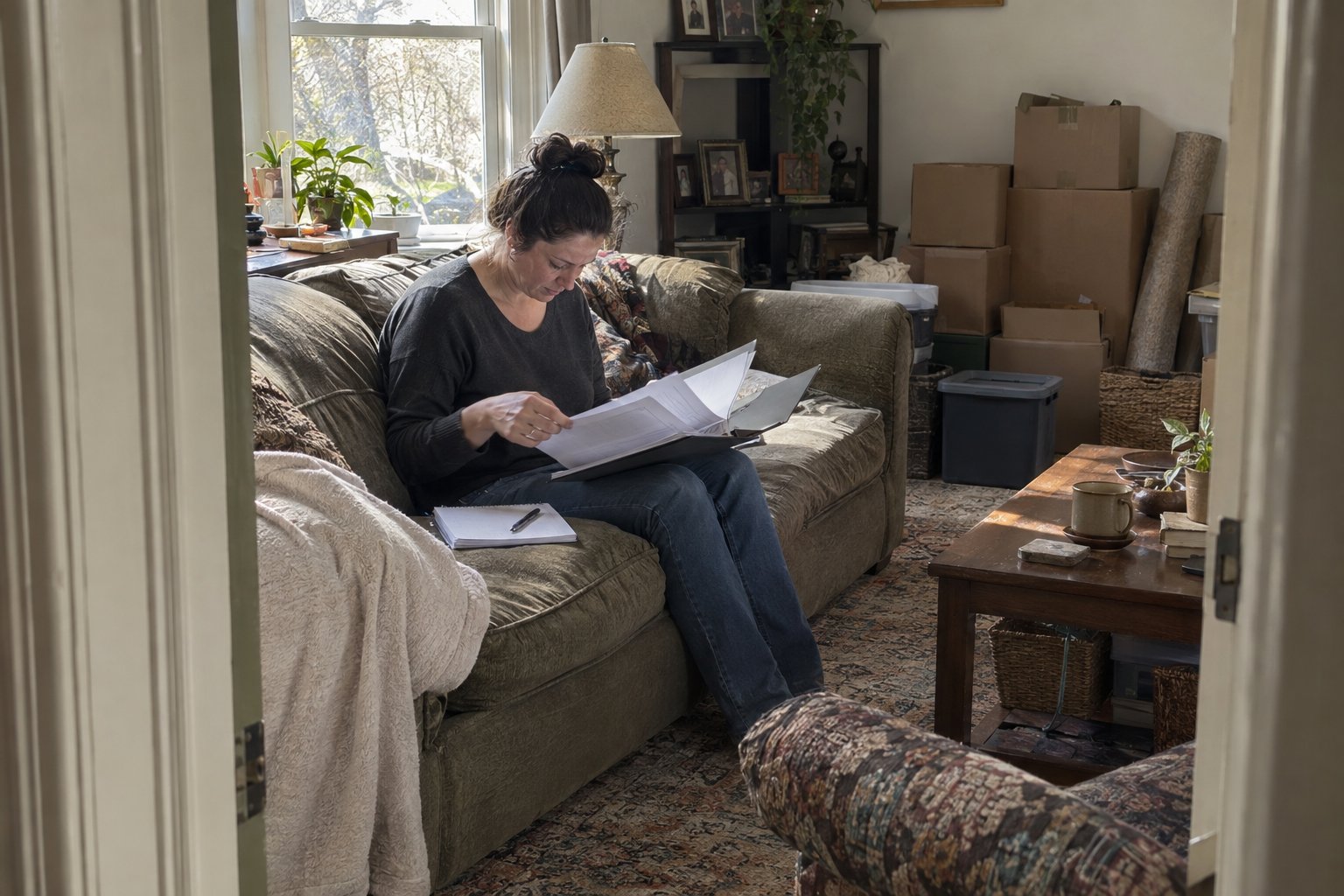
Inspect every antique closely a few days before the move, not the morning of, so you have time to address anything you find. Check for existing cracks, loose veneer, wobbly legs, and hardware that is already working its way loose, and photograph the piece from several angles as a record of its condition.
Once you know what you are working with, prepare the piece itself:
Document it and stabilize it rather than trying to repair it yourself. A loose joint can often be temporarily supported with painter's tape or a soft wrap so it does not worsen in transit, but structural repair is best left until after the move when you can address it properly.
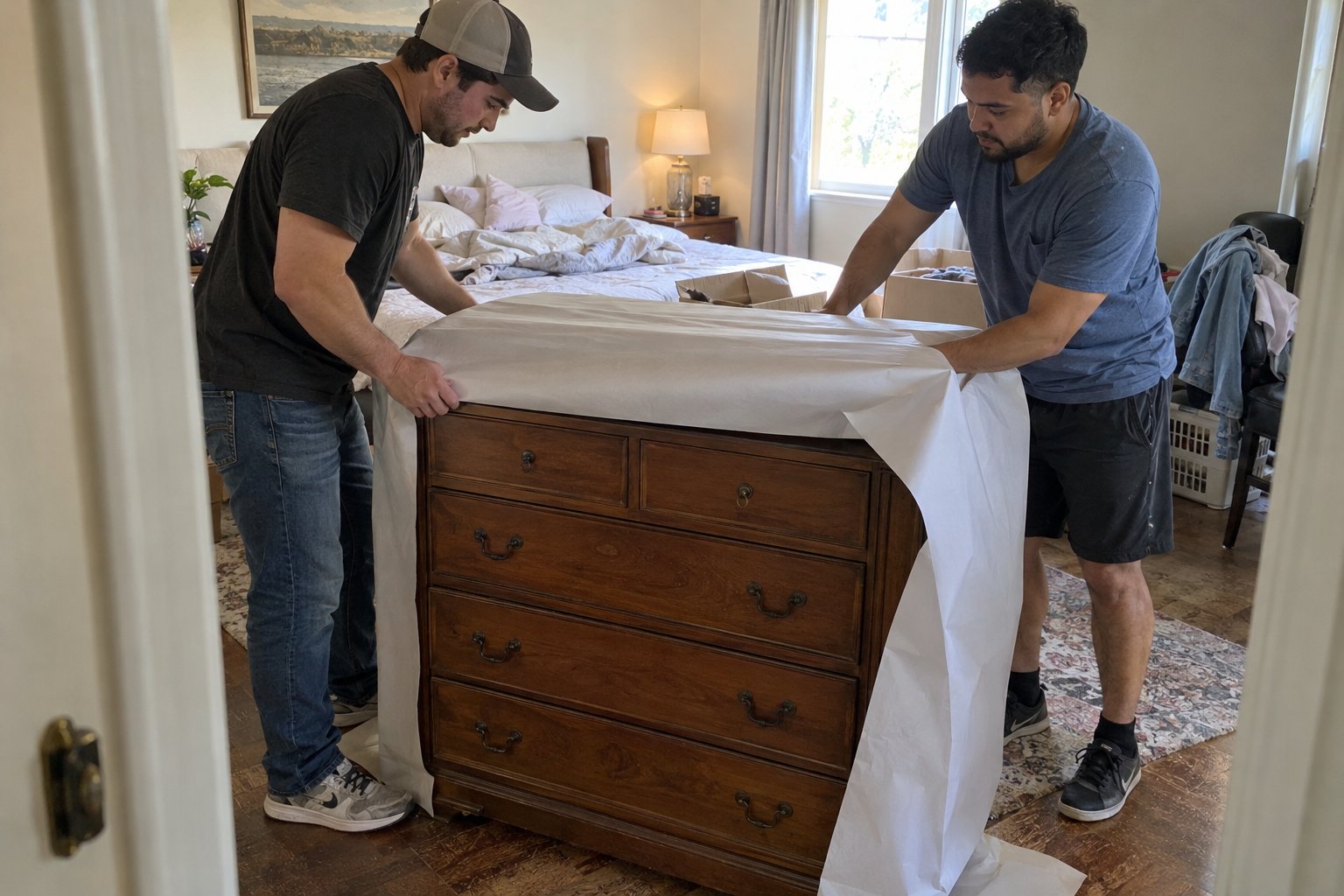
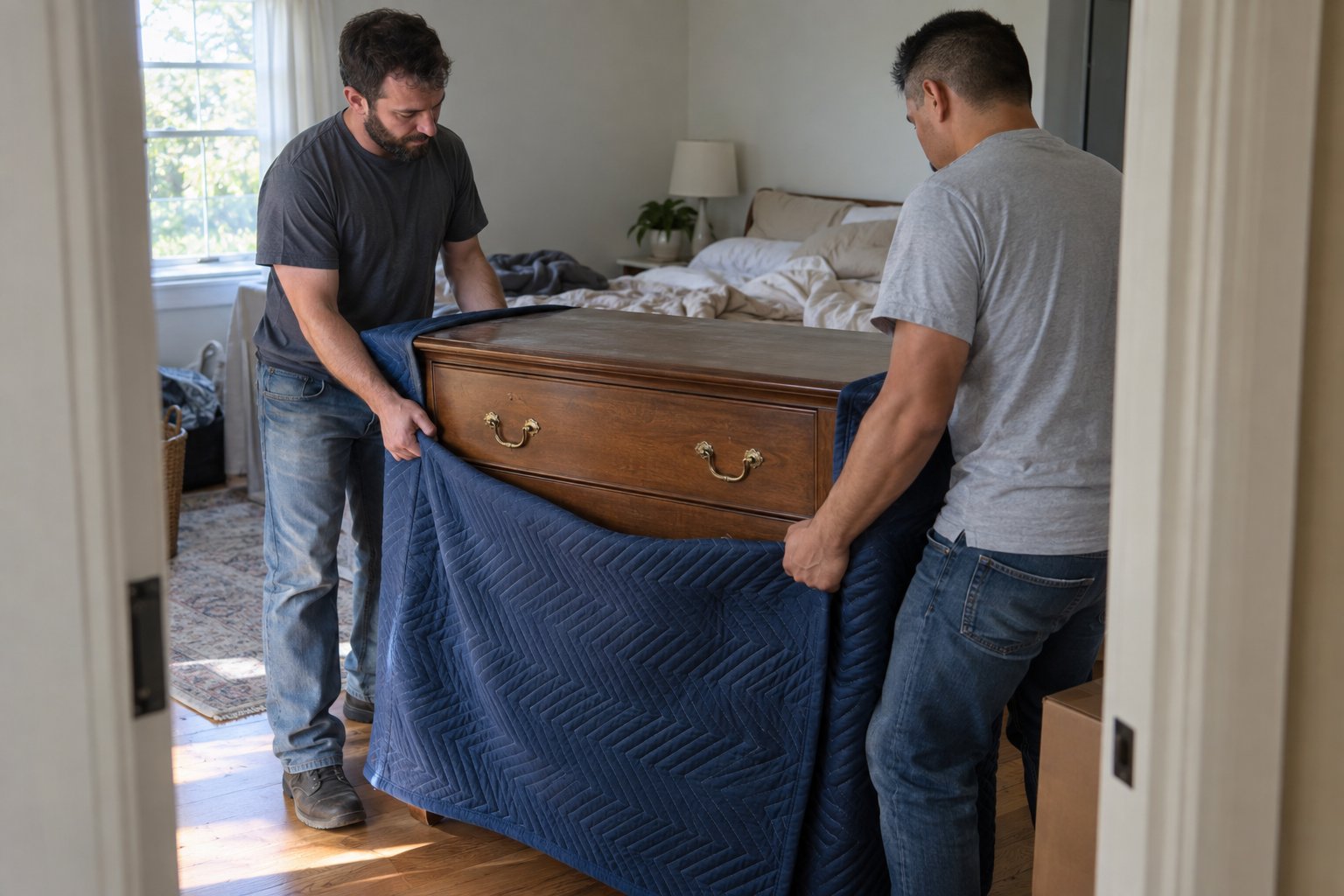
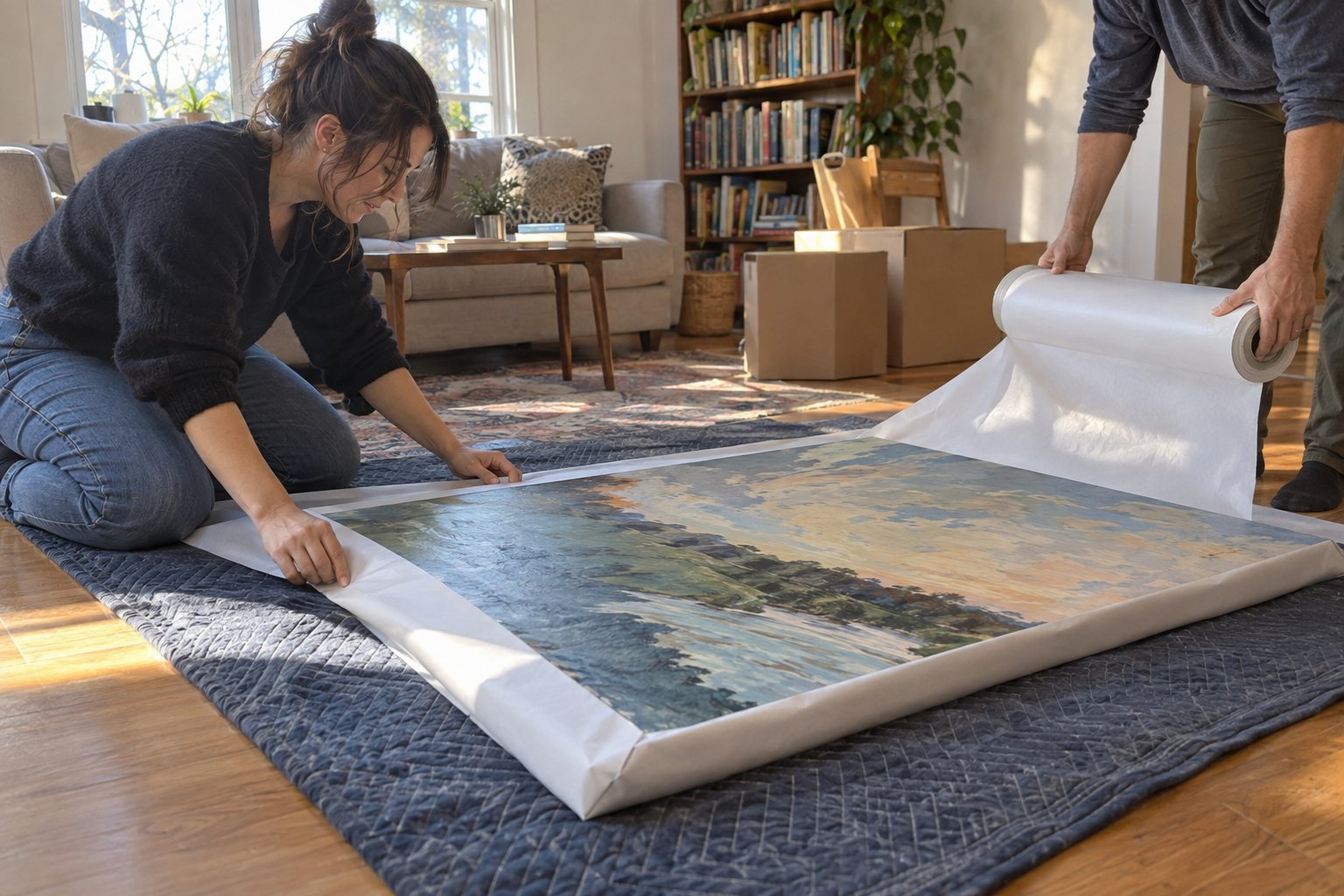
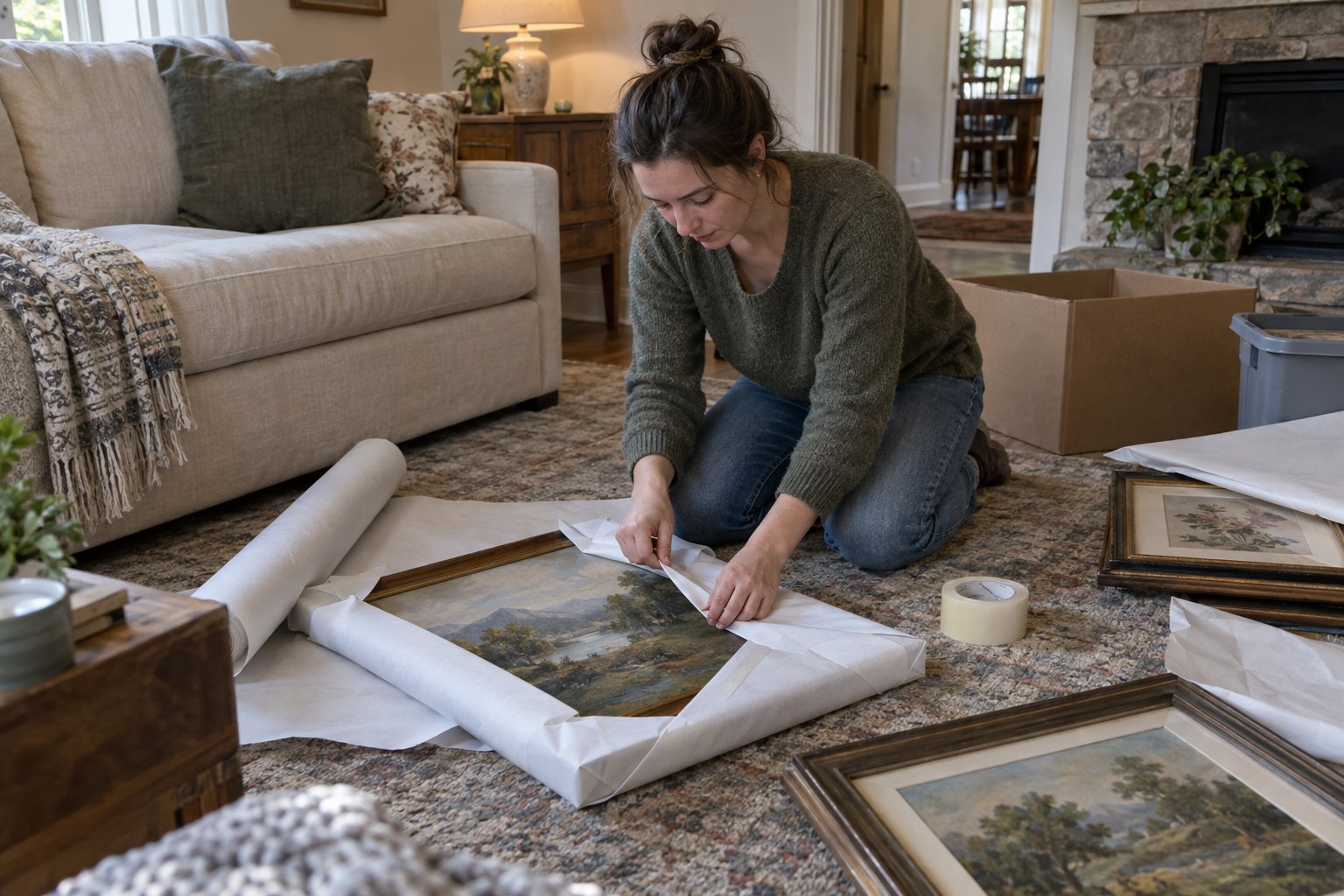
Antiques need softer, more layered protection than standard moving blankets alone. The finish is usually more delicate than the wood underneath, so the first layer touching the surface should never be plastic wrap directly against paint, lacquer, or veneer.
A reliable layering approach looks like this:
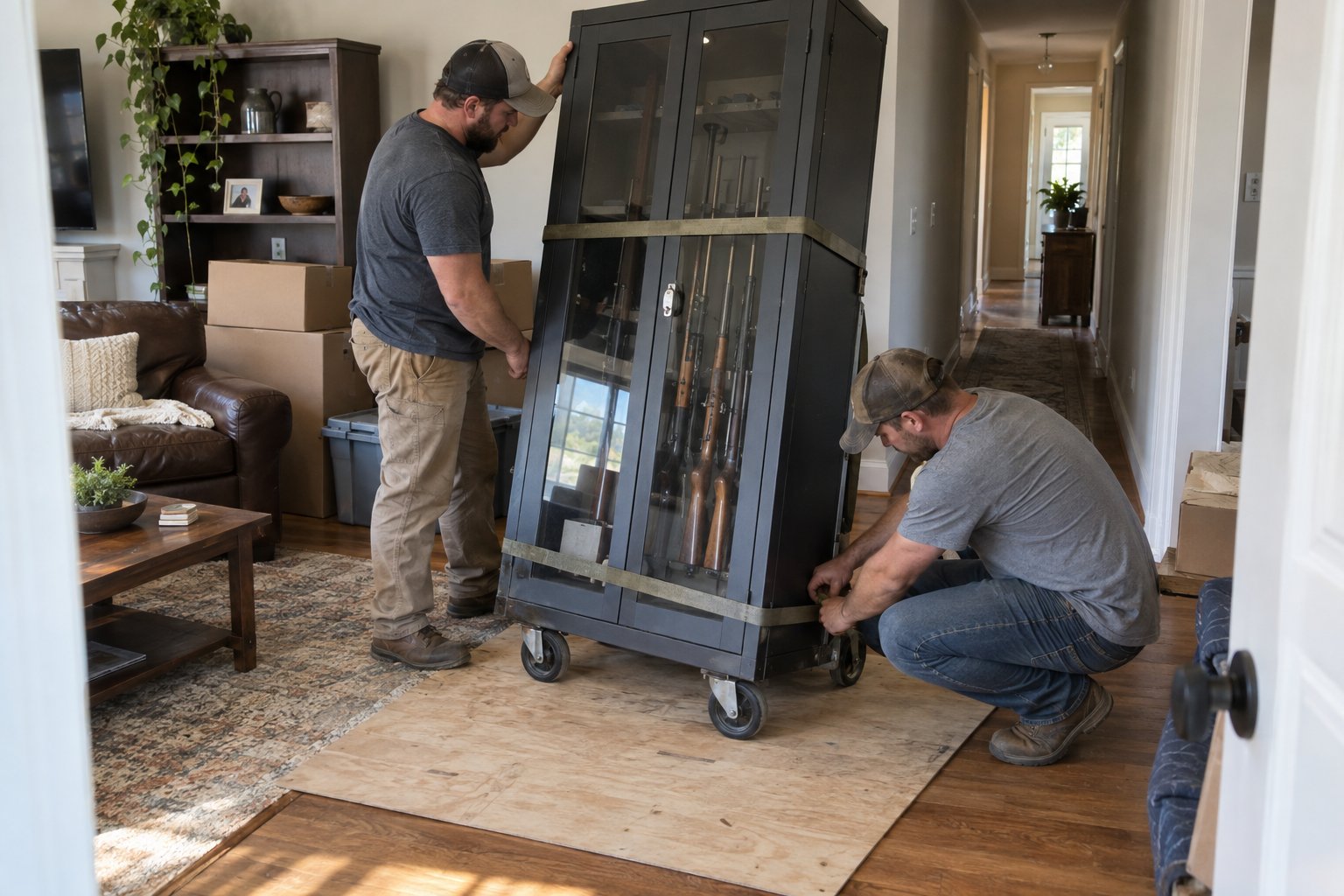
For carrying and loading, always lift from the base or frame, never from arms, handles, or tabletops, and keep the piece upright throughout. Tipping a cabinet or chest on its back can shift drawers and internal joinery in ways that are hard to notice until later.
Antiques should go in last and come off first, positioned where they cannot shift, tip, or bear weight from other items during transport. Place them against a flat wall of the truck, standing upright in their natural orientation, and secure them with straps rather than letting other boxes lean against them for support.
Leave a small buffer of soft materials, like blankets or pillows, between an antique and anything stacked nearby. Never load boxes or furniture directly on top of an antique piece, even briefly, since even light pressure concentrated on an old joint can cause it to fail. If the truck will sit in extreme heat or cold for any length of time, antiques are also more sensitive to that exposure than modern furniture, so minimizing time in transit matters more for these pieces.
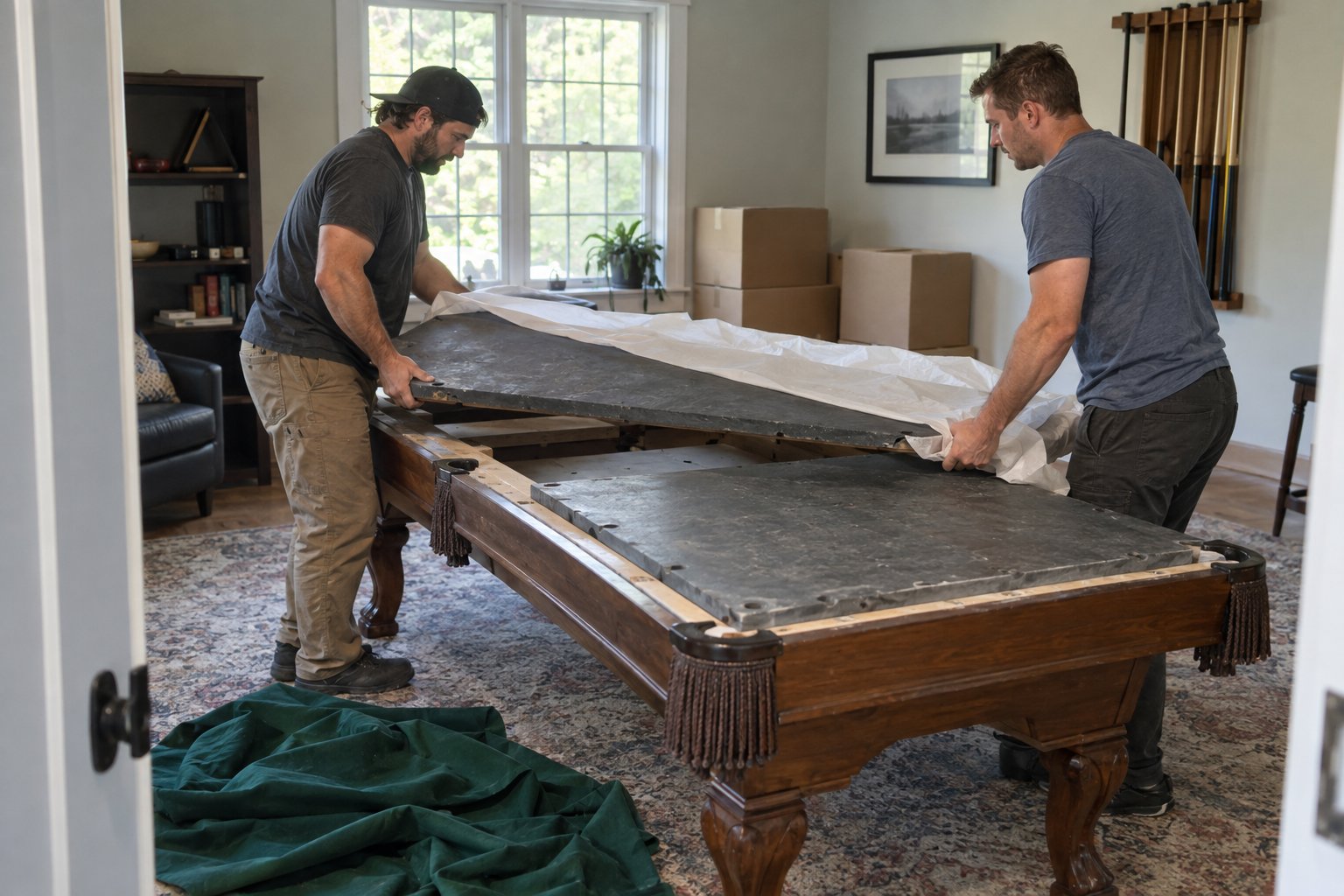
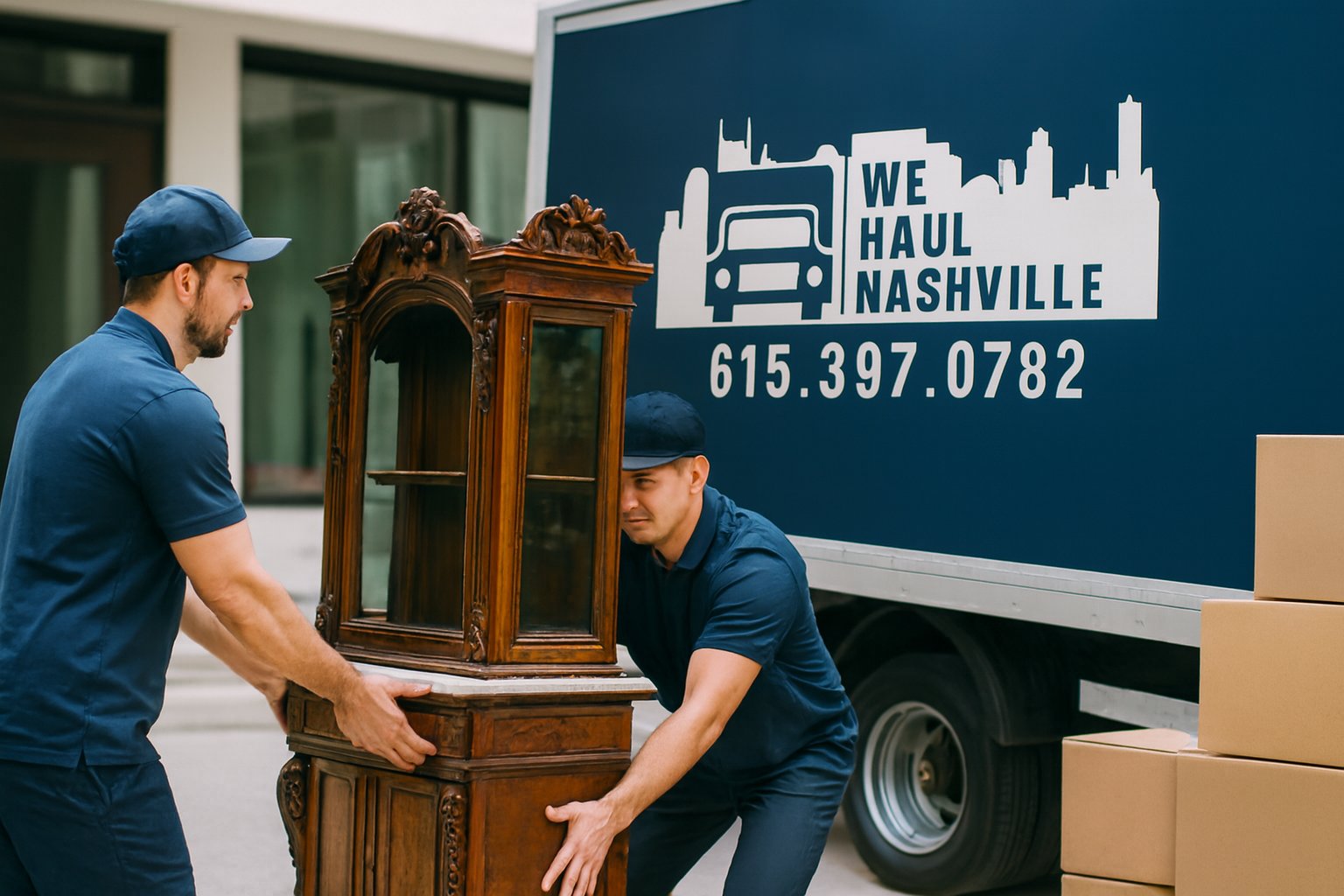
Bring in specialty movers when a piece is large, structurally unstable, extremely valuable, or made of materials like marble, glass, or inlay that cannot tolerate amateur handling. A grandfather clock, a marble-top dresser, or a china cabinet with original glass are all examples where the cost of a mistake outweighs the cost of professional help.
Experienced crews carry equipment most households do not, like piano boards, furniture dollies rated for uneven weight distribution, and crating materials for pieces that need full enclosure. If you are already comparing full-service movers against a self-move for the rest of your household, treat antiques as a separate decision. It is entirely reasonable to move everyday furniture yourself while hiring help specifically for the pieces that cannot be replaced. We Haul Nashville's piano and specialty item moving service is built for exactly this kind of fragile, high-value furniture, and covers Nashville and nearby communities including Franklin and Brentwood.
If your move also involves a long-distance leg, antiques face more handling transfers and more time in transit, which raises the stakes further. In that case it is worth reading through general guidance on moving across the country alongside your plan for the antique pieces specifically, since the two sets of risks compound.
Unwrap antiques first, before anything else gets unloaded, so they are not sitting wrapped in a hot or humid garage longer than necessary. Let the piece adjust to the new room's temperature and humidity for a few hours before reattaching hardware or loading drawers back in, since wood that has traveled through temperature swings needs time to settle.
Reinspect each piece against the photos you took before the move. Catching a new scratch or a loosened joint immediately makes it far easier to address, whether that means a quick tightening or a call to a restoration specialist, than discovering it weeks later and wondering when it happened.
If you are ready to get pricing on moving help for antiques alongside the rest of your household, get a moving quote from We Haul Nashville and mention any specialty pieces up front so the crew can plan for them.
Plastic wrap should never touch the wood or finish directly, since trapped moisture underneath can cloud a finish or lift veneer. Use a cotton sheet or packing paper as the first layer, then a moving blanket, and reserve plastic wrap for securing the outer layer or protecting non-wood parts.
Remove the mirror from the dresser before the move whenever the mounting allows it, and wrap it separately with cardboard corner protectors. Moving a dresser and mirror as one unit puts uneven stress on the mounting hardware and makes the whole piece harder to carry safely through doorways.
It can be moved, but a piece with existing structural weakness needs extra stabilization, such as temporary padding or soft strapping around the affected area, and should be lifted and carried more slowly than a sound piece. If the damage is significant, it is worth getting professional help rather than risking the joint failing completely in transit.
Antiques handle stable conditions far better than sudden swings in temperature or humidity, so minimizing time in a hot truck or unconditioned storage unit matters more for these pieces than for modern furniture. If a move involves any delay between pickup and delivery, ask about climate-controlled options for valuable wood pieces.
Pricing for specialty antique handling typically runs higher than standard furniture moving because it involves extra materials, slower handling, and sometimes custom crating, though the exact amount depends on the piece's size, fragility, and how far it needs to travel. Getting a quote that specifically accounts for the antique, rather than a generic household estimate, gives you a more accurate number.
Whether you’re moving a home, apartment, office, or just a few heavy items, We Haul Nashville is ready to help make the process easier.