Written by:
Pierce J.
Published:
June 26, 2026
Moving in the rain in Nashville? Learn how to protect your belongings, floors, and furniture during a wet move with this practical step-by-step guide.
Knowing how to move in the rain is one of those practical skills nobody thinks about until they wake up on moving day to a gray sky and the sound of water on the roof. Rain is one of the most common — and most disruptive — variables a move can face, and Nashville's weather makes it a genuine planning consideration no matter what season you are moving. A shower that lasts an hour can soak cardboard boxes into uselessness, warp wood furniture, destroy electronics, and turn hardwood floors into a slip hazard. A heavy downpour on moving day, handled without a plan, can turn a well-organized relocation into an expensive mess.
This guide walks you through everything you need to know about moving in the rain: how to prepare before the weather arrives, which materials and techniques protect your belongings in wet conditions, how to protect your floors and walls inside both homes, and what to do if the rain is severe enough that you need to reconsider your timeline. Whether you are dealing with a light drizzle or a full Tennessee storm, these steps will keep your move on track and your belongings dry.
The best protection against a wet move is preparation that happens well before the first raindrop falls. Most of the damage rain causes during a move is preventable — it just requires thinking through the process a day or two early rather than improvising in the moment.
Start monitoring the forecast three to four days out from your move date. Reliable forecasting at that range is not perfect, but it gives you enough lead time to gather supplies and make decisions. If rain looks likely, decide in advance whether you plan to move through it with proper protection in place, or whether you have enough scheduling flexibility to shift your move date by a day. If you are working with a moving company, contact them early — crews have experience moving in rain and can often advise on timing adjustments or confirm what protective materials they bring.
Do not wait until the morning of your move to make these decisions. Last-minute changes are more stressful and more expensive than adjustments made a few days in advance.
A rainy move requires a specific set of materials beyond your standard packing supplies. Gather the following before moving day:
Water damage during a move typically falls into a few categories: soggy cardboard boxes that collapse or allow moisture to reach contents, soaked upholstery and mattresses, damaged electronics and documents, and wood furniture that absorbs moisture and warps. Each category requires a slightly different approach.
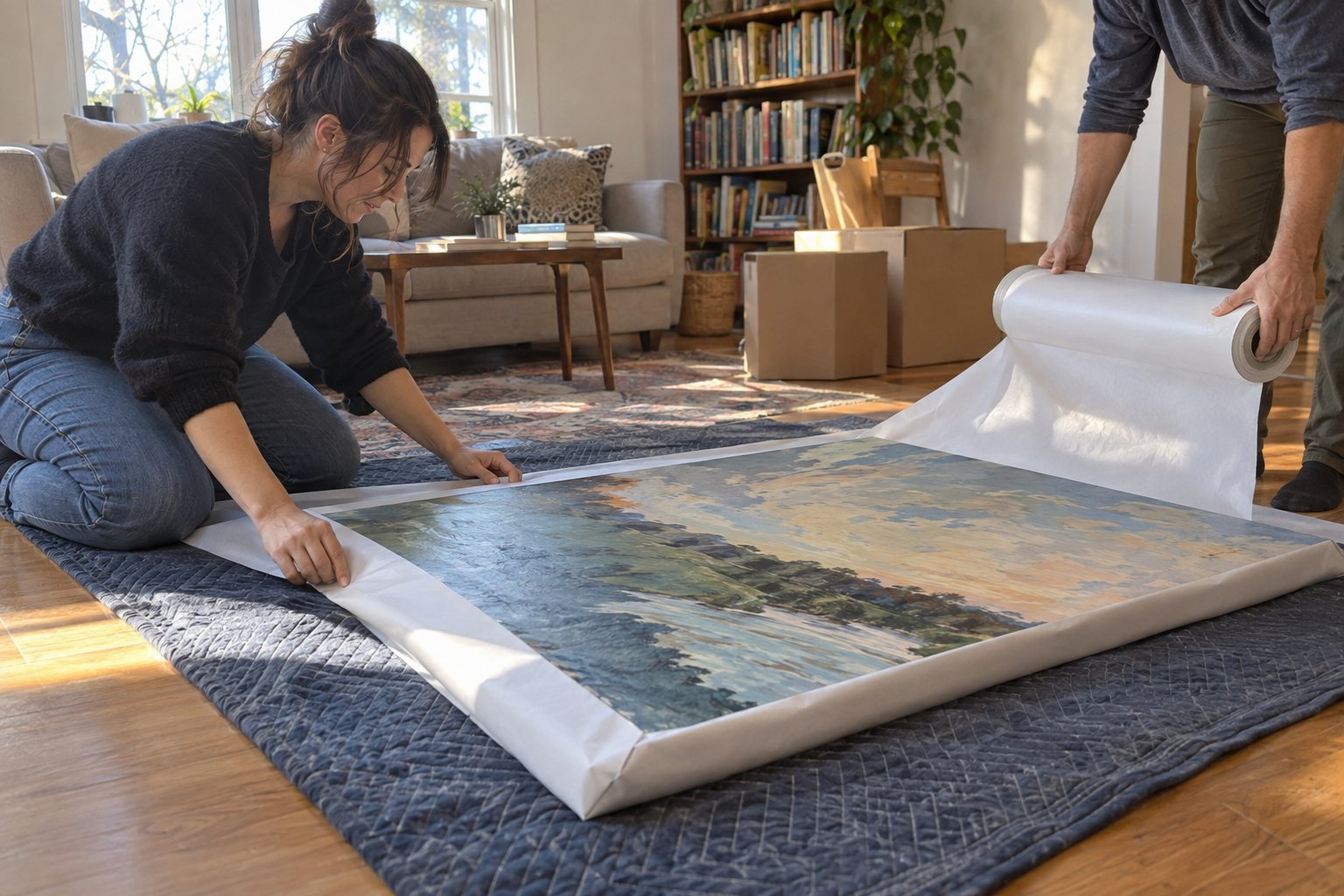
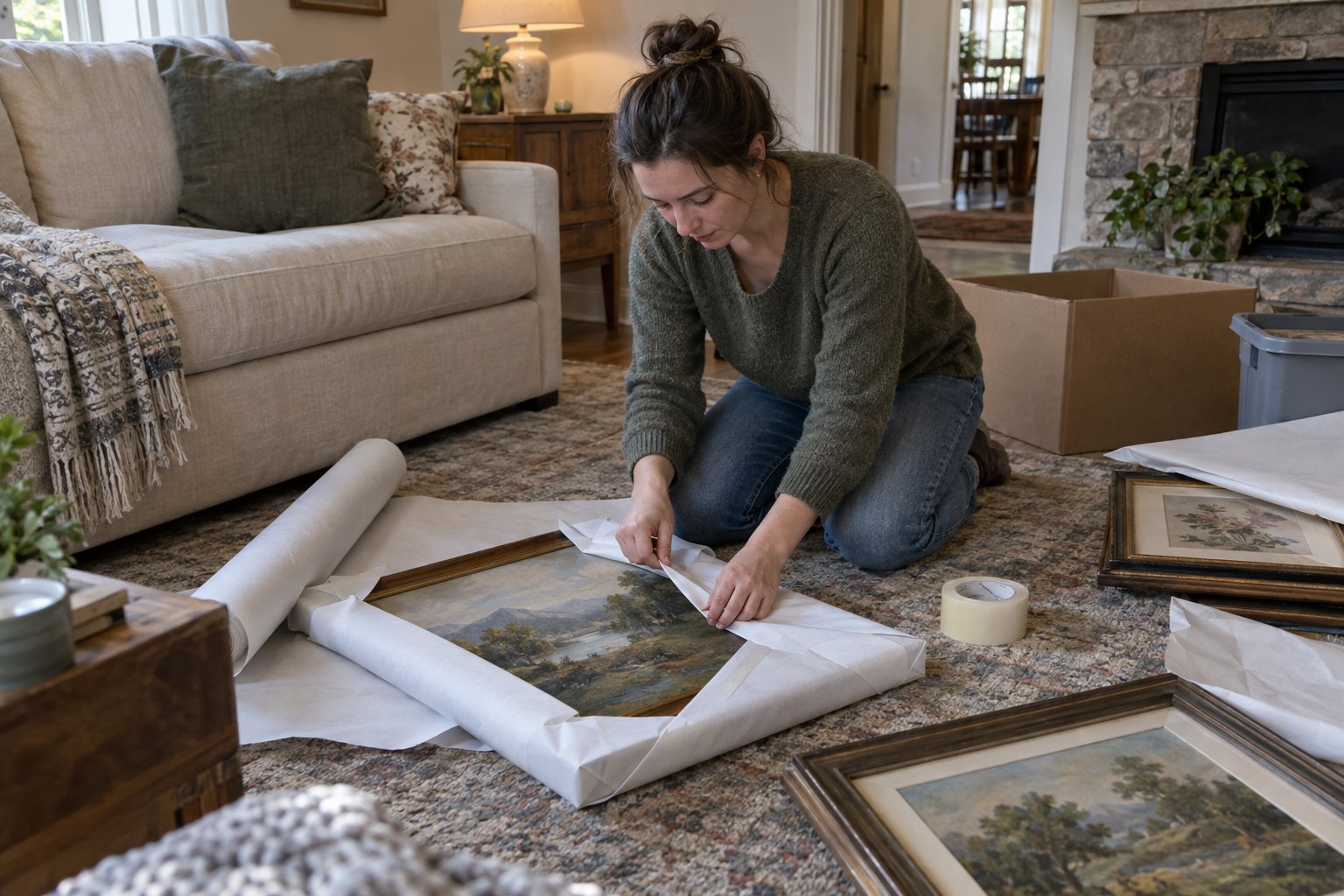
Cardboard is the most vulnerable material in any rainy move. Even moderate rain can weaken a box's structural integrity to the point where it collapses under its own weight, spilling contents or causing a dropped load. The fix is simple: wrap every loaded box in a contractor bag or a sheet of plastic stretch wrap before it leaves the building. This adds only seconds per box and completely eliminates the moisture risk. Pay particular attention to boxes containing books, documents, artwork, and electronics — these are the contents most damaged by even minor water exposure.
Sofas, upholstered chairs, and mattresses absorb water quickly and dry slowly. A piece that gets soaked during a move can take days to fully dry, and if it is packed into a humid moving truck or placed in a new home before drying, mold can begin forming within 24 to 48 hours. Cover upholstered pieces with moving blankets first, then wrap tightly with plastic stretch wrap. For mattresses, use a purpose-made waterproof mattress bag — they are designed for exactly this purpose and cost only a few dollars at most moving supply stores.
Electronics should be moved in their original manufacturer boxes where possible, since those are typically designed to be moisture-resistant and structurally protective. If original boxes are not available, pack electronics in double-layered cardboard boxes lined with plastic bags. Documents, photos, and irreplaceable paper items should be packed in sealed plastic bins rather than cardboard boxes on any day when rain is possible. For particularly valuable items — jewelry, small electronics, important documents — consider transporting them in your personal vehicle rather than the moving truck to give them the most controlled environment possible.
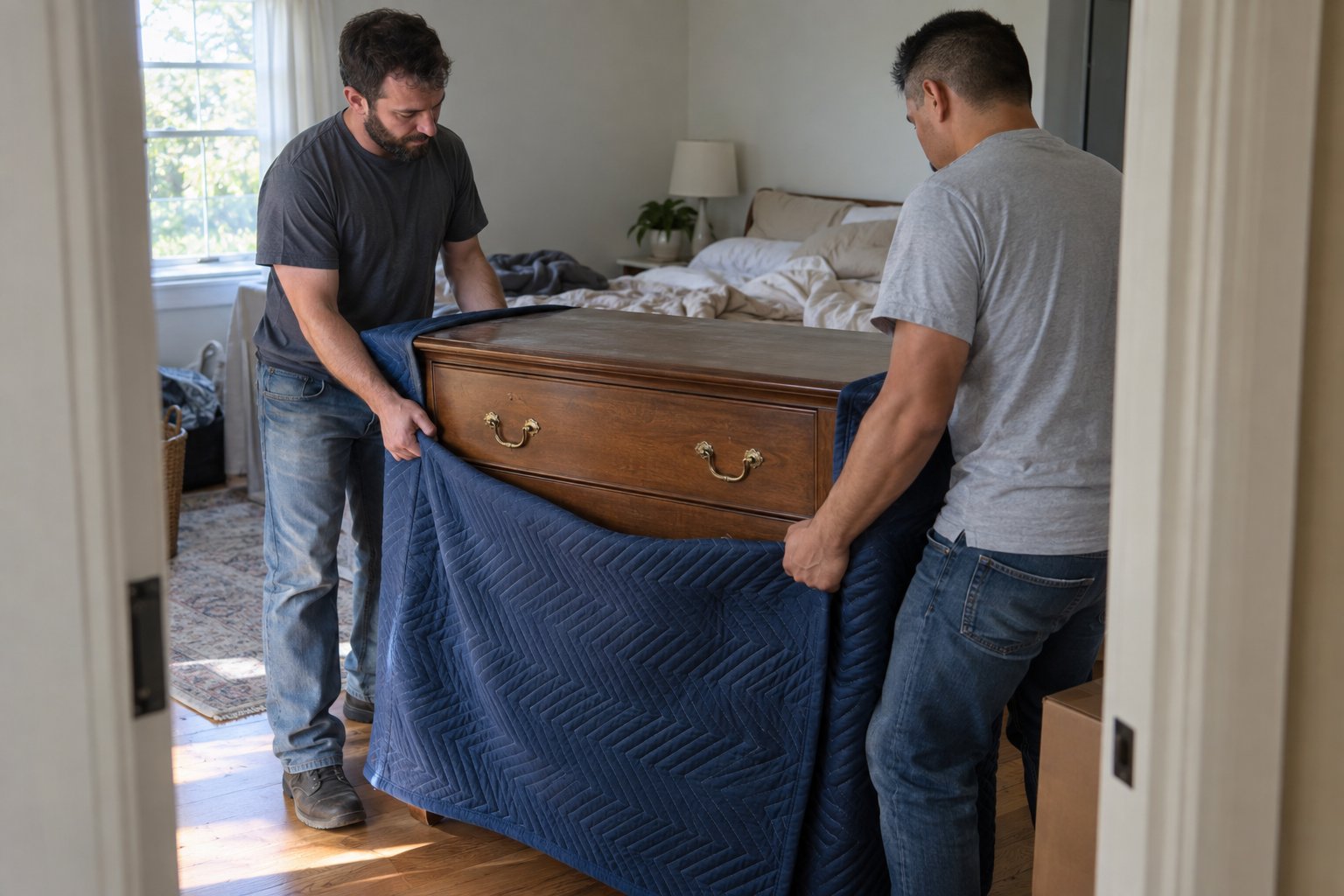
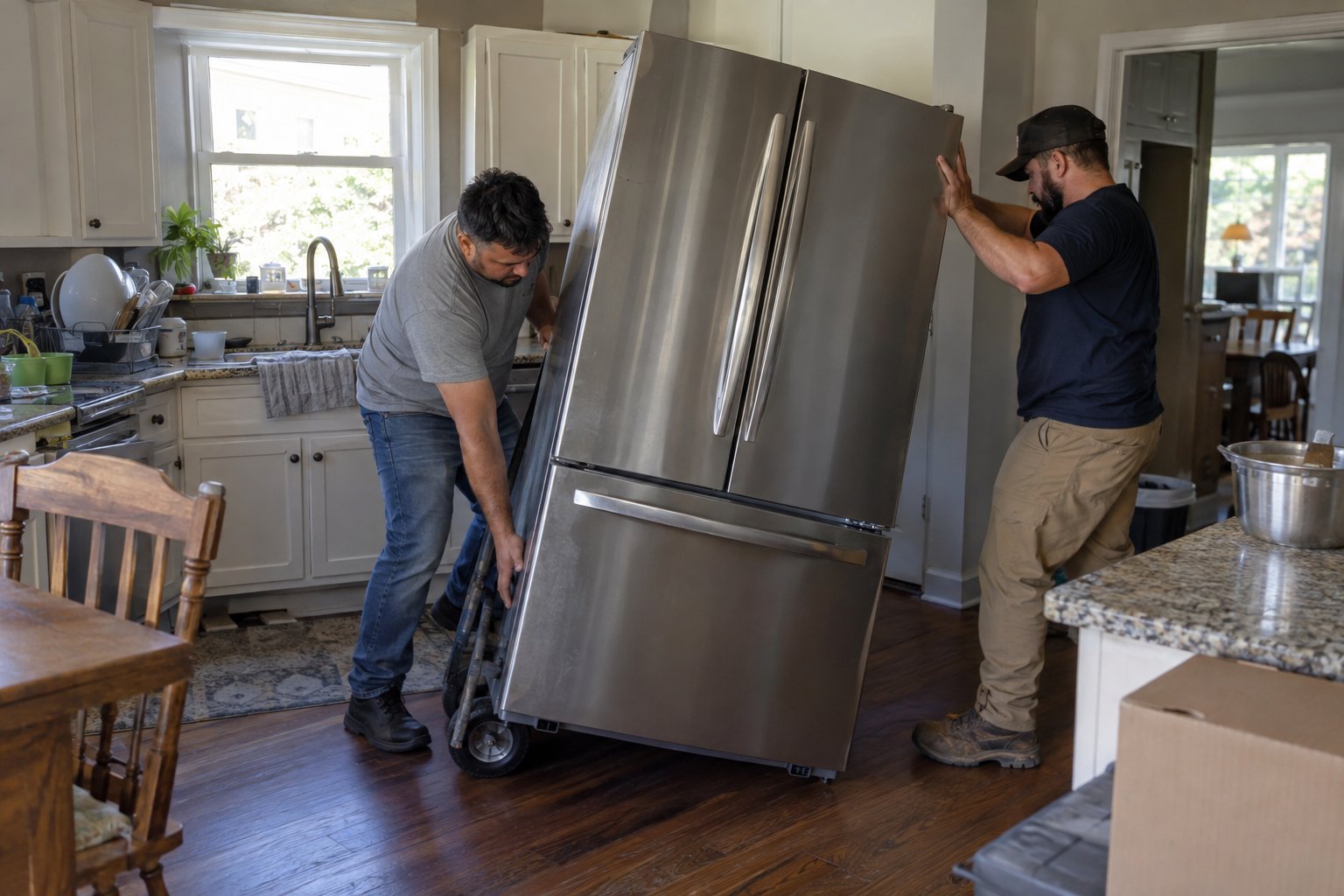
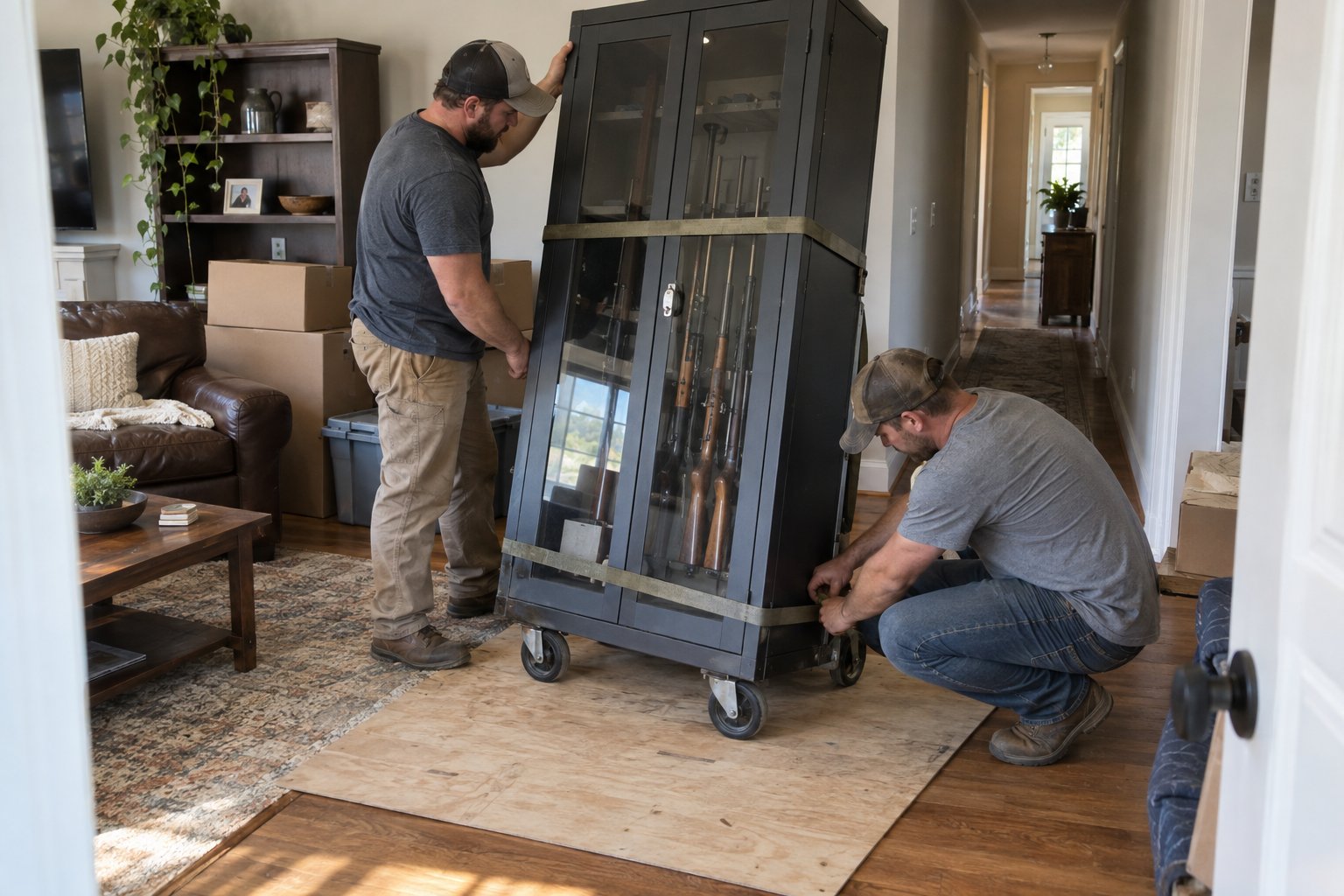
Solid wood furniture is relatively tolerant of brief moisture exposure, but extended dampness can cause warping, swelling at joints, and finish damage. Moving blankets provide meaningful protection: wrap wood pieces fully in blankets and then add a layer of plastic stretch wrap to keep the blankets dry. Avoid leaving wood furniture sitting outdoors in rain for any extended period, even if covered. Move wood pieces in and out of the truck as quickly as possible, and dry off any surfaces that did get wet before loading into the truck or placing in the new home.
One of the most significant sources of damage during a rainy move is not the rain itself — it is the wet shoes, wet equipment, and wet hands that track water into both the home you are leaving and the home you are entering. Protecting the interior of both properties is just as important as protecting your belongings outside.
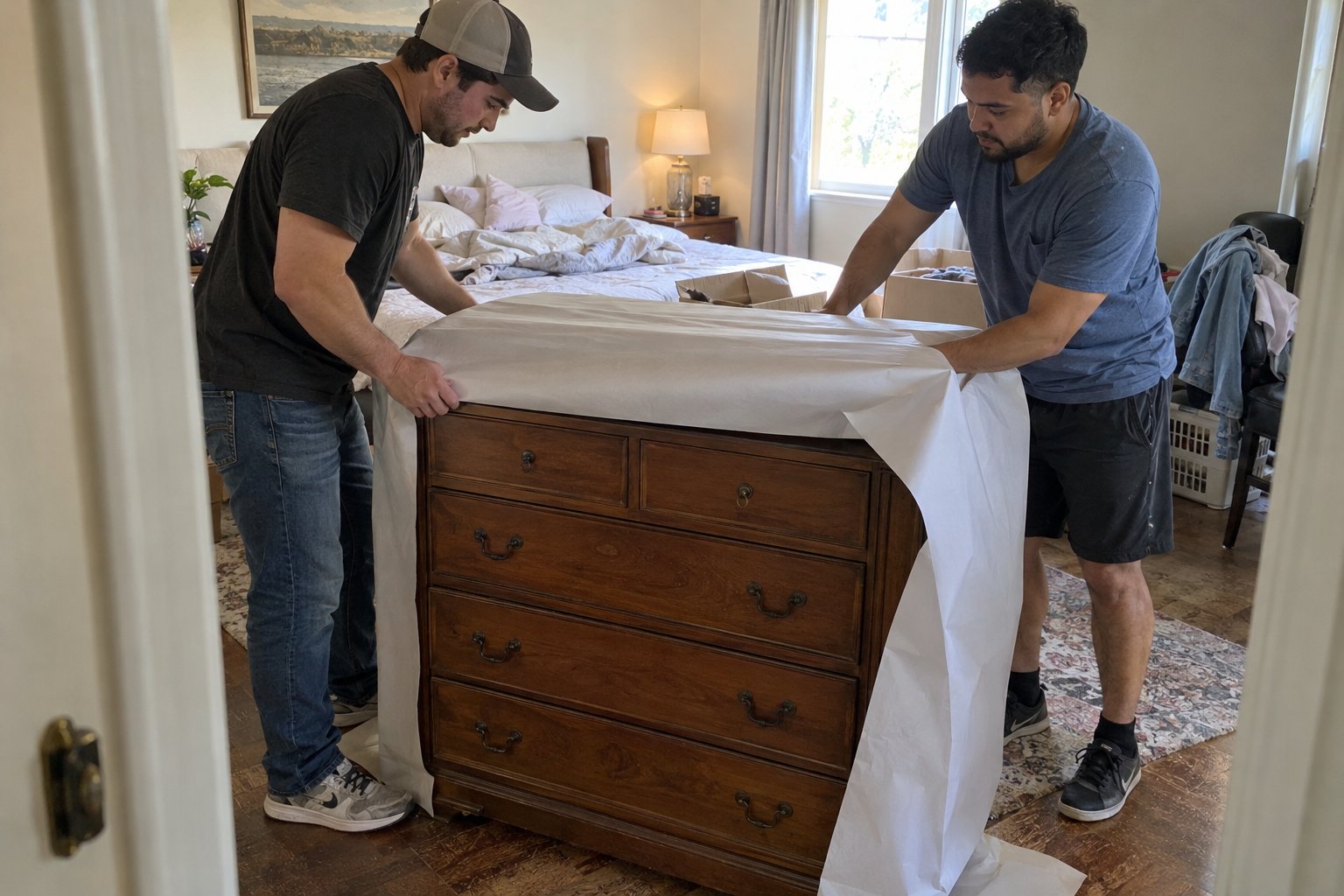
Before any furniture or boxes are moved through a doorway, lay down floor protection on the entire route from the entrance to wherever items are being staged or placed. Rosin paper and ram board are the professional standards: they are thick enough to absorb water and muddy footprints, protect the surface underneath, and can be taped at the seams to prevent them from shifting. At minimum, cover the entryway, any hallways items will be carried through, and any rooms where boxes or furniture will be set down.
Hardwood floors are particularly vulnerable. A single wet furniture dolly wheel dragged across an unprotected hardwood floor can leave a scratch that is expensive to refinish. Wet feet tracked repeatedly across hardwood can cause surface clouding in the finish. Take the five minutes to lay protection down — it is one of the most cost-effective things you can do on a rainy moving day.
Rain makes door frames and walls more vulnerable to impact damage because wet surfaces provide less friction, meaning furniture is more likely to slide unexpectedly. Pad door frames with moving blankets or foam padding before any large piece comes through, and make sure pathways are clear of obstacles that could cause a load to tip or swing. Use extra care on stairwells, where wet shoes on wet tile or hardwood can create a serious slip hazard for anyone carrying a heavy load.
Place a mat and a stack of dry towels at the entrance of both homes. Before anyone carries anything into the dry interior, wet items can be quickly wiped down and wet shoes replaced with clean footwear. This one habit prevents the slow accumulation of water throughout the home that is responsible for most interior damage during rainy moves.
The area between the building entrance and the truck is where most rain exposure happens. How you manage this transition zone determines how much moisture your belongings actually encounter.
Position the moving truck as close to the building entrance as the parking situation allows. Every extra foot of distance between the truck's rear door and the building is more distance that boxes and furniture spend exposed to falling rain. If a covered walkway, canopy, or garage is available at either property, use it as your staging area. Even a few seconds of reduced exposure per item adds up across a full truckload.
It may seem efficient to leave the truck's roll-up door open throughout loading, but an open truck quickly accumulates moisture in the cargo area — especially if rain is blowing horizontally. Keep the door closed between runs and open it only when you are actively loading or unloading. This keeps the interior of the truck, and everything already loaded, significantly drier.
Sequence your loading so that moisture-sensitive items — electronics, documents, books, mattresses — go in last during loading and come off the truck first at the destination. This minimizes the time these items spend in the truck's cargo environment and gives you the most direct path to getting them inside and dry.
Most rainy moves can proceed safely with proper preparation. But there are situations where the right decision is to pause or reschedule, and it is worth knowing what those look like in advance so the decision is made deliberately rather than in a moment of frustration.
Consider pausing if lightning is present in the area. Carrying metal furniture, working around metal truck ramps, and being outdoors in general during an active lightning storm is a genuine safety risk that no amount of preparation addresses. Wait for lightning to pass before resuming.
Consider rescheduling if the rain is heavy enough that visibility and wet road conditions create serious driving hazards. A fully loaded moving truck handles differently than a passenger vehicle in heavy rain — stopping distances are longer, and the risk of a slide on a slick road is meaningful. If conditions are severe, a one-day delay is far less costly than an accident.
Consider rescheduling if your building has an elevator that is being taken out of service during rain or if flooding is affecting your specific neighborhood or route. Nashville is no stranger to flash flooding, and roads that are passable in the morning can be impassable by afternoon during a serious storm event. Monitor local conditions and be willing to make the pragmatic call.
Ultimately, moving in the rain is manageable — it just requires more preparation and more deliberate execution than a dry moving day. With the right materials, the right habits at the doors, and a clear plan for protecting both your belongings and the homes you are moving between, a wet move can proceed efficiently and without damage. The people who have the worst experiences moving in the rain are almost always those who did not prepare for the possibility until they were already standing in it.
Yes, moving in the rain is generally safe and manageable as long as you take proper precautions. Wrap cardboard boxes in plastic contractor bags or stretch wrap before they leave the building. Cover upholstered furniture and mattresses with moving blankets and a layer of plastic stretch wrap. Lay down floor protection inside both homes to prevent water and mud from being tracked across floors. The most important safety consideration is avoiding outdoor work during active lightning — pause the move and wait inside until the lightning has passed before resuming.
The simplest method is to slide each packed cardboard box into a large contractor garbage bag and tie or tape the bag closed before carrying the box outside. Alternatively, wrap each box tightly with plastic stretch wrap, which clings to itself and creates a reasonably waterproof barrier. For items that are particularly sensitive to moisture — books, documents, photos, electronics — consider packing them in sealed plastic storage bins rather than cardboard boxes any time rain is possible on your moving day.
Lay down rosin paper, ram board, or heavy-duty floor runners along the entire path from the entrance to wherever furniture and boxes are being staged before the move begins. These materials absorb water and mud tracked in by wet shoes and equipment, protecting the hardwood surface underneath. Keep a mat and dry towels at each doorway so items can be quickly wiped before entering. Avoid rolling furniture dollies across unprotected hardwood in wet conditions — even a brief roll with a wet or gritty wheel can leave a scratch that requires professional refinishing.
In most cases, a light to moderate rain is not a reason to reschedule if you have the right materials on hand. The move may take a bit longer and require more attention at doorways, but it can proceed without damage. Rescheduling becomes worth considering if there is active lightning in the area, if heavy rain is creating dangerous road conditions for a loaded moving truck, or if serious flooding is affecting your neighborhood or route. Nashville is prone to flash flooding during significant rain events, so check local conditions carefully if the forecast calls for heavy rain rather than just a steady shower.
The key is to dry wet items as quickly as possible before they are enclosed in a truck, storage unit, or new home. If a piece of upholstered furniture or a mattress gets wet during a move, remove any wet coverings, blot as much surface moisture as possible with dry towels, and allow the piece to air out before placing it in an enclosed space. In humid conditions, a fan directed at the wet surface accelerates drying significantly. For mattresses specifically, a waterproof mattress bag prevents this problem entirely and is worth the few dollars it costs at any moving supply store.
Whether you’re moving a home, apartment, office, or just a few heavy items, We Haul Nashville is ready to help make the process easier.