Written by:
Pierce J.
Published:
August 28, 2026
Learn how to pack collectibles for a move, from vinyl records to trading cards and figurines, so nothing warps, chips, or gets crushed in transit.
Packing collectibles for a move comes down to three things: rigid outer protection, zero empty space inside every box, and a separate inventory so nothing small disappears into a pile of "misc." Vinyl records, trading cards, comic books, model kits, figurines, and other collections are not shaped like normal household goods, so normal packing habits (loose paper, oversized boxes, stacking heavy on light) are exactly what damages them. A collection that survived years on a shelf can get crushed in a single afternoon of careless loading.
Most collectors do not lose sleep over the couch or the dinner plates. They lose sleep over the sealed first-pressing record, the graded card, the hand-painted figure that took months to find. This guide walks through how to pack these items by category so they arrive in the same condition they left in.
Collectibles need different handling because their value depends on condition, not just function. A chipped mug is still a mug, but a warped record, a bent card corner, or a scuffed figurine can lose a meaningful share of its worth instantly. The packing goal shifts from "get it there in one piece" to "get it there in the exact condition it left in."
That means rigid containment matters more than cushioning volume, and box size matters more than box strength. A giant box with a little padding still lets contents shift and collide. A snug box sized to the item, with the right stiffener against the sides, keeps everything locked in place for the whole ride.
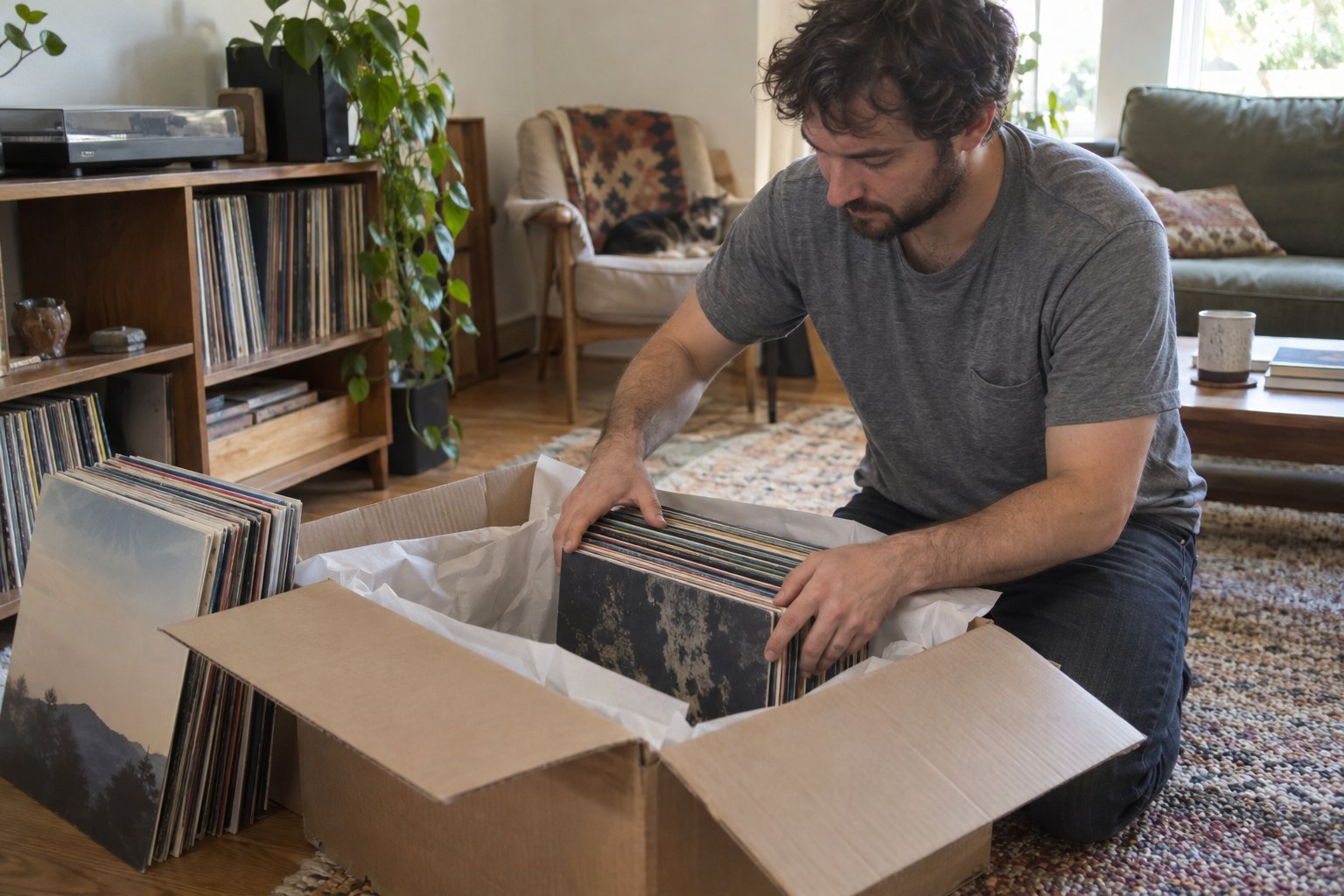
Pack records vertically, like books on a shelf, never flat and never stacked horizontally. Use sturdy record-specific or document boxes sized close to the record dimensions, and fill any remaining gap so the records cannot lean or slide during transport.
Keep boxes at a weight you can comfortably lift with two hands, since a fully packed case of records gets heavy fast and a dropped box is often a ruined collection. Avoid attics, car trunks, and anywhere temperatures swing widely, since heat is what actually warps vinyl, not rough handling alone. If you are moving in warmer months, keep record boxes in the air-conditioned cab area rather than a hot truck bed whenever the move allows it.
Small, high-value items need individual protection first and a snug outer box second. Cards go in penny sleeves and rigid card savers or graded slabs stay in their cases; comics go in bags and boards inside a short box that keeps them from bowing; loose figurines get wrapped individually and separated so they cannot knock against each other.
Once each item is individually protected, the packing sequence is the same across categories:
Resist the urge to combine several collectible types into one big "collection box." Mixed weights inside a single container is one of the most common causes of crushed corners and broken glass on figurines during a move.
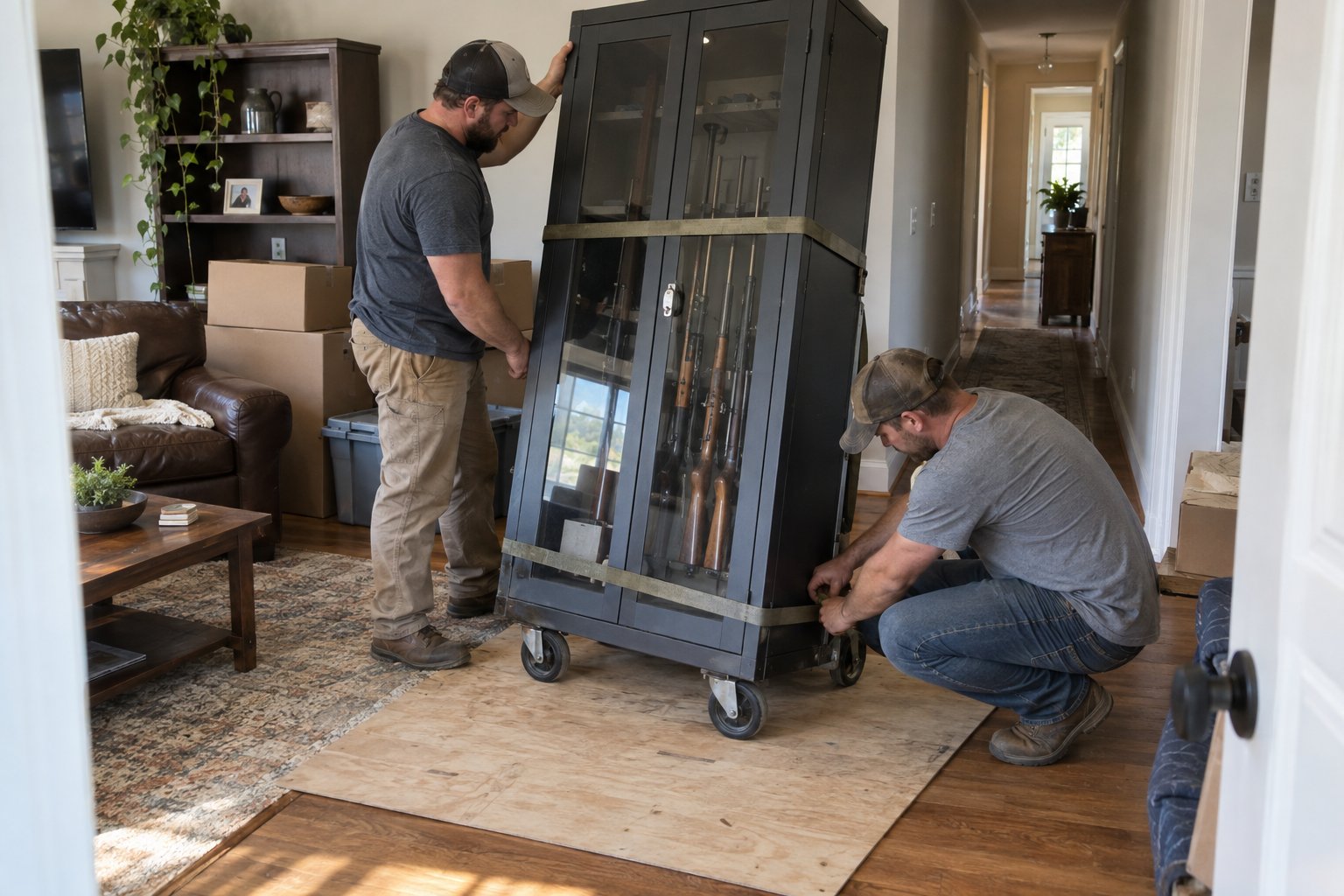
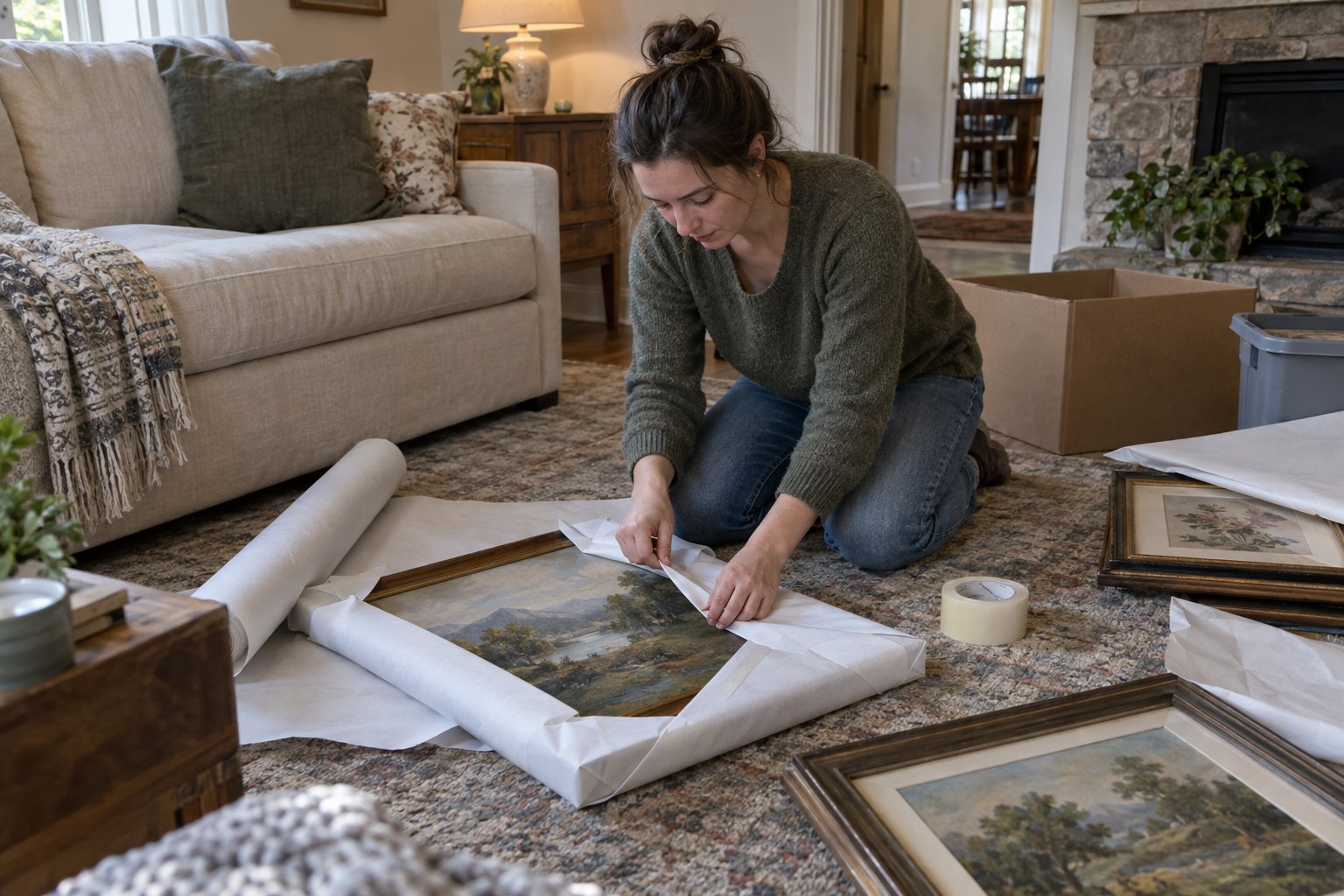
Small, easily boxed collections like cards or paperbacks travel fine with the rest of your household goods once they are packed correctly. Larger or higher-value collections, especially anything framed, glass-cased, or individually worth hundreds of dollars, are worth keeping with you personally or flagging clearly for the crew so they get placed last on the truck and unloaded first.
If your collection includes anything irreplaceable, tell your moving company ahead of time. A crew that knows a box holds a signed first edition or a graded card set will handle it differently than a box marked "books." Movers who specialize in specialty item moving are used to this kind of cargo and can advise on which pieces are safe to load with the general shipment and which should ride separately.
Keep track of a large collection with a written or photographed inventory made before you seal a single box. List what is in each box, number the boxes, and take a quick photo of anything especially valuable before it goes into packing paper. This is the step collectors skip most often, and it is the one that saves the most stress on the other end.
An inventory also protects you if something does go wrong. Knowing exactly what was packed, and having a photo showing its condition beforehand, makes any damage claim with your moving company far easier to resolve than trying to remember what "box 14" was supposed to contain.
A collection that takes weeks to build deserves more than an afternoon of last-minute boxing. Start packing it early, separate from the general household timeline, so you are not rushing fragile items the night before the truck arrives. Pair this with a broader plan for the rest of the house, since a smooth moving day checklist keeps the crew focused on the bulk of the home while you handle your collection at your own pace.
If you are relocating a larger distance, the extra time in transit raises the stakes for anything temperature or shock sensitive, so it is worth reviewing how your overall plan for moving across the country accounts for climate control and ride time. And if you would rather not pack a valuable collection alone, a quick conversation with a mover ahead of time costs nothing and can save a lot of worry. Get a moving quote and mention your collection so the crew can plan for it from the start.
Original record sleeves are fine for storage but usually are not sturdy enough on their own for a move. Use a rigid record box or a snug document box instead, and keep the original inner sleeves on the records for their normal protection.
Wrap each slab individually in bubble wrap or foam, stand them upright in a snug box rather than laying them flat and stacked, and fill any remaining space so they cannot shift or knock against each other in transit.
Several smaller boxes are almost always safer. A big box lets heavier items shift onto lighter ones and makes it easy to exceed a weight you can carry safely, both of which lead to damage.
Anything irreplaceable or especially high in value is usually safest traveling with you personally. Everything else can go on the truck as long as it is boxed correctly and clearly labeled fragile.
Leaving it for the last night before the move. Rushed packing leads to loose fills, mismatched box sizes, and skipped inventory steps, which are the exact conditions that cause damage.
Whether you’re moving a home, apartment, office, or just a few heavy items, We Haul Nashville is ready to help make the process easier.