
Written by:
Pierce J.
Published:
July 2, 2026
Need to move fast? Our complete guide to last-minute moving covers packing shortcuts, booking movers quickly, and staying organized when time is not on your side.
Last-minute moving is one of the most stressful versions of an already demanding process. Whether a job offer came through with a two-week start date, a lease ended sooner than expected, or a family situation changed overnight, the challenge of compressing a multi-week move into a matter of days is real — and it requires a different kind of planning than a move with a comfortable runway. The good news is that a last-minute move is absolutely manageable when you know exactly where to put your limited time and energy.
This guide walks you through how to execute a last-minute move from the moment you realize you are on a tight timeline: how to triage what actually needs to happen first, how to pack quickly without creating chaos you will regret later, how to book professional help on short notice, and how to get through moving day without burning out before the truck is even loaded. Whether you have two weeks or two days, these steps will help you move faster and smarter.
The most counterproductive thing you can do when time is short is start packing everything immediately without a plan. Grabbing random items and throwing them into boxes feels like progress but creates a disorganized mess that costs you time on the other end. Before you pack a single thing, take thirty minutes to make three decisions that will define everything else.
Identify the non-negotiables first: documents, medications, irreplaceable personal items, essentials for work, and anything with significant financial or sentimental value. These items should be packed into a dedicated bag or small box that you personally transport — not put on the moving truck. When time is short and handling gets rushed, the items that matter most should never be in the most chaotic part of the process.
A tight timeline is actually one of the best forcing functions for decluttering. Every item you do not move is time and energy you get back. Go room by room and be ruthless: furniture that is old or inexpensive, duplicate kitchen items, clothes you have not worn in a year, and anything that costs more to move than it would to replace. Post large furniture on local Facebook Marketplace or Craigslist the moment you know you are moving — even at low prices, fast turnover is the goal. Donation centers will often schedule a pickup with just a few days' notice for large loads.
If you have access to a storage unit at your destination or can leave items with a trusted person temporarily, consider staging a two-phase move: get the essentials and daily-life items to the new place first, then circle back for the rest. This is not ideal, but it is far better than a chaotic single move where nothing arrives organized.
Speed and care are not mutually exclusive when packing — but they do require a deliberate approach. Rushed packing that produces unlabeled boxes, mixed-room contents, and poorly protected fragile items creates problems that last for weeks after the move is done. The following techniques let you pack significantly faster without creating a nightmare on the unpacking end.
Even under time pressure, never mix items from different rooms in the same box. The few seconds you save crossing rooms while packing will cost you hours when you are trying to find your coffee maker in a box labeled "misc." Keep a permanent marker in your pocket and label every single box with its destination room and a one-line description of the contents before you seal it. This takes ten seconds per box and saves enormous amounts of time later.
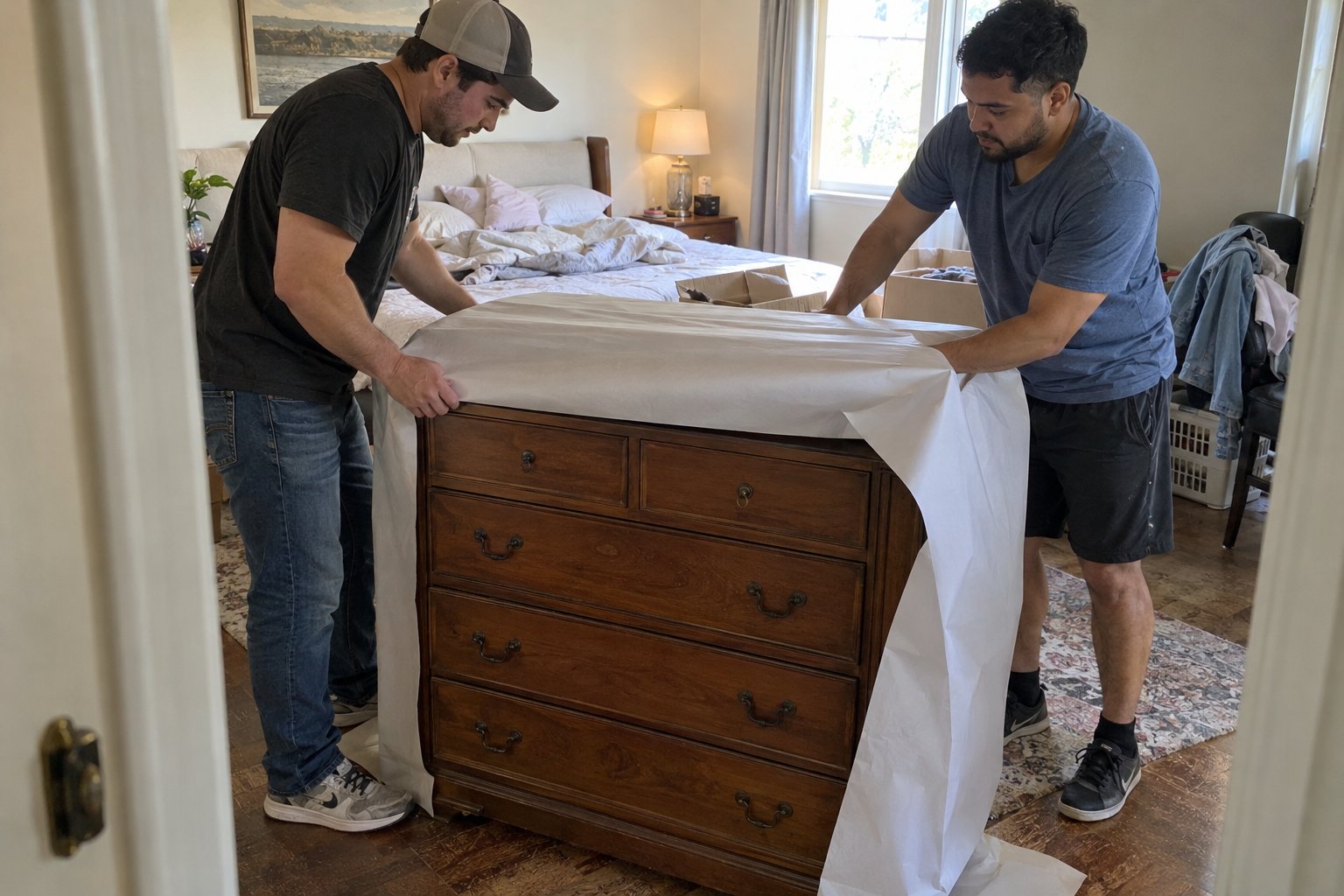
Clothes hanging in a closet can be moved without ever being taken off hangers. Gather a bundle of ten to fifteen hanging items, slip a garbage bag over them from the bottom, and tie or twist the bag around the hanger hooks at the top. This creates an instant garment bag that protects clothes and unpacks in seconds. Folded clothes in drawers can often be moved inside the drawer itself — simply remove the drawer from the dresser, cover the top with plastic wrap or a pillowcase, and carry it as a unit. This saves an enormous amount of time on both ends.
Under time pressure, people skip wrapping fragile items — and pay for it when things arrive broken. You do not need elaborate wrapping to protect most breakables. Each item needs one layer of packing paper or a dish towel wrapped around it, placed upright in a box with soft material underneath and between items. A box of dishes packed in ten minutes with basic wrapping will survive a move. A box of unwrapped dishes thrown in loose will not. Prioritize wrapping over speed for anything genuinely irreplaceable.
Set aside one box or bag that does not get loaded on the truck — your "open first" kit. This should include a change of clothes for the next day, phone chargers, toiletries, a basic set of utensils and a few pantry items, important medications, and anything else you will need within the first twelve hours at the new place. Without this, you will spend your first evening in a new home excavating boxes when you should be resting.
Booking a moving company with less than two weeks of lead time is genuinely harder than booking with a month or more of notice. Most reputable moving companies fill their schedules in advance, particularly on weekends. That said, last-minute availability does exist — and knowing how to find it quickly is the difference between getting professional help and doing everything yourself.
When you are short on time, do not fill out web forms and wait for callbacks. Call moving companies directly and immediately. Have your key details ready before you dial: your current address, your destination address, an honest estimate of how many rooms you are moving, whether there are stairs or elevator restrictions at either location, and your target move date and a backup date if you have flexibility. Moving companies can give you a much faster answer and a more accurate quote when you give them complete information upfront.
Professional moving companies frequently have cancellation openings that do not appear on their online booking tools. If a company says they are fully booked, ask directly: "Do you have any cancellation slots around that date?" You will sometimes find exactly what you need this way — a crew that became available because another customer rescheduled or cancelled.
If your timeline gives you any flexibility at all, a weekday move is almost always easier to book on short notice than a weekend move. Moving company demand peaks on Fridays, Saturdays, and Sundays. A Monday or Tuesday move — even if it requires taking time off work — is typically easier to schedule quickly and may also be less expensive.
A last-minute move does not end when the boxes are packed. Moving day itself carries additional pressure when everything leading up to it has been compressed. A few specific habits on moving day make a significant difference in how smoothly the final hours unfold.
Whatever time you planned to start loading — start an hour earlier. Last-minute moves almost always reveal surprises: a piece of furniture that does not fit through a doorway, a box that needs to be repacked, an item you forgot to account for. The buffer of an extra hour on the front end of moving day is almost always used.
If you have help — whether professional movers or friends — designate one person whose job is to oversee how items are loaded into the truck rather than carrying boxes themselves. This person ensures heavy items go in first, fragile boxes are loaded last and stacked correctly, and nothing gets left behind. Without this role, loading decisions get made haphazardly by whoever is nearest the truck, and problems compound.
Before you lock the door of your old place for the last time, walk through every room including closets, the garage, outdoor spaces, and any storage areas. Check inside appliances — refrigerators, washing machines, and dryers often have items left inside during rushed moves. Check under beds, in bathroom cabinets, and behind doors. A five-minute walkthrough is far less painful than a forty-minute drive back for something you forgot.
One of the hidden costs of a last-minute move is the emotional exhaustion that arrives once you are at the new place. After days of compressed decision-making, physical labor, and logistical scrambling, the impulse to immediately unpack everything and get "back to normal" as fast as possible can actually make recovery slower. The new home does not need to be fully set up in twenty-four hours. Unpack the essentials first — the open-first box you set aside, the bedroom, the bathroom — and give yourself explicit permission to let the rest wait a few days. A last-minute move is a significant physical and mental effort. Getting through it well is the goal. Getting through it perfectly is not.
It depends on the size of your home and whether you are hiring professional movers. A one- or two-bedroom apartment can realistically be packed and moved in as little as two to three days if you are decisive about what to keep, willing to let go of things you cannot move quickly, and able to get professional help on short notice. A full house with more than three bedrooms typically needs at least a week to execute well under compressed conditions. The biggest variable is usually not packing time — it is booking a moving company, which can require more lead time than you expect on short notice.
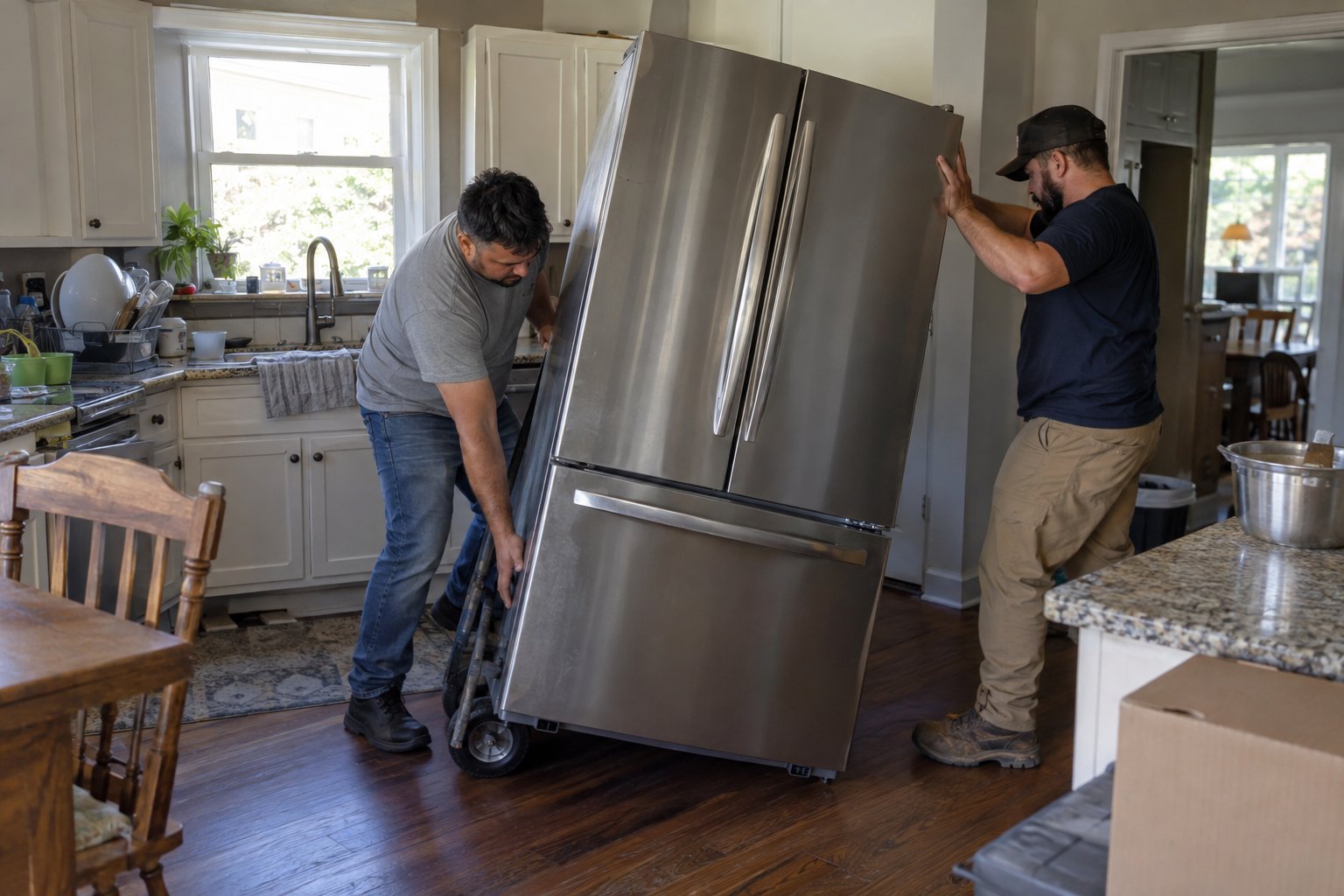
If you can get professional movers booked, hiring them almost always saves time on a last-minute move — even accounting for the time it takes to book them. Professional crews load and unload faster than most people anticipate, they have the equipment to handle heavy items without injury or property damage, and they free you to focus on the dozens of other details that a last-minute move demands. If professional movers are unavailable or outside your budget, recruiting two or three reliable people and renting a truck with a loading ramp is the next best option. Avoid relying on ad hoc help that may not show up — confirm your help explicitly the night before.
Selling or donating furniture you cannot move in time is almost always better than paying rush fees to move low-value items. For pieces you want to keep but cannot move immediately, a short-term storage unit near your old address can bridge the gap — you move the contents later once the pressure of the initial move is behind you. For valuable furniture that does not sell quickly, consider consignment stores, which will often arrange pickup for quality pieces. Do not leave furniture behind in an apartment or rental without explicit written permission from your landlord — abandoned property can result in charges against your security deposit.
Contact your utility providers — electric, gas, water, internet — as soon as you know your move date, even if that is only a few days out. Most utility companies can process transfers or new service setup within two to five business days, though internet installation sometimes takes longer. File a mail forwarding request with USPS online — this can be done in minutes and takes effect within a few days. Notify your bank, employer, and any subscriptions or recurring deliveries of your new address as quickly as possible. If you run out of time before the move, prioritize utilities and mail forwarding and handle the rest in the first week at the new address.
Call moving companies immediately — before you pack a single box. Availability for professional movers is the most time-sensitive variable in any last-minute move, and the sooner you either secure a crew or confirm you need to self-move, the sooner you can organize everything else around that fact. While you are making calls, keep a running list of what else needs to happen — utilities, address changes, packing supplies, storage if needed — so that no critical task falls through the cracks in the rush of the first few hours.
Whether you’re moving a home, apartment, office, or just a few heavy items, We Haul Nashville is ready to help make the process easier.