Written by:
Pierce J.
Published:
August 14, 2026
Moving a fish tank takes more than a bucket and a towel. Learn how to move an aquarium safely, from water storage to tank setup at your new Nashville home.
Moving a fish tank comes down to protecting three things separately: the fish, the water, and the glass. Trying to move all three together, tank still full, fish still swimming, is how most home aquariums end in disaster on moving day. Break the job into stages and even a large community tank can survive a local or long-distance move without losing a single fish.
Unlike a couch or a dresser, an aquarium is a living ecosystem. The bacteria in your filter, the chemistry of your water, and the stress tolerance of your fish all matter as much as the physical glass box sitting in your living room. This guide walks through what to do in the days before the move, how to handle the actual transport, and how to get everything running again at the new address without shocking your fish into illness.
A fish tank cannot be moved like furniture because the water inside it holds a living bacterial colony that keeps your fish alive, and dumping that water destroys months of biological cycling in seconds. Glass tanks are also far more prone to stress fractures when moved full, empty, or even slightly twisted during transport.
Aquarium glass is sealed with silicone that flexes under weight in ways it was never designed for once the water that used to support it evenly is gone. An empty tank that looks fine can develop a hairline crack from being tilted on a dolly or set down unevenly. On top of that, your fish are sensitive to sudden swings in temperature, pH, and ammonia, all of which spike when you break down and rebuild their environment too quickly. Treating the move as a chemistry and biology project, not just a furniture project, is what keeps fish alive.
Start preparing three to five days before the move by cutting back feeding, testing your water parameters, and gathering containers to hold your fish and old tank water separately. This gives you a baseline reading to compare against once you arrive and reduces waste buildup in the tank right before a stressful transition.
Feed lightly in the days leading up to the move so there is less waste in the water and less chance of fish fouling their temporary containers during transport. Save several gallons of the existing tank water in clean, sealed buckets or jugs. This water carries the beneficial bacteria and chemistry your fish are already used to, and reusing it at the new home avoids restarting the nitrogen cycle from scratch. Do not clean the filter media in the days before the move either; that bacteria is doing important work and you want to keep it alive and intact.
Individually bag fish in clean, sealed bags with a mix of about one-third old tank water and two-thirds air, similar to how a pet store bags a new fish for the ride home. Keep aggressive or territorial species separated into their own bags. Place bagged fish inside an insulated cooler or box to buffer against temperature swings during the ride, and keep that cooler in the passenger area of the vehicle rather than a hot trunk or cold truck bed.
The tank itself should be fully drained, and gravel, decorations, and equipment should be packed separately rather than left inside during transport. Moving a full or partially full tank risks cracking the glass and puts unnecessary strain on the seams.
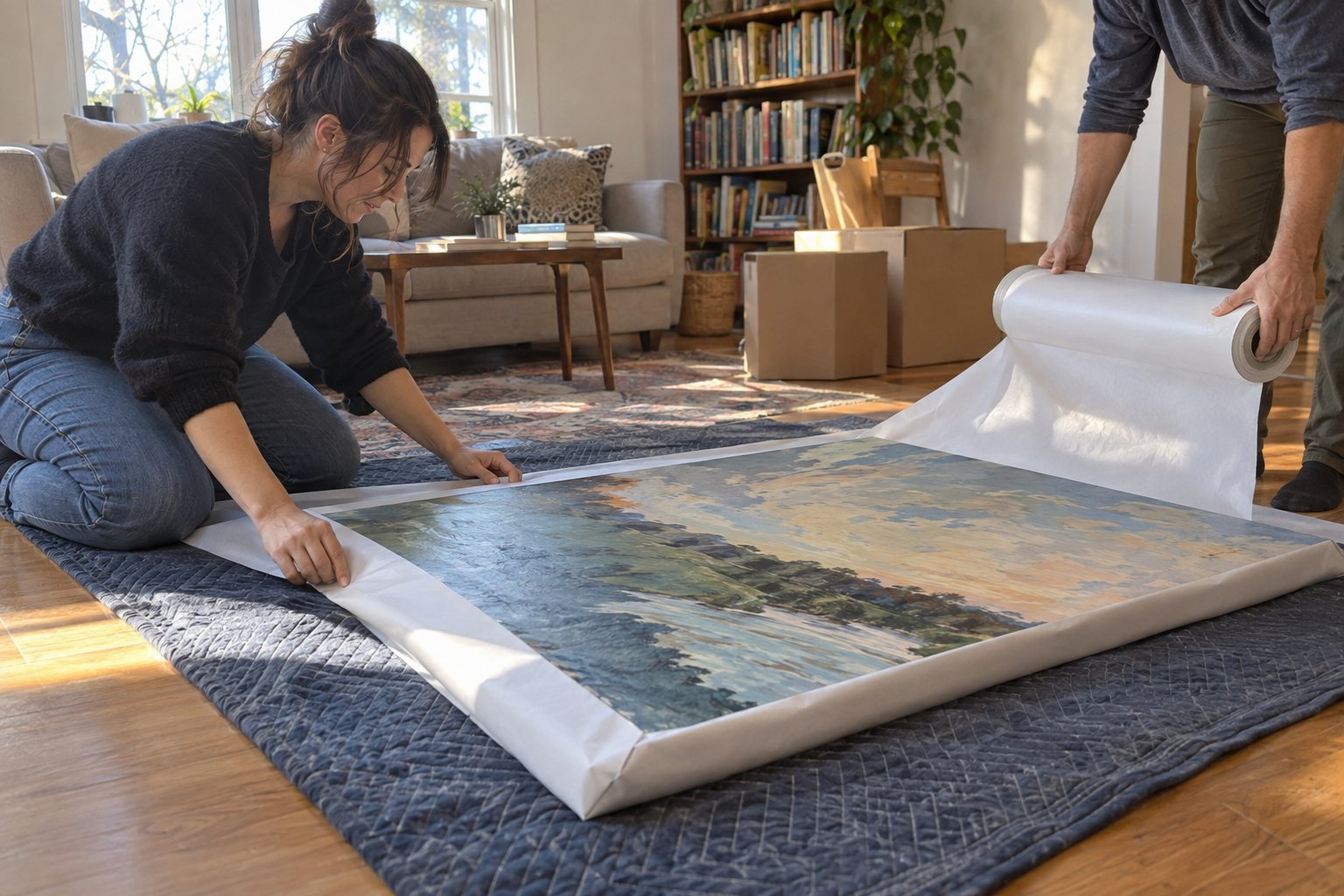
Scoop out substrate into a bucket with a lid; a layer of the old tank water poured over gravel helps keep bacteria alive if the trip is short. Wrap decorations, driftwood, and rock work in towels or packing paper the same way you would wrap any fragile item, since ceramic ornaments and glass features chip easily. Filters, heaters, and air pumps should be unplugged, drained of standing water, and wrapped individually. Keep filter media damp rather than letting it dry out completely, since a fully dried filter loses much of its bacterial colony. The empty tank itself should be padded on all sides, ideally still in its original box if you kept it, and always carried level rather than tilted onto a corner or edge.
Set the tank up again as quickly as possible once you arrive, ideally within a few hours, since fish can only tolerate bagged transport for so long. Rushing the refill without checking temperature and chemistry first is the most common way an otherwise careful move ends with dead fish.
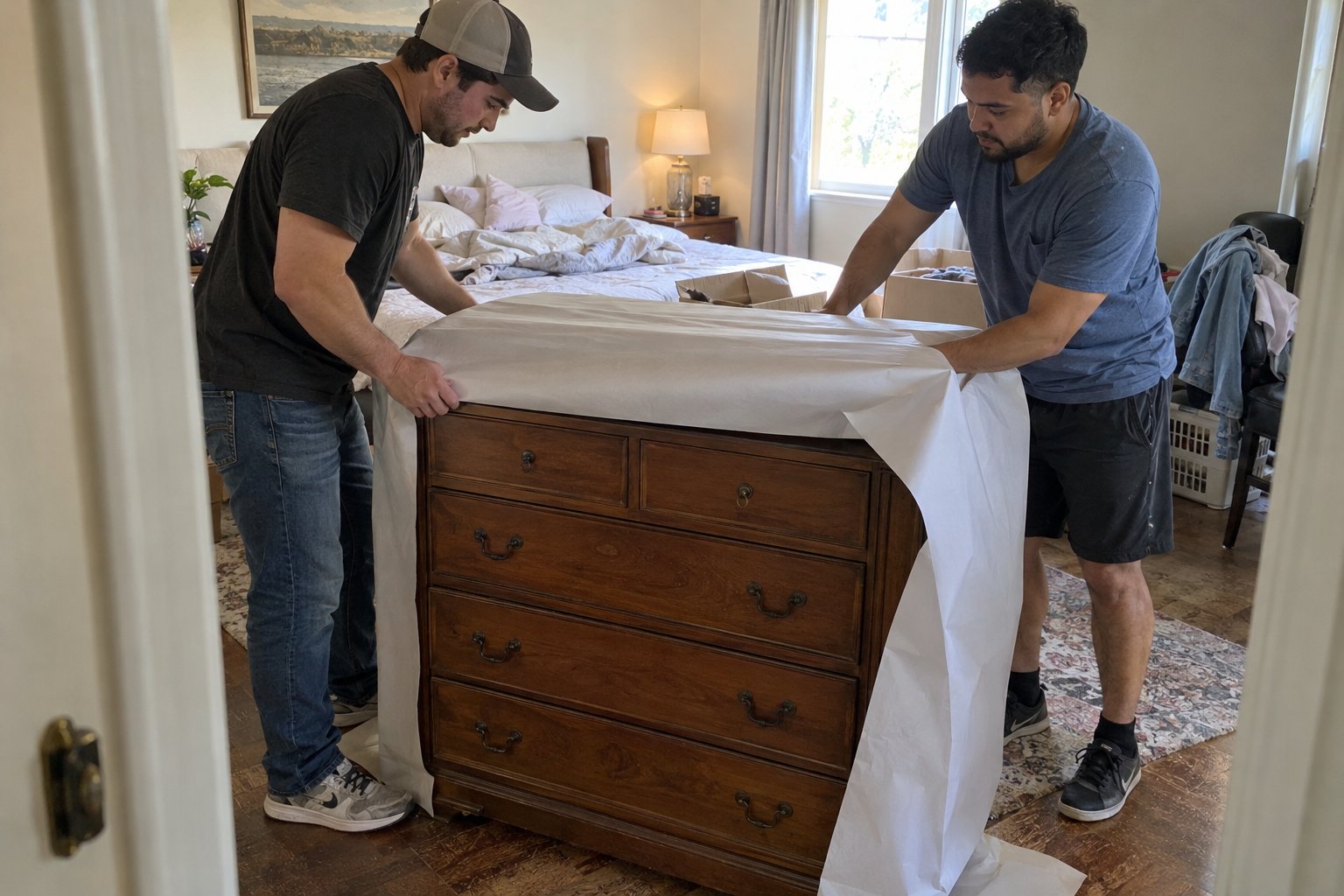
Place the empty tank on a stable, level surface in its new spot before adding anything back, the same consideration you would give any heavy furniture item in a new room. Add back the substrate, decorations, and saved tank water first, then top off with fresh dechlorinated water to reach the normal level. Reinstall the filter and heater and let the water reach a stable, appropriate temperature before introducing fish. Float sealed fish bags in the tank for 15 to 20 minutes so the water temperature equalizes gradually, then release the fish. Test ammonia, nitrite, and pH over the following days, since even a careful move can cause a temporary spike while the bacterial colony re-establishes itself.
Small to mid-size tanks are usually manageable as a DIY project if you plan ahead, while large tanks, reef setups, or moves involving long drive times benefit from professional help or at least professional-grade moving supplies. The deciding factor is less about tank size alone and more about how much time and temperature control your fish can tolerate.
If your move covers real distance, coordinate the aquarium leg of the trip with your overall local moving services so the fish are handled as the very first thing loaded and the very last thing unloaded, minimizing time spent in transit. For unusually large or heavily stocked tanks, treat it the same way you would a piano or other awkward, high-value item, and lean on a crew experienced with specialty item moving rather than risking it alone. A rushed, DIY approach to a 100-gallon reef tank is a very different risk than doing the same for a 10-gallon community tank.
An aquarium is rarely the only delicate, living, or awkward item in a home on moving day, and the same patience that protects your fish pays off elsewhere in the house. Building a full moving day checklist that accounts for the aquarium alongside everything else keeps the whole move from feeling like it is happening in isolation.
If you are also relocating other fragile collections, the same slow-down-and-protect mindset used for a tank applies directly to breakables elsewhere in the house; our guide on packing fragile items for a move covers padding and box selection in more depth. And if the aquarium is just one part of a bigger cross-country relocation, it is worth reviewing our broader advice on moving across the country so you can sequence the fish transport around fuel stops, overnight stays, and total drive time. When you are ready to book help for the physical labor side of the move, you can get a moving quote from our team.
Most healthy fish tolerate being bagged for several hours without major issues, as long as the bag has enough air and the temperature stays stable. For moves longer than half a day, plan for a battery-powered air pump or a larger volume of water per fish to keep oxygen levels up.
Not usually, as long as you save your original tank water and keep the filter media damp during transport. Reusing that water and media preserves most of the beneficial bacteria, so you are refreshing the tank rather than starting the nitrogen cycle from zero.
It is not recommended even for short distances, since the weight and movement of the water puts uneven pressure on the glass seams and can cause cracks that are not immediately visible. Always drain the tank fully before transport.
The refilled tank water should match the temperature the fish were kept at in their transport bags as closely as possible, ideally within a degree or two. Floating the sealed bags in the tank for 15 to 20 minutes before release lets the temperatures equalize gradually and reduces shock.
Light feeding or a brief fast in the day or two before the move is generally better than a normal feeding schedule, since less food means less waste in the transport water. Fish can safely go a day or two without food, so skipping a feeding before a stressful move is not a concern.
Whether you’re moving a home, apartment, office, or just a few heavy items, We Haul Nashville is ready to help make the process easier.