Written by:
Pierce J.
Published:
June 29, 2026
Learn how to move a storage unit the right way — from sorting and packing to loading and transport. A complete guide for Nashville residents clearing or relocating storage.
Knowing how to move a storage unit is a skill that most people only need once — but when they need it, they really need it. A storage unit move is not like a typical home relocation. You are often dealing with items that have been sitting untouched for months or years, a mix of furniture, boxes, and loose items that were never packed with a future move in mind, and no clear mental map of what is even in there anymore. Add in a lease-end deadline, a new storage facility across town, or a home that finally has room for what was in storage, and the pressure to do it efficiently and without damage is real.
This guide walks you through how to move a storage unit from start to finish: how to sort and assess what you have before moving day, how to pack and protect items that were never meant for long-term storage, how to load a truck from a storage facility, and how to decide whether a professional moving crew is the right call. Whether you are moving a small climate-controlled unit or a 10×30 packed with furniture and boxes, these steps will get you through it cleanly.
The single biggest mistake people make when moving a storage unit is showing up on moving day without having looked inside first. What felt like "a unit full of stuff" six months ago may now contain a mix of items you want to keep, things you forgot you owned, furniture that has degraded from humidity, and boxes that are no longer structurally sound. Going in blind wastes time and creates expensive surprises.
At least a week before your move date, visit the storage unit with a notepad or your phone and take a full inventory. Open boxes if you can. Move items away from the walls if there is room to walk. Look for signs of moisture damage, pest activity, mold, or anything that has shifted and could fall when the unit is opened. This visit does two things: it tells you what you are actually moving, and it gives you time to make decisions before you are standing there with a truck idling outside.
As you assess, mentally sort everything into three groups: keep, donate or sell, and discard. Items that have been in storage for years without being retrieved are worth reconsidering. If you have not needed something in two or more years, ask whether the effort and cost of moving it is worthwhile. Donation centers, Facebook Marketplace, and estate sale companies can all absorb items you decide not to keep — and doing that work before moving day means you are loading less into the truck and unpacking less at the destination.
Identify any items that require specific equipment or techniques during your inventory visit. Furniture that came apart and is now in pieces. Mirrors or artwork leaning against the wall. Appliances. Mattresses that may need mattress bags. Knowing what is in there lets you arrive on moving day with the right materials and enough people to handle each item safely.
Moving items out of storage requires different packing considerations than packing a home. Many of the items in your unit may already be in boxes — but storage boxes are not necessarily move-ready. They may have absorbed humidity, been compressed under the weight of other items, or weakened over time. Before moving day, gather fresh supplies so you are not relying on compromised packaging.
Press on the corners and bottom of every box before you load it. If a box flexes noticeably, the cardboard has weakened and it will not survive stacking in a truck. Transfer the contents to a new box, or reinforce the existing one with heavy packing tape on all seams. Do not trust a soft-bottomed box with anything breakable or heavy — it will fail in transit. Label any boxes you repack so you know what is inside without having to open them at the destination.
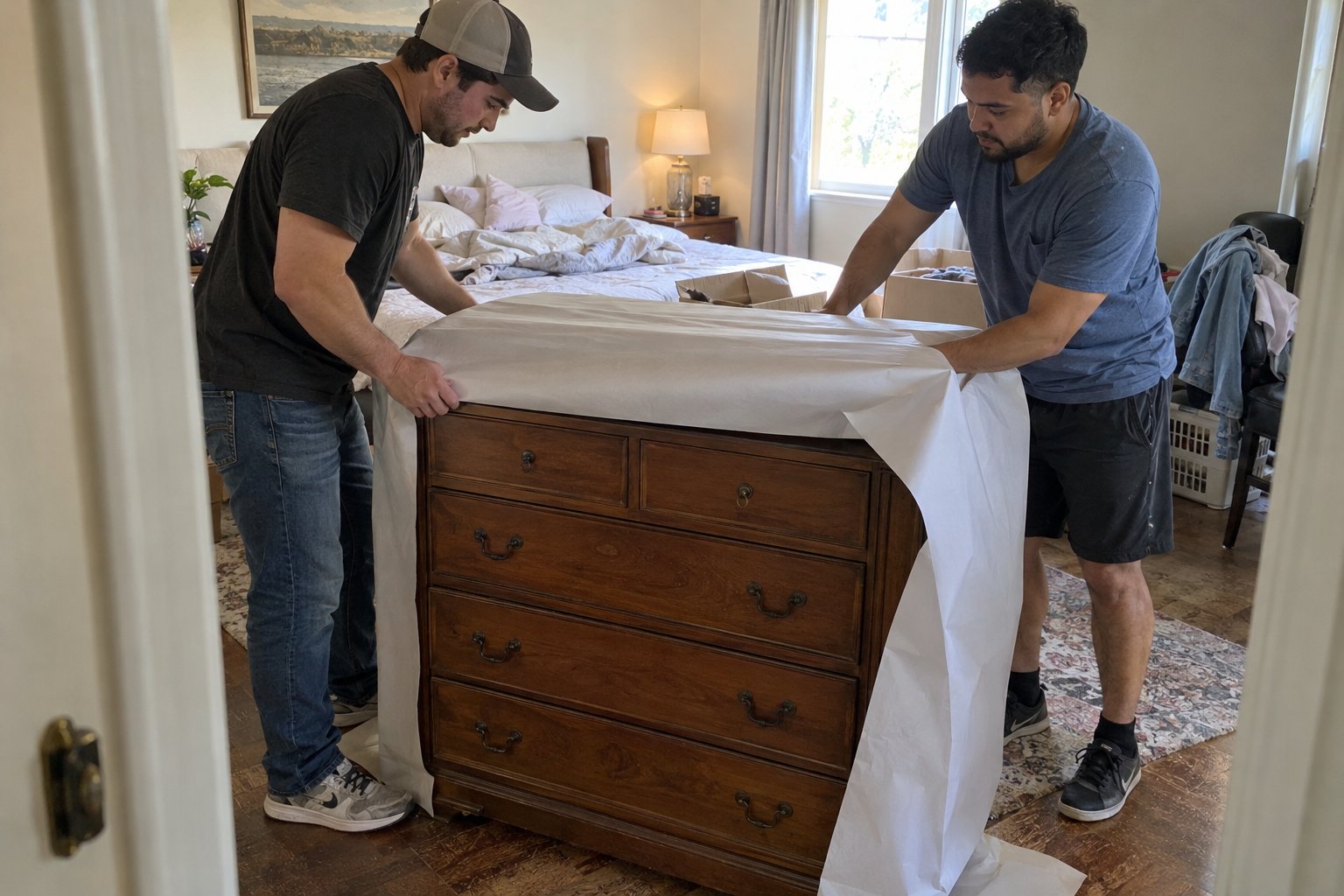
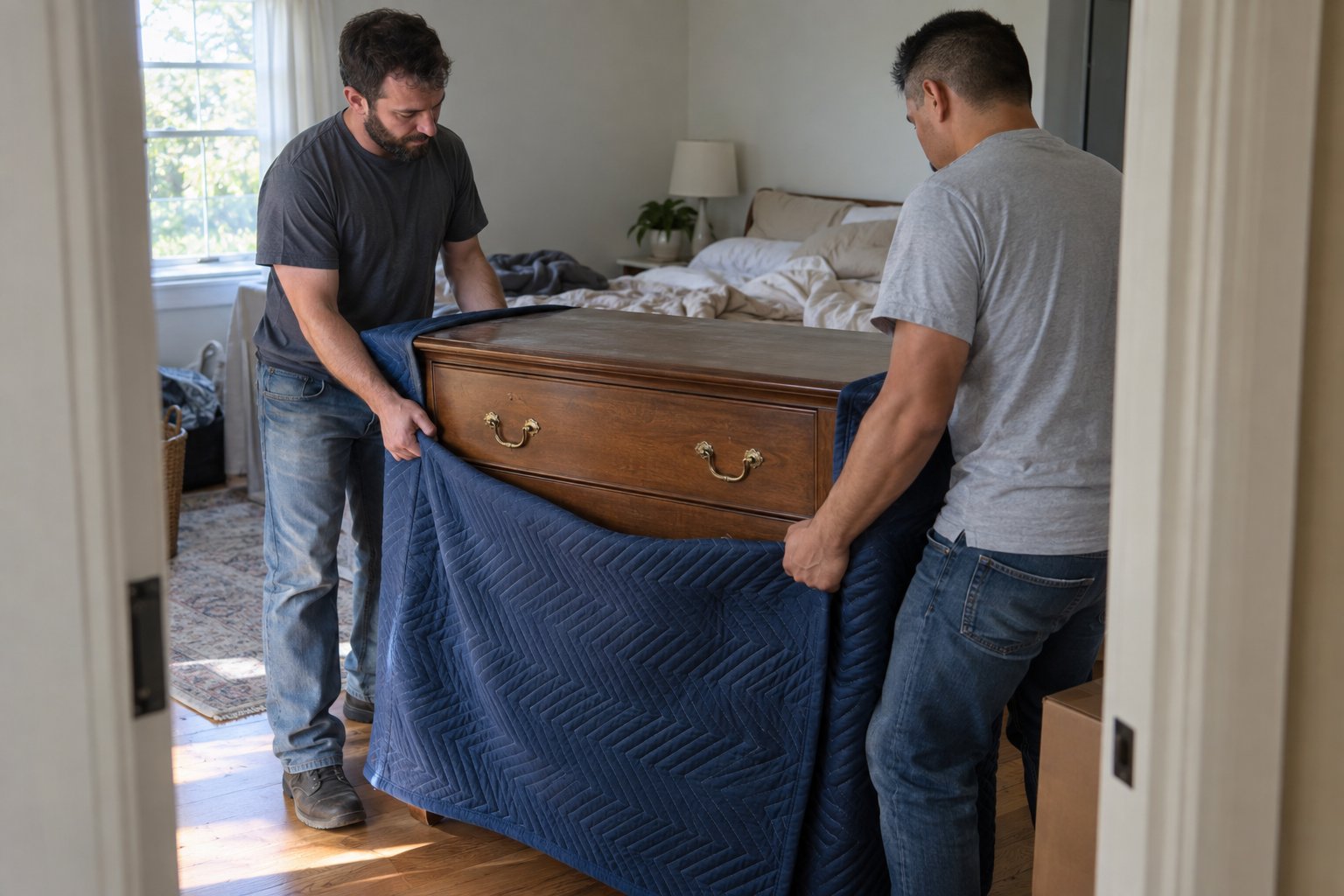
Bring moving blankets for furniture surfaces, stretch wrap for protecting wrapped items from dust and rubbing, and mattress bags if mattresses are coming out of storage. Furniture that has been sitting in a unit may have accumulated dust and minor surface marks — wrapping it in blankets before loading protects the finish during the move. For any items that were not previously wrapped or padded, wrap them before they go anywhere near a truck.
Loading a moving truck from a storage unit presents a specific logistical challenge that is different from loading from a home. You typically have a narrow doorway, no staging area inside the unit, and items stacked in whatever order they went in rather than in an order that makes them easy to remove. Good loading strategy starts with thinking backward from how you want to unload at the destination.
Before you start loading the truck, pull items out of the unit and stage them in the hallway or on the facility's loading dock if one is available. This gives you room to sort, wrap, and assess each item before it goes onto the truck, rather than trying to do all of that inside a cramped space. Most storage facilities have paved outdoor areas where you can stage a substantial amount of furniture and boxes before loading begins. Check facility rules — some restrict staging in hallways during busy hours.
The same loading rules that apply to any truck apply here: heavy furniture and appliances go in first, positioned against the front wall of the truck over the wheel wells. Dressers, wardrobes, and bookshelves go in on their sides if they are tall and narrow, or upright if they can be strapped securely. Boxes go on top of and around furniture, with heaviest boxes on the bottom and lighter boxes on top. Do not stack boxes on top of soft furniture items like sofas without a solid barrier — a heavy box will deform a cushion permanently over a long drive.
Every piece of furniture should be secured to the truck's tie-down rails with ratchet straps before the truck moves. Storage unit contents are frequently an irregular mix of sizes and weights, which means a load that looks stable can shift unexpectedly when the truck turns or brakes. Walk the load after strapping and push on items to confirm they are not going to travel. Furniture that is not strapped is a hazard to everything else in the truck and to anyone opening the truck at the destination.
Items that have been in storage — especially non-climate-controlled storage — may have deteriorated in ways that are not immediately obvious and that affect how they should be moved. Understanding what can happen to items in storage helps you make smarter decisions about what to move, how to protect it, and what to do with it on arrival.
Solid wood furniture that has been in a non-climate-controlled unit through Nashville's humid summers may have expanded, warped slightly, or developed surface mold. Before loading, wipe down wooden surfaces with a dry cloth and look for any signs of structural compromise — loose joints, swollen drawers that no longer close, or soft spots in the wood that suggest water damage underneath the finish. Furniture with active mold should be cleaned and fully dried before it goes into a truck or home. Moving damp or moldy items into a sealed truck spreads the problem.
Sofas, chairs, and mattresses in storage are susceptible to dust mite accumulation, mildew odor, and fabric degradation. Before loading, inspect upholstered items closely and decide whether they are worth moving. If a sofa has a persistent musty odor that does not clear after airing out, it may not recover fully once it is back in a living space. If it is worth keeping, cover it with stretch wrap for the move to contain any odor and protect the fabric in transit.
Appliances and electronics stored long-term should be inspected before assuming they will work. Check cords for cracking or rodent damage. Look inside appliances for pest nesting material. Electronics that have been exposed to humidity may have internal corrosion that only shows up when they are powered on. Move these items carefully regardless — wrap them in blankets to protect against exterior damage during the move, and test them before assuming they can be put directly into use.
A storage unit move is one of the scenarios where calling in professional movers often makes more practical sense than attempting it with a rented truck and friends. The combination of heavy and fragile items, facility access restrictions, and the physical demands of clearing an entire unit in one trip adds up quickly — and the cost of damaged items or a strained back frequently exceeds what professional help would have cost.
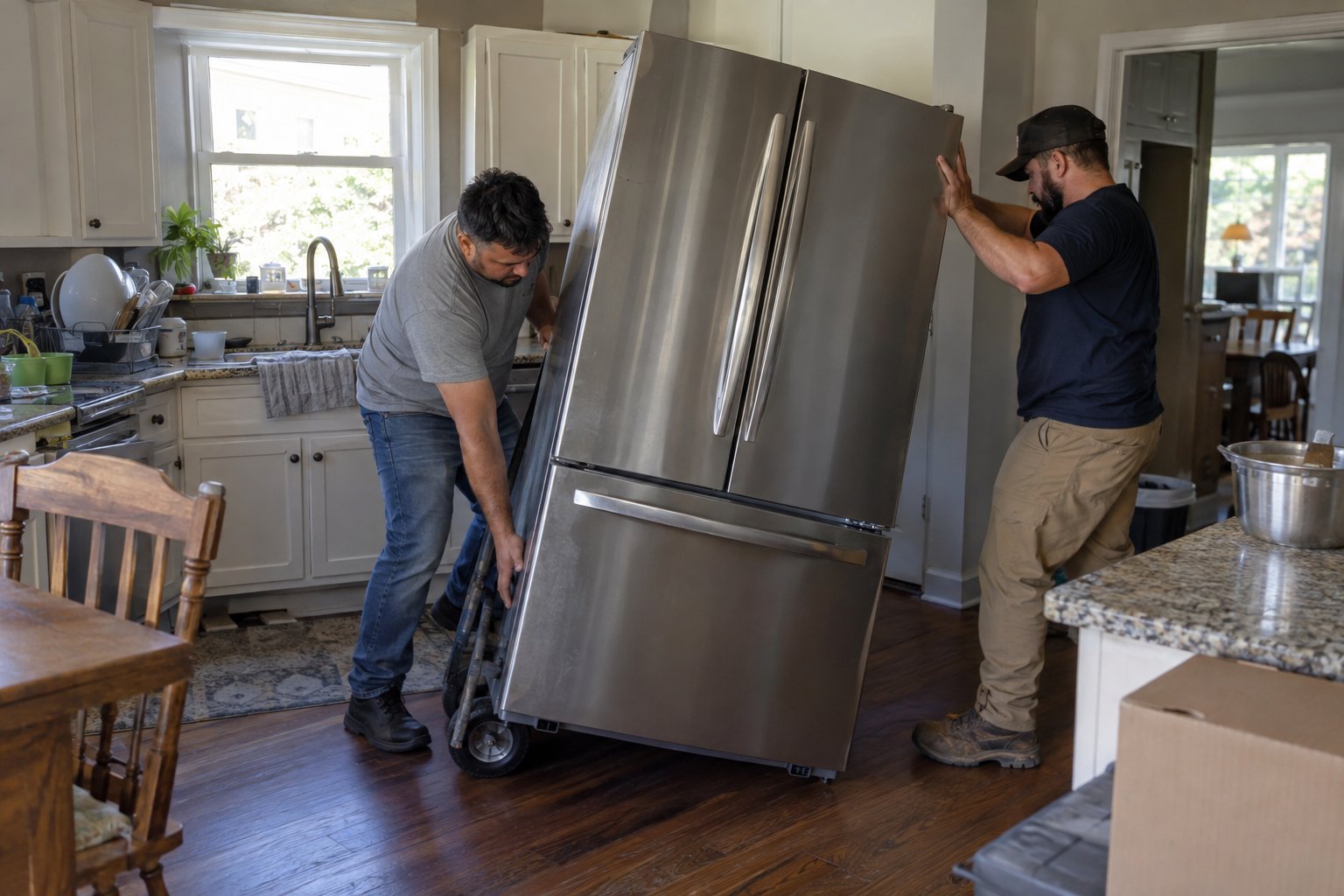
Professional movers bring the right equipment for heavy lifts, know how to pack a truck efficiently, and carry insurance that covers damage during the move. If your unit contains large furniture, appliances, artwork, or other high-value items, the investment in a professional crew is worth calculating against the risk of moving those items without specialized equipment or experience. A quality local Nashville moving company can often accommodate storage unit moves with relatively short scheduling lead times compared to full home moves — and the efficiency of a trained crew typically means the job is done faster than a self-move of the same unit.
The time depends entirely on unit size, how well-organized the unit is, and how many people are working. A small 5×10 unit that is well-packed can be loaded in under an hour with two or three people. A large 10×20 or 10×30 unit with mixed furniture, loose items, and boxes can take three to five hours or more — longer if repacking is needed. The most common time drain in a storage unit move is discovering items during loading that were not accounted for in advance. A pre-move visit to assess and sort the unit can significantly reduce loading time on moving day.
Yes. Most full-service moving companies, including local Nashville movers, handle storage unit moves alongside standard home relocations. You can hire a crew to come to your storage facility, load everything onto their truck, and deliver it to your home, a new storage facility, or a combination of both. When booking, let the company know it is a storage unit move rather than a home move — the logistics of facility access, hallway navigation, and unit-specific loading constraints are different from a residential move, and the crew may need to bring different equipment.
The most efficient approach is to make donation and disposal decisions before moving day rather than during it. Nashville has a number of donation centers that accept furniture and household goods, and many will schedule free pickup for larger items if you arrange it in advance. For items that are too degraded to donate, Nashville's waste management system accepts bulk item drop-offs. Selling items through Facebook Marketplace or similar platforms before your move-out date is also practical for higher-value pieces. Arriving on moving day with a clear decision made on every item — keep, donate, or discard — prevents the storage unit from simply relocating its clutter to your home.
Yes. Most storage facility leases require advance written notice before vacating — typically 10 to 30 days depending on the contract. Review your lease agreement for the specific notice period and the required format. Many facilities also require the unit to be swept out and the lock removed before you are released from the lease and eligible for any deposit return. Failing to give proper notice can result in additional charges. If your move-out timeline is uncertain, contact the facility directly to understand your options for extending on a month-to-month basis or adjusting your notice date.
Before loading, wipe down all furniture surfaces and inspect for any signs of moisture damage, mold, or structural weakness. Wrap every piece in moving blankets before it contacts the truck floor, a dolly, or a door frame — storage furniture is often more vulnerable to surface damage than furniture that has been in regular use, because finishes can become brittle or sticky in temperature-variable environments. Secure blankets with stretch wrap applied to the blanket itself, never directly to the furniture finish. On the truck, strap all furniture securely to prevent shifting, and keep heavy items away from surfaces that could dent or scratch during transit.
Whether you’re moving a home, apartment, office, or just a few heavy items, We Haul Nashville is ready to help make the process easier.