
Written by:
Pierce J.
Published:
July 8, 2026
Learn how to pack and move your bathroom safely — from medicine cabinets and mirrors to toiletries and towel bars. A complete moving guide from We Haul Nashville.
Knowing how to move a bathroom is something most people treat as an afterthought — a quick sweep of the medicine cabinet and a shove of towels into a garbage bag on moving day morning. But the bathroom is one of the most deceptively complex rooms in the house to pack correctly. It contains a mix of glass bottles, aerosol cans, liquid toiletries that will leak without proper containment, prescription medications that require careful handling, fragile mirrors and framed décor, and hardware like towel bars and toilet paper holders that you may or may not want to reinstall at your new home. When the bathroom is not packed deliberately, the result is a box of shattered glass, a bag of soaked towels from a shampoo bottle that lost its cap in transit, and a bathroom at your new home that takes days to get functional instead of hours.
This guide walks you through how to move a bathroom from start to finish: how to audit and reduce what is actually worth taking, how to pack toiletries and liquids so they survive the truck, how to handle mirrors and glass items safely, how to deal with medicine cabinet contents and prescription medications, and how to get your new bathroom set up and functional as quickly as possible after the move. Whether you are moving a single apartment bathroom or coordinating three or four full baths and a powder room, these steps will carry you through the process without the mess and damage that bathroom moves so often produce.
The bathroom is one of the most reliable places in any home for accumulation without awareness. Products purchased and never finished, duplicates bought because the original could not be found, expired medications, samples collected over years, and half-empty bottles of things no one in the household remembers buying — all of it has been sitting quietly under the sink or in the back of a cabinet. Before you pack a single thing, spend thirty minutes doing a deliberate audit.
Check expiration dates on everything in your medicine cabinet and under-sink storage: over-the-counter medications, sunscreen, vitamins, prescription medications that were never finished, and first aid supplies. Expired medications should not be moved to a new home — most communities offer drug take-back programs or designated disposal sites where they can be dropped off safely. Do not flush medications or dispose of them in the trash without checking local guidelines. Once you have cleared out expired items, evaluate the products that remain. If a bottle of body wash is a quarter full and you have two more waiting, finish what you have or discard the partial. Moving liquid weight that will be thrown away within a month costs you real money on a truck.
Towel bars, toilet paper holders, robe hooks, over-door organizers, and freestanding shelving units all take time and effort to remove, pack, and reinstall. Before automatically taking everything, consider whether the new home already has comparable hardware in place. Many buyers and renters inherit functional bathroom hardware that renders their existing pieces redundant. If you are unsure, measure the new space before moving day and verify what is already there. Items that will duplicate existing hardware at the destination are not worth the box space, the packing time, or the installation effort at the other end.
Liquids are the single biggest risk in any bathroom move. A shampoo bottle with a loose pump top, a bottle of mouthwash without its cap secured, or a jar of face cream with a lid that backs off under pressure can saturate an entire box and ruin everything it touches — including boxes stacked nearby on the truck. Packing liquids correctly is not complicated, but it requires a deliberate system rather than a quick toss into a bag.
Before any liquid product goes into a box, remove the cap or pump top, place a small square of plastic wrap over the opening, and replace the cap tightly over it. This creates a secondary seal that holds even if the cap works loose during transit. For pump-top bottles, press the pump down to its locked position and wrap the entire pump head with stretch wrap or a rubber band before capping. For products that do not have caps — open nail polish bottles, for example — wrap the entire opening tightly with plastic wrap secured with a rubber band. Pack all liquids upright in a clearly labeled waterproof bag or a dedicated plastic bin. Do not pack liquids in boxes with towels, paper goods, or anything absorbent.
Your bathroom is one of the last rooms you will finish packing and one of the first rooms you need functional at the new home. Set aside a dedicated first-night essentials kit that travels with you in your vehicle — not on the truck. This kit should include: toothbrush and toothpaste, hand soap, toilet paper, a towel for each person, any daily prescription medications, contact lens supplies if applicable, and basic first aid essentials. Everything else in the bathroom can go on the truck. The first-night kit means your bathroom is functional the moment you arrive regardless of how long it takes to unload and unpack.
Bathroom mirrors — whether mounted, leaning, or part of a medicine cabinet — are among the most damage-prone items in any move. They are heavy for their size, they shatter explosively when struck at the right angle, and the glass fragments they produce are a serious safety hazard for movers and anyone unpacking. Do not wrap a mirror in a towel and call it done.
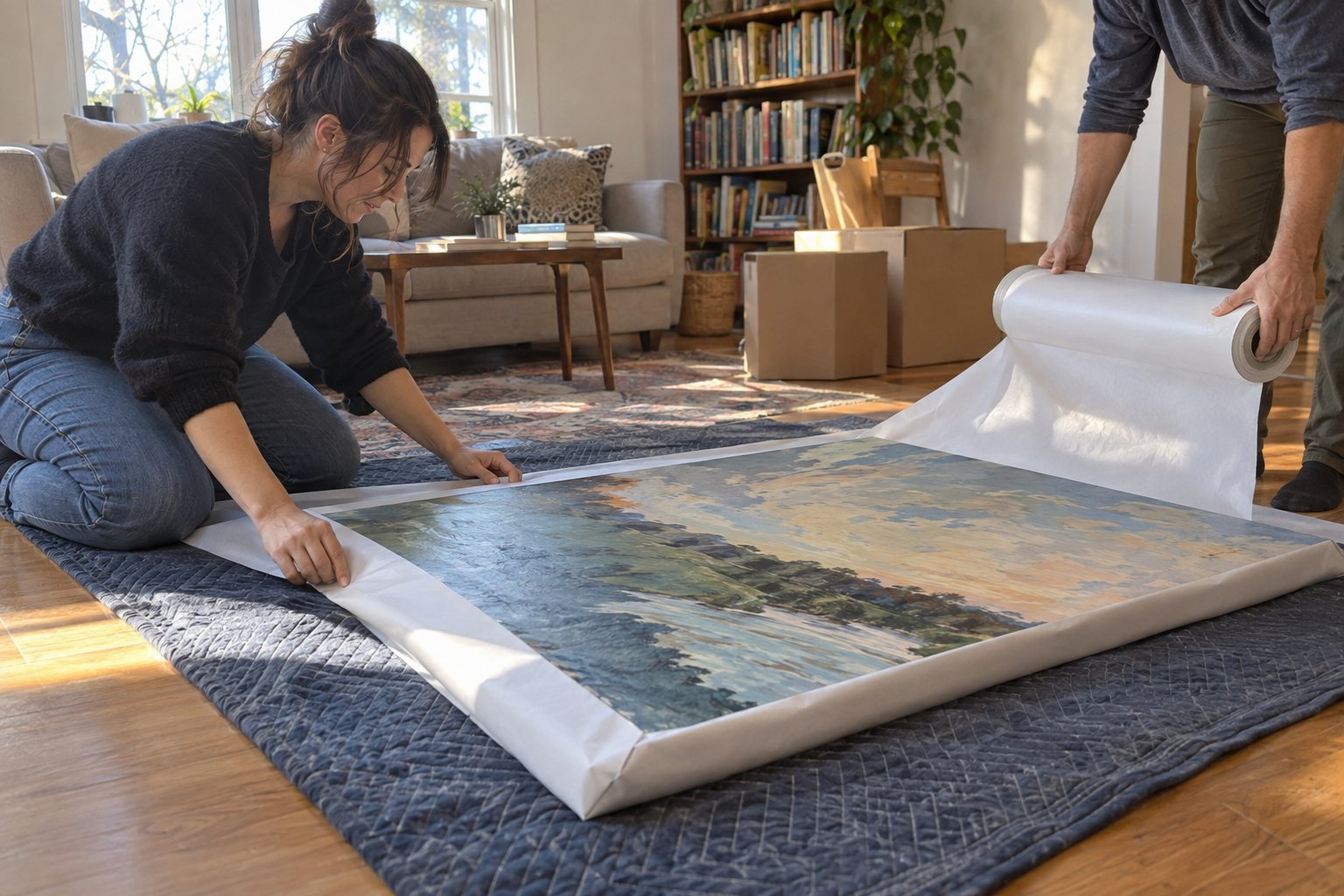
Use mirror boxes — flat cardboard boxes specifically designed for mirrors and framed pictures — for any flat glass item. If mirror boxes are not available, build a makeshift version by taping two standard boxes together to create a double-thickness flat sleeve. Before boxing, apply painter's tape or masking tape in an X or grid pattern across the mirror face. This does not prevent breakage, but it holds shattered pieces together in the event the mirror breaks, significantly reducing the cleanup hazard and the chance of injury. Wrap the mirror in several layers of packing paper or bubble wrap before inserting it into the box, and fill any empty space in the box with crumpled paper so the mirror cannot shift during transport. Mark the box FRAGILE — GLASS — THIS SIDE UP clearly on all four sides and the top.
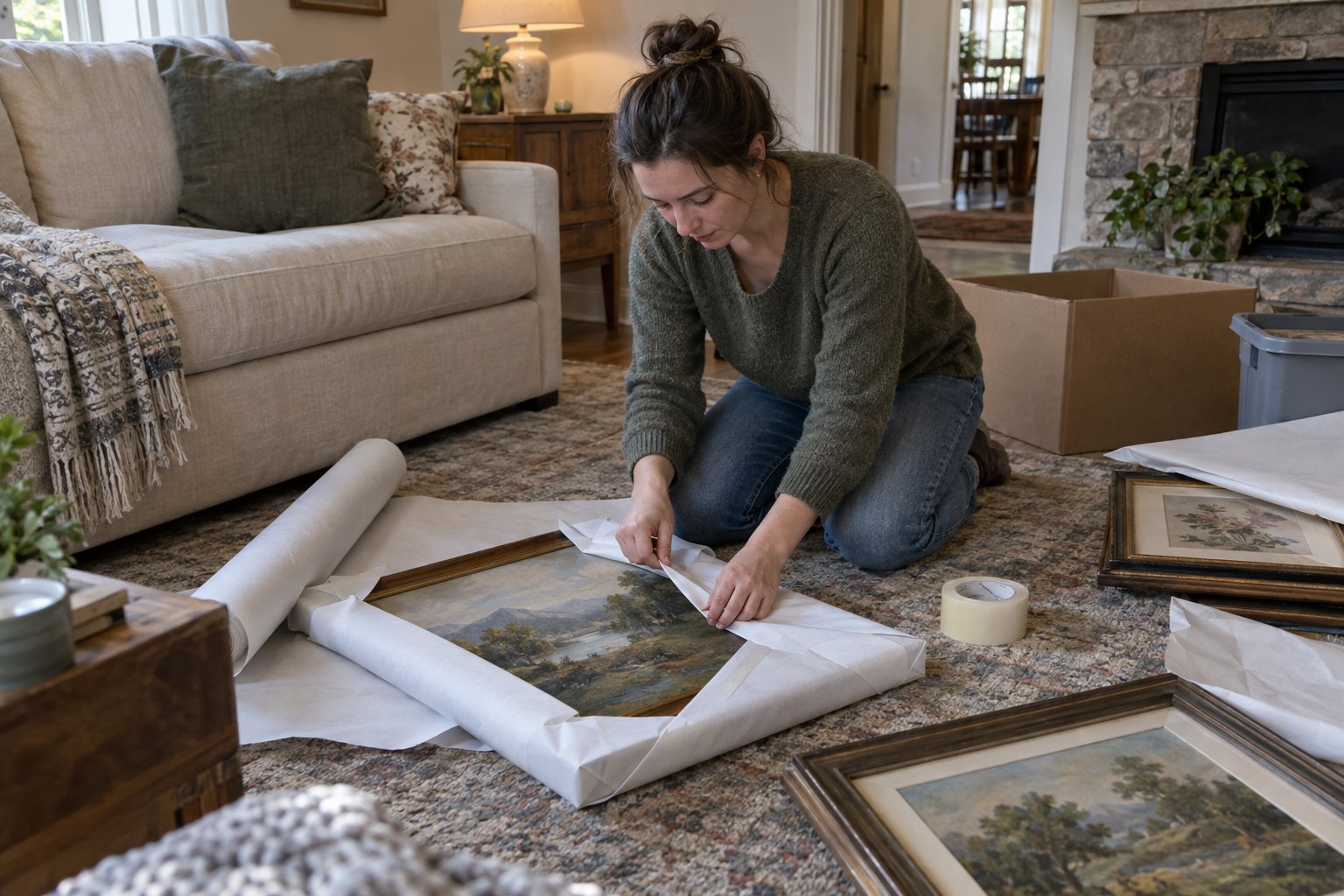
Bathroom art and decorative items — framed prints, small shelves, ceramic soap dishes, decorative trays — should be wrapped individually in packing paper before being nested together in a box with crumpled paper between each layer. Do not pack heavy items on top of fragile ones. Label the box fragile and note the contents so it can be placed where it will not be buried under other boxes at the destination.
Prescription medications require more careful handling than any other bathroom item. They should never travel on the moving truck — temperature fluctuations in a truck cargo area during a Nashville summer can degrade medications, and a lost or damaged prescription can mean days without essential treatment while you wait for a replacement. All prescription medications should travel with you in a climate-controlled vehicle, stored in a clearly labeled bag or case that you know the location of at all times throughout the move.
If you use home medical equipment — a blood pressure cuff, a nebulizer, an insulin storage case, or similar devices — treat those items the same way. Pack them personally, keep them with you, and verify they are functioning correctly after arrival. For controlled substances, check with your pharmacy about transport requirements before moving day.
If you are taking towel bars, toilet paper holders, robe hooks, or other mounted hardware with you, remove them carefully before moving day so you are not rushing through it while the truck is being loaded. Use the appropriate screwdriver or drill bit for each fastener, keep all screws and mounting hardware together in a labeled zip-top bag, and tape that bag to the fixture itself or to a component it belongs with. This simple step eliminates the common moving-day disaster of arriving at the new home with a towel bar and no idea where its mounting screws went.
For wall-mounted medicine cabinets, the process is more involved. Surface-mount cabinets typically have screws along the interior top or sides. Recessed cabinets may require patching the wall opening after removal. If you are in a rental, check your lease before removing anything — many landlords require original fixtures to remain. Whether you are taking the cabinet or leaving it, document its condition with photographs before and after the move for your own protection.
The bathroom is one of the highest-priority rooms to set up on moving day or the morning after. Unlike a dining room or a guest bedroom, it is a space every person in the household will need within hours of arrival. Before the truck is even fully unloaded, have someone designated to set up the essential bathroom — hang toilet paper, place hand soap, lay out towels, and make sure the toilet is functioning. If you are installing any fixtures, a basic screwdriver and a stud finder are the only tools you will need for most towel bar installations.
Unpack bathroom boxes in order of priority: medications and medical supplies first, daily use toiletries second, cleaning supplies third, and decorative items last. This sequence means the bathroom is genuinely functional within the first hour of unpacking, rather than waiting until the final decorative box gets opened two weeks after the move.
For bathroom liquids, a plastic bin or a zip-seal waterproof bag inside a box is strongly preferable to a standard cardboard box alone. Cardboard provides no protection if a bottle leaks — a single shampoo cap that works loose can saturate the bottom of a box and ruin everything it contacts. Use the plastic wrap and cap method on every liquid: remove the cap, place a small square of plastic wrap over the opening, and replace the cap tightly. Pack all liquids upright and keep them grouped together in a waterproof container. Label that container clearly so it is handled carefully and not placed under heavy items on the truck.
Lightweight, non-liquid items like cotton balls, hair ties, or washcloths can reasonably stay in a drawer if the drawer is removed from the cabinet and transported separately with the contents wrapped or secured with stretch wrap. Liquids, glass bottles, sharp implements like razors or scissors, and heavy items like hair dryers should always be removed and packed individually. The cabinet carcass itself should be moved empty or nearly empty — loaded cabinetry is significantly heavier and the doors can swing open or the structure can flex during transit, causing damage to the cabinet and its contents.
A large wall mirror should be packed in a mirror box — a flat cardboard box sized for framed pictures and mirrors — after wrapping it in several layers of packing paper or bubble wrap. Before wrapping, apply masking tape or painter's tape in an X or grid pattern across the mirror face. This does not prevent breakage but holds shattered glass together if the mirror does break, significantly reducing injury risk. Transport the mirror upright on its edge, never flat — laying a mirror flat allows it to flex under weight and dramatically increases the chance of cracking. Mark the box clearly on all sides: FRAGILE, GLASS, THIS SIDE UP.
Most liquid cleaning products — bleach, toilet bowl cleaner, drain cleaner, glass cleaner — are technically hazardous materials and can leak, react with other substances, or damage items they contact if they spill in transit. The safest approach is to use up as much as possible in the weeks before the move, donate unopened supplies to neighbors or local organizations, or dispose of them properly rather than moving them. If you do decide to move partially used cleaning products, they must be sealed tightly, packed upright in a clearly labeled bin kept separate from all other items, and should not be mixed with food, clothing, or electronics boxes. Many moving companies restrict or prohibit transport of certain chemical products — confirm with your mover before moving day.
The fastest path to a functional bathroom after a move is preparation before the move. Pack a first-night essentials kit — toothbrush, toothpaste, hand soap, toilet paper, a towel per person, daily medications, and any contact lens or personal care items you use every morning — and keep it in your vehicle rather than on the truck. This kit makes the bathroom immediately usable the moment you arrive. When you begin unpacking, prioritize the bathroom above most other rooms: hang toilet paper and a hand towel, place the soap dispenser, confirm the toilet and sink are working, and set out daily toiletries. The rest of the bathroom can be unpacked in stages over the following days, but these basics take fewer than fifteen minutes and make your first night in the new home dramatically more comfortable.
Whether you’re moving a home, apartment, office, or just a few heavy items, We Haul Nashville is ready to help make the process easier.