
Written by:
Pierce J.
Published:
July 7, 2026
Learn how to move a bedroom the right way — from disassembling bed frames to packing dressers, clothing, and nightstands. A complete guide from We Haul Nashville.
Knowing how to move a bedroom seems straightforward until you are standing in the middle of a room with a king-size bed frame that will not fit through the doorway, a dresser stuffed with clothing that has not been sorted in years, and a closet that has somehow become a secondary storage unit for half the house. Bedrooms are the most numerous rooms in most homes, and in a multi-bedroom household, the cumulative weight and volume of what needs to move can rival any other space in the building. Getting bedroom moves right requires a deliberate sequence — one that starts long before moving day and accounts for the specific challenges each type of bedroom furniture presents.
This guide walks you through how to move a bedroom from start to finish: how to audit and reduce what you are actually moving, how to disassemble and protect bed frames and mattresses, how to handle dressers, nightstands, and armoires, how to pack clothing and bedding efficiently, and how to get each bedroom functional again at your new home without spending the first night sleeping on a pile of boxes. Whether you are moving a single guest room or coordinating three or four bedrooms at once, these steps will carry you through the process without damage you could have avoided.
The bedroom is one of the spaces where people most often move things they no longer need simply because it felt easier to pack them than to make a decision. A dresser full of clothes that have not been worn in two years, a mattress that is past its useful life, a nightstand that wobbles and has never quite fit — these are items that cost real money to move and that will occupy space in your new home by default. Before you wrap a single piece of furniture, spend time doing an honest audit of everything in the room.
Mattresses are among the most expensive items to move by size relative to their replacement value, especially older mattresses that are already approaching the end of their usable life. If your mattress is more than seven to ten years old or has visible sagging or deterioration, moving it may not be worth the cost of a mattress bag, the truck space it occupies, and the labor required to maneuver it. Pricing a replacement at your destination before moving day gives you the information you need to make an honest decision. If you do move it, a mattress bag is non-negotiable — mattresses absorb dirt, moisture, and odors quickly and cannot be cleaned once contaminated.
Clothing is deceptively heavy and voluminous, and most people move far more of it than they will ever wear. A standard wardrobe box holds a significant amount of hanging clothing but still weighs forty to sixty pounds when full. Before packing a single item, go through every drawer, shelf, and closet section and sort honestly: what you have worn in the past year, what fits, and what you are genuinely keeping. Donate the rest to local Nashville thrift organizations or schedule a pickup. Every bag of clothing you eliminate is weight and volume you do not have to load, transport, and unpack.
If you have measurements for your new bedrooms — or can visit and measure before moving day — compare them against your existing furniture. A king bed that fits comfortably in a large master bedroom may leave almost no floor space in a smaller room. A tall armoire that works in a room with high ceilings may not clear the ceiling in a new home. Moving furniture that will not work in the new space costs real money in labor and truck space. Make these decisions before the truck arrives, not while it is idling in the driveway.
The bed frame is almost always the largest piece of furniture in any bedroom and the one that causes the most moving-day difficulty when it has not been properly prepared. Most bed frames — whether a simple metal platform, a wooden slat system, a storage bed, or an upholstered headboard setup — can and should be disassembled before the move. Moving a fully assembled bed frame through doorways is almost always harder than moving the disassembled components, and the risk of damage to the frame, the walls, and the doorframes is significantly higher.
Before removing a single bolt or bracket, photograph the assembled bed from multiple angles — including close-up shots of every connection point, bracket, and hardware location. This takes less than five minutes and eliminates hours of guesswork at the other end. Place all hardware — bolts, screws, slats, clips — into a labeled zip-lock bag and tape it to the headboard or a visible component so it does not get separated from the frame during transit.
Upholstered headboards are vulnerable to scuffs, moisture, and compression damage during a move. Wrap them in plastic stretch wrap first, then add a layer of moving blankets secured with additional stretch wrap. Do not let upholstery come into direct contact with moving blankets without the plastic layer underneath — blanket fibers can snag and pull fabric. For wooden slat beds and wooden headboards, wrap each component in moving blankets and secure with stretch wrap or packing tape applied only to the blanket, never to bare wood or finish surfaces.
Box springs and platform foundations are large and awkward but not especially heavy. The primary challenge is navigating them through doorways and stairwells. Measure the dimensions of your box spring against every doorway it needs to pass through before moving day — including the front door, hallway turns, and any stairwells. Many box springs can be stood on their side and walked through doorways at an angle. If clearance is genuinely too tight, some box springs are available in split versions that separate into two halves, which may be worth arranging as a replacement if you are in a home with unusually narrow stairwells.
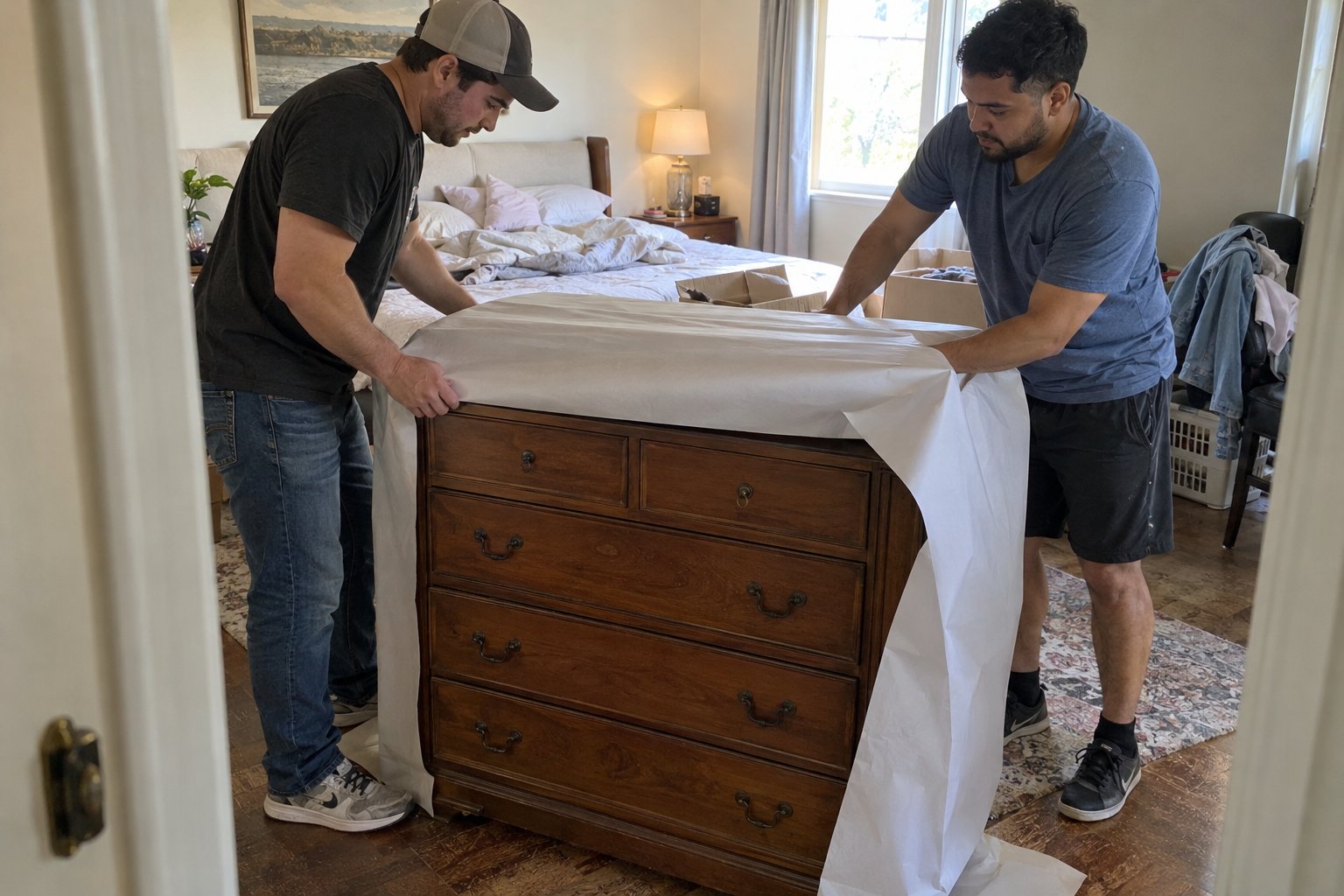
Dressers and nightstands are the workhorse storage furniture of any bedroom, and they present a specific moving challenge: they are heavy when loaded with contents, their drawers can slide open or pull free during transit, and their finish surfaces scratch easily when they contact other furniture on the truck.
For solid, well-built dressers moving a short distance, leaving lightweight clothing in the drawers — with the drawers removed from the dresser and transported separately — can save significant packing time. Remove each drawer, cover the top opening with plastic stretch wrap to contain the contents, and transport the drawers stacked flat. The empty dresser carcass, significantly lighter without the drawers and contents, can then be wrapped and moved with less risk of damage. For long-distance moves or dressers with heavy contents like denim or sweaters, empty the drawers entirely and pack the clothing in boxes or vacuum-seal bags.
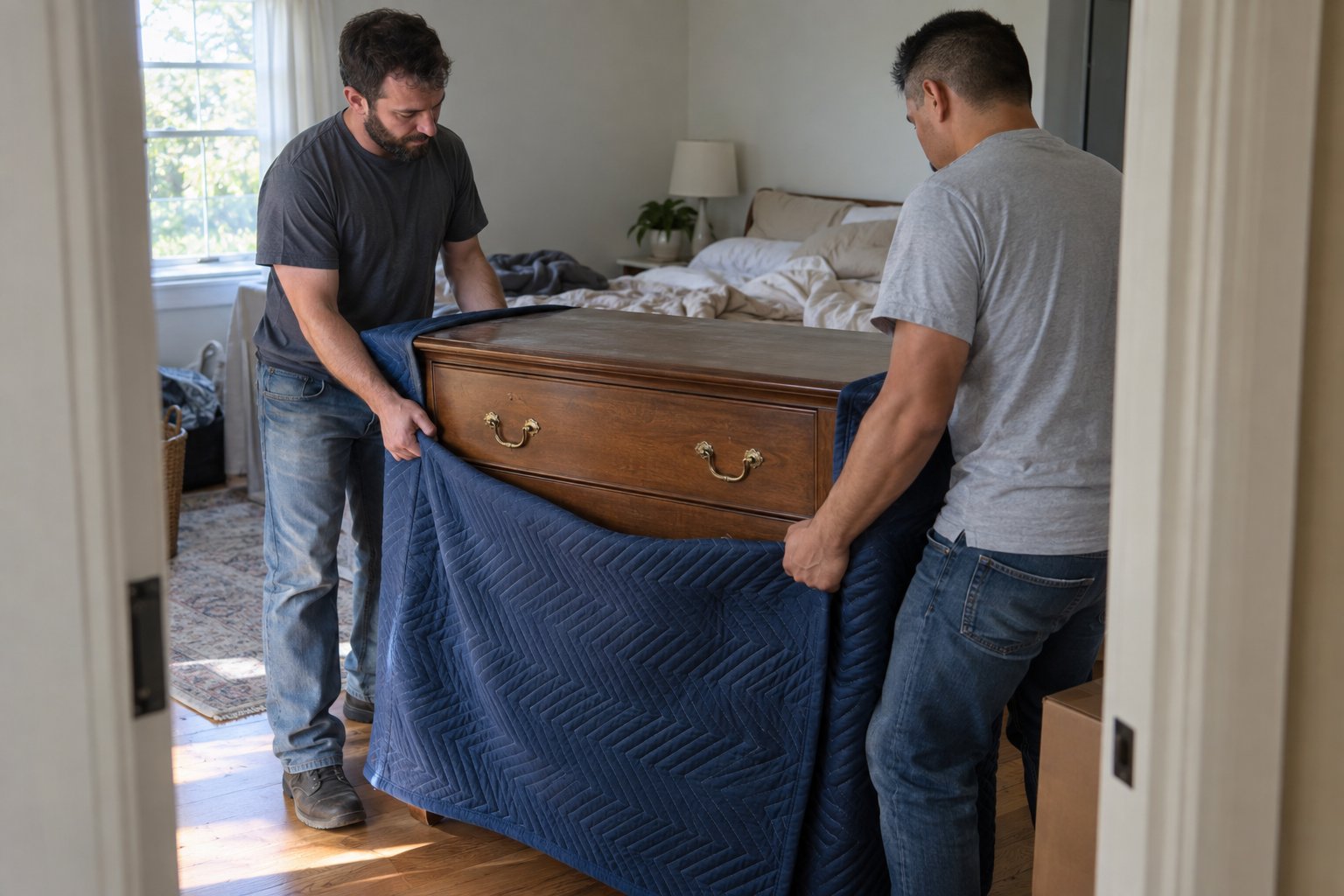
Dresser tops and the sides of nightstands are vulnerable to corner impacts and surface scratches. Wrap every piece of bedroom furniture in moving blankets secured with stretch wrap before loading. Pay special attention to corners and protruding hardware — drawer pulls and knobs can gouge other surfaces if they make contact during transit. For mirrored dressers or nightstands with glass inserts, apply painter's tape in an X-pattern across the glass and wrap with packing paper before adding the moving blanket layer. Mark these pieces clearly so anyone handling them knows to take extra care.
Nightstands typically contain a mix of small personal items, medications, electronics accessories, chargers, and miscellaneous objects accumulated over time. Empty every drawer completely before the move and sort the contents: medications and important personal items should travel in a bag you keep with you rather than on the truck, chargers and accessories should be coiled and labeled, and anything you do not actively use should be evaluated for discard before it makes it into a box.
Clothing and bedding make up a surprising amount of the total volume in most bedroom moves and, if packed without a plan, they become the source of a dozen overstuffed, disorganized boxes that take days to unpack at the other end. Packing them deliberately takes a little more time upfront and saves significant time and frustration on the back end.
Wardrobe boxes — tall cardboard boxes with a metal hanging rod across the top — are the most efficient way to move hanging clothing. Clothes stay on their hangers, arrive wrinkle-free, and can be transferred directly into the new closet with minimal handling. Wardrobe boxes are available at most moving supply stores and are worth renting or purchasing for any move that involves a significant quantity of hanging garments. Fill the bottom of each wardrobe box with shoes, folded items, or accessories to maximize the space.
Comforters, duvets, heavy blankets, and off-season clothing are among the highest-volume, lowest-density items in any bedroom. Vacuum-seal storage bags compress these items to a fraction of their normal volume and allow you to pack dramatically more into each box. This is one of the most effective packing strategies for bedrooms with large amounts of bedding or households that keep significant off-season clothing stored in the bedroom.
For each bedroom in the move, pack a clearly labeled bag or small box with everything needed for the first night: a set of sheets, a pillow, pajamas, any medications, phone chargers, and a change of clothes for the next morning. When the truck is unloaded at the end of a long moving day, having these essentials immediately accessible means everyone can get a functional night's sleep without unpacking a single box. This step is especially important in households with children or anyone with specific medical needs.
The physical execution of moving bedroom furniture — getting it out of the old home and into the new one without damaging walls, floors, doorframes, or the furniture itself — is where preparation either pays off or fails. The steps you take before moving day determine almost everything about how moving day itself unfolds.
The single most common and preventable moving-day problem is discovering that a piece of furniture will not fit through a doorway, around a hallway corner, or up a staircase after the truck has already arrived. Measure every large bedroom piece — bed frame components, dressers, armoires — against every doorway, hallway, and stairwell they need to navigate. Measure the narrowest point of each passageway, including the diagonal clearance for tall pieces being tilted through doorways. If a piece is marginal, plan the entry and exit path in advance and identify whether removing a door from its hinges will provide the clearance needed.
Bedroom furniture — particularly dressers and armoires — is heavy and dense, and dragging it across hardwood or tile floors leaves real damage. Use furniture sliders under the feet of any piece being moved across hard floors, and lay down floor runner protection for high-traffic pathways. Apply doorframe protectors or foam padding to any doorframe that large pieces will pass close to. These materials are inexpensive, take minutes to apply, and prevent the kind of damage that costs significantly more to repair than the protection would have cost.
When the truck arrives at your new home, prioritize bedroom setup before unpacking any other room. Getting beds assembled and made up means that regardless of how the rest of the unpacking goes, everyone has a functional place to sleep that night. Tackle the master bedroom first, then children's rooms in order of age and need. Once beds are assembled and the first-night essentials bags are accessible, the urgency of the rest of the unpacking process drops considerably — and the rest of the move becomes manageable rather than exhausting.
In most cases, yes — disassembling the bed frame before moving day is strongly recommended. Fully assembled bed frames, especially king and queen sizes with headboards, are extremely difficult to maneuver through doorways, around hallway corners, and up or down stairwells. Disassembling the frame into its component parts allows each piece to be moved more safely and efficiently, reduces the risk of damage to walls and doorframes, and protects the frame itself from stress it was not designed to handle during transport. Before disassembling, photograph every connection point and place all hardware in a labeled bag taped to a component so nothing gets separated.
It depends on the dresser and the contents. For a short local move, leaving lightweight clothing like t-shirts and underwear in the drawers — with the drawers removed from the dresser body and transported separately — can save significant packing time. Wrap the top of each loaded drawer in stretch wrap to keep contents contained. For heavier items like denim, sweaters, or anything fragile, empty the drawers entirely to reduce weight and prevent damage. On any move, the dresser carcass should always be moved without drawers installed, both to reduce weight and to prevent drawers from sliding out and causing injury or damage during loading.
Always transport a mattress inside a mattress bag — a heavy-duty plastic sleeve designed specifically for mattresses. Mattresses absorb dirt, moisture, and odors almost immediately upon contact with a moving truck surface, and once contaminated they cannot be meaningfully cleaned. Mattress bags are inexpensive and available at most moving supply stores. Transport the mattress on its side when possible, secured upright against the truck wall so it cannot flex or bow during transit. Avoid placing heavy items on top of a mattress — sustained compression from other furniture can permanently deform the interior structure. If your mattress is older than seven to ten years or shows visible wear, evaluate whether replacement at the destination makes more financial sense than moving it.
The most efficient approach is a combination of wardrobe boxes for hanging items and vacuum-seal bags for bulky folded items. Wardrobe boxes keep hanging clothes on their hangers, arrive wrinkle-free, and can be transferred directly into the new closet with almost no handling. For folded items, vacuum-seal bags compress bulky bedding, sweaters, and off-season clothing to a fraction of their normal volume, allowing you to pack dramatically more into each box. Before packing anything, take the opportunity to sort honestly — clothing you have not worn in the past year, items that no longer fit, and duplicates are all candidates for donation before the move rather than boxes you will unpack and deal with later.
A single bedroom with a platform bed and standard furniture is manageable as a DIY move with enough help and proper preparation. Multiple bedrooms, or any bedroom containing a heavy mattress, a large armoire, a storage bed with drawers, or a mirrored dresser, represent a more significant physical and logistical challenge. Professional movers bring the equipment — furniture dollies, moving blankets, floor runners, and stretch wrap — as well as the technique to move heavy and awkward pieces through tight spaces without damaging the furniture or the home. The most important factor in either case is preparation: disassemble what can be disassembled, protect surfaces, measure doorways before moving day, and pack a first-night essentials bag for every bedroom so the first night in the new home is functional regardless of how the rest of the unpacking goes.
Whether you’re moving a home, apartment, office, or just a few heavy items, We Haul Nashville is ready to help make the process easier.