Written by:
Pierce J.
Published:
July 1, 2026
Moving with kids doesn't have to be chaotic. Learn how to prepare children of every age for moving day, keep them safe, and make the transition smoother for the whole family.
Moving with kids is one of the most logistically and emotionally complex versions of an already demanding process. A move that would take a couple a single focused day can stretch into something far more unpredictable when toddlers need naps, school-age children ask questions you do not have answers to yet, and teenagers go silent in ways that are easy to misread. The physical challenges of moving are manageable with the right equipment and plan. The human challenges of moving with children require a different kind of preparation — one that accounts for attention spans, emotional bandwidth, and the fact that kids process change very differently than adults do.
This guide walks you through how to move with kids from the first conversation to the first night in the new home: how to talk to children of different ages about the move, how to involve them without creating more chaos, how to structure moving day so children are safe and cared for, and how to help them settle into a new space after the boxes are gone. Whether you are moving across Nashville or across the state, these steps will get your whole family through the process with less stress and more confidence.
The single biggest mistake parents make when moving with children is waiting too long to tell them. Kids pick up on stress, overheard phone calls, and boxes appearing in the garage long before they are officially told anything — and what their imagination fills in is almost always worse than the reality. Starting the conversation early, and framing it honestly and age-appropriately, gives children the time they need to process the change rather than react to a surprise.
Children under five have a limited grasp of time and geography, but they understand home, routine, and the people around them. Keep the conversation simple and concrete: "We are going to live in a new house. Your room will be there. We will all go together." Repeat this often in the weeks before the move — repetition is how young children build understanding. Read picture books about moving, and use play to act out the idea of packing toys and moving them somewhere new. Do not overload them with logistics; focus on what stays the same: their family, their toys, their bedtime routine.
Children between roughly five and twelve years old are old enough to understand what a move means — including what they will lose. They may worry about leaving friends, changing schools, or losing their sense of place. Give them honest, concrete information: where the new home is, what their new school will be like, whether they will still see existing friends. Acknowledge that it is okay to feel sad or worried. Avoid dismissing concerns with "You will make new friends" — that may be true, but it does not address the real feeling of loss. Instead, ask what they are most worried about and take the answer seriously.
Teenagers tend to experience moves as something being done to them, particularly if a move means leaving a high school friend group or an established social identity. The worst thing you can do is minimize this. Give teenagers as much information as possible, involve them in decisions where you genuinely can (the layout of their new room, the timeline for saying goodbye to friends, keeping in touch with their social network), and do not expect immediate enthusiasm. Anger and withdrawal are normal. What helps is consistent communication, genuine acknowledgment that the move is a real disruption for them, and giving them something concrete to look forward to — not a forced silver lining, but a real one.
Involving kids in a move sounds like it should reduce stress. In practice, it only does so if the involvement is structured and age-appropriate. Unstructured involvement — a six-year-old "helping" tape boxes while you are trying to pack the kitchen — creates more chaos than it resolves. The goal is to give children meaningful tasks that help them feel ownership of the process without slowing down the adults who need to get things done.
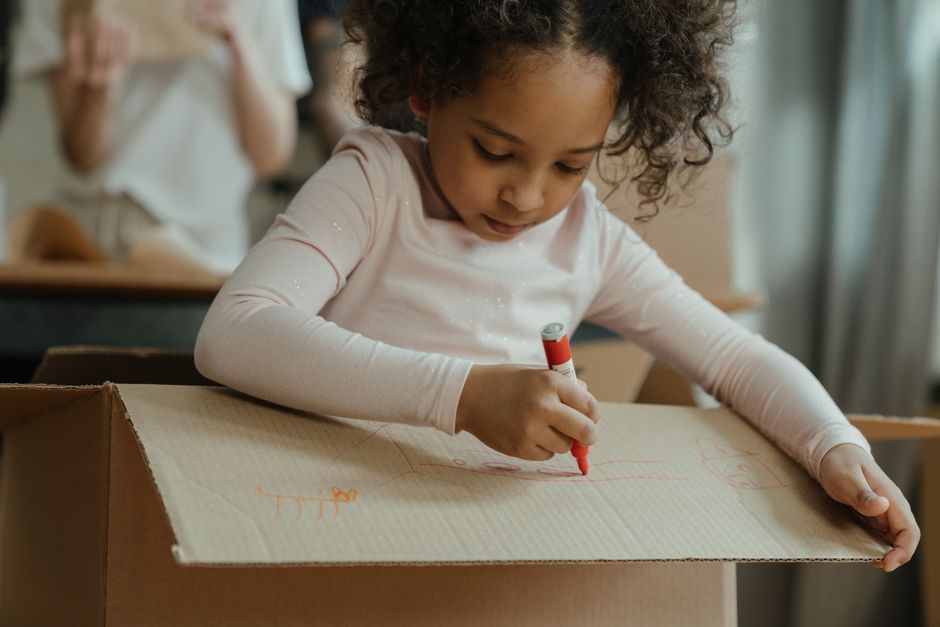
Young children can pack their own stuffed animals into a designated bag, choose which books they want to bring on the moving truck (versus in the car), or help decide where things go in their new room. Older children can genuinely help label boxes, pack their own belongings under adult guidance, or manage a checklist. Teenagers can take on real responsibility: coordinating their own room's packing, helping research the new neighborhood, or managing the family's moving day snack supply. A job that is appropriately sized prevents the "I'm bored" and "Can I help?" loop that derails packing momentum.
Every child, regardless of age, benefits from having one bag that is entirely theirs on moving day — a bag that goes in the car with them, not on the truck. Pack it a few days before the move and let the child choose what goes in it: a favorite toy, a comfort item, headphones, a book, a tablet with downloaded content, snacks they actually like. This bag is their anchor on a day when everything else is in flux, and it removes the anxiety of "where is my [beloved stuffed animal]?" in the middle of loading.
Moving day with children present requires a parallel plan running alongside the actual move. Kids cannot simply be told to stay out of the way for eight hours while adults work — that plan fails within the first thirty minutes. What works is deciding in advance exactly how children will be managed throughout the day and having backup coverage for when the plan inevitably needs adjusting.
For children under seven or eight, the best moving day option is often to not have them present for the bulk of the move at all. A grandparent, close friend, or trusted childcare provider who can take young children for the morning — covering breakfast, outdoor activity, and lunch — frees the adults to focus entirely on loading and coordination. Young children underfoot during a move create real safety hazards: dollies moving through doorways, furniture being carried through hallways, and boxes stacked at heights that are exactly the wrong level for a running three-year-old. If off-site childcare is available, use it. Reunite when the truck is loaded and it is time to drive to the new address together.
If children will be present during the move, assign one adult whose job is the children — not helping with boxes, not answering questions about where the couch goes, but specifically being present with and for the kids. This person manages snacks, bathroom breaks, boredom, and minor meltdowns so the rest of the team can stay focused. In a two-parent household, this may mean one parent manages the move while the other manages the children, and they switch roles for the second half of the day. In a single-parent move, this is where a trusted friend or family member becomes genuinely valuable.
Moving day with children will take longer than moving day without them. Build that time into your planning. Schedule a proper lunch break — not eating standing up over boxes, but sitting down together as a family — even if it is just sandwiches on the floor of the empty old house. Build in a snack break mid-afternoon. Give children a realistic sense of the day's timeline in terms they understand: "When the truck is full, we drive to the new house. Then we unload. Then we get pizza for dinner in our new home." A narrative arc helps kids manage the waiting that makes up most of moving day.
The moment you arrive at a new home with children, the priority order shifts. Before kitchen boxes, before the living room furniture, before figuring out where anything else goes — set up the children's rooms first. This is counterintuitive to adults who want to start with the most-used communal spaces, but it is the single most effective thing you can do to stabilize children in a new environment.
If a child's bed was against the left wall in the old room, try placing it against the left wall in the new room. If a child's stuffed animals lived on a specific shelf, recreate that shelf arrangement as closely as the new room allows. Familiarity in physical space reduces the cognitive load of newness for children who are already processing a lot of change. This does not mean every detail must be identical — but anchoring recognizable elements in the new space signals to children that this new place is also home.
The first night in a new home sets a tone that can either reassure or unsettle children. Before that night arrives, make sure every child has: their own bed set up with familiar bedding, a nightlight in place if they use one, access to their comfort item or toy, and a consistent bedtime routine that mirrors what they had in the old home. Resist the temptation to keep unpacking past children's bedtimes. The boxes will still be there tomorrow. A child who sleeps well on the first night in a new home is significantly easier to manage on day two.
The move itself is only the beginning. The adjustment period that follows — especially for school-age children and teenagers — can last weeks or longer. Watching for signs of struggle and responding actively is what separates a move that the family eventually looks back on positively from one that leaves lasting emotional marks.
Regression in younger children — a potty-trained toddler having accidents, a child who stopped needing a nightlight suddenly needing one again — is a normal response to transition stress. Older children may become withdrawn, irritable, or have trouble sleeping. These behaviors are communication: they signal that the child is working through more than they can verbalize. Acknowledge the behavior without shaming it, and name the feeling behind it: "It seems like you are having a hard time. Is it because you miss your old room?" Giving children language for their experience helps them process it.
Routine is the fastest way to help children feel stable in a new environment. Consistent mealtimes, consistent bedtimes, and consistent rhythms around school, homework, and family time signal to children that the new home operates predictably — and predictability is what makes a new place feel safe. Even before the home is fully unpacked, hold the routines that matter most.
Give children meaningful input into how their new room looks. Let them choose how to arrange their furniture (within reason), which art goes where, and what color they might want to add with a decorative element. A child who has shaped their own space has ownership of it — and ownership is the beginning of belonging.
Tell your child as soon as the move is confirmed — regardless of age. Even toddlers benefit from early, simple notice because it allows them to adjust gradually rather than react to a sudden change. For very young children, keep the explanation concrete and repeat it often: 'We are moving to a new home, and we are all going together.' For older children, give as much honest detail as you have available. Waiting too long to tell children about a move typically increases anxiety rather than reducing it.
For children under seven or eight, sending them to stay with a grandparent, trusted friend, or childcare provider for the bulk of moving day is often the safest and least stressful option for everyone. Young children are at risk of injury around moving equipment and cannot sustain the long, boring stretches that moving day involves. For older children and teenagers, being present and having a defined role can actually help — it gives them agency and keeps them connected to the process. If young children are present, assign one adult whose sole job is managing them throughout the day.
Start by acknowledging the feeling rather than trying to fix it. Saying 'I know this is hard and it makes sense to feel sad' is more effective than 'You will love it there.' Let children express grief about what they are leaving — friends, their room, familiar places — without rushing them toward acceptance. Give them concrete things to look forward to: a video call scheduled with a best friend, a trip to explore the new neighborhood, a special dinner on the first night. For children who remain significantly distressed for weeks after a move, speaking with a school counselor or family therapist can provide additional support.
Contact both the current school and the new school as early as possible. Request records, transcripts, and any documentation of special services or accommodations your child receives well before the move date — school record transfers can take time, and gaps create disruption. If the move happens mid-school year, ask the new school about the onboarding process for new students and whether they have any programs to help children integrate socially. As much as possible, maintain homework routines and consistent bedtimes through the moving period, even when the house is in chaos — routine signals stability to children.
Give teenagers as much autonomy as possible in the process: let them have significant input into their new room, keep their existing social connections alive through technology while they build new ones, and avoid pushing forced positivity about the move. Acknowledge directly that leaving an established friend group and social identity is a real loss. Help them find activities in the new location — sports, clubs, classes, or community groups — that connect to existing interests. Teenagers who find one or two genuine connections in the new community typically adjust faster than those who are simply waiting to go back to what they knew.
Whether you’re moving a home, apartment, office, or just a few heavy items, We Haul Nashville is ready to help make the process easier.