Written by:
Pierce J.
Published:
July 6, 2026
Learn how to move a living room the right way — from protecting large furniture and packing electronics to reassembling everything in your new home. A complete guide.
Knowing how to move a living room is more involved than most people anticipate. It is the largest, most publicly visible space in the home — the place where oversized sofas sit next to fragile television screens, where bookshelves packed with hundreds of pounds of books share floor space with framed artwork and decorative glass, and where entertainment centers full of cables, components, and accessories have to be untangled and reassembled at the other end. Unlike a bedroom, which tends to have predictable furniture and straightforward packing, the living room combines awkward large-format furniture, breakable décor, electronics, and sentimental items into one sprawling challenge.
This guide walks you through how to move a living room from start to finish: how to audit and reduce what you are actually moving, how to protect sofas, sectionals, and large furniture, how to pack and transport your television and entertainment setup safely, how to handle artwork and decorative items, and how to get your living room functional and arranged in your new home without spending days wrestling boxes and bruising doorframes. Whether your living room is a minimalist apartment setup or a fully furnished family space with a sectional, entertainment wall, and years of accumulated shelving, these steps will get you through the move without damage you could have avoided.
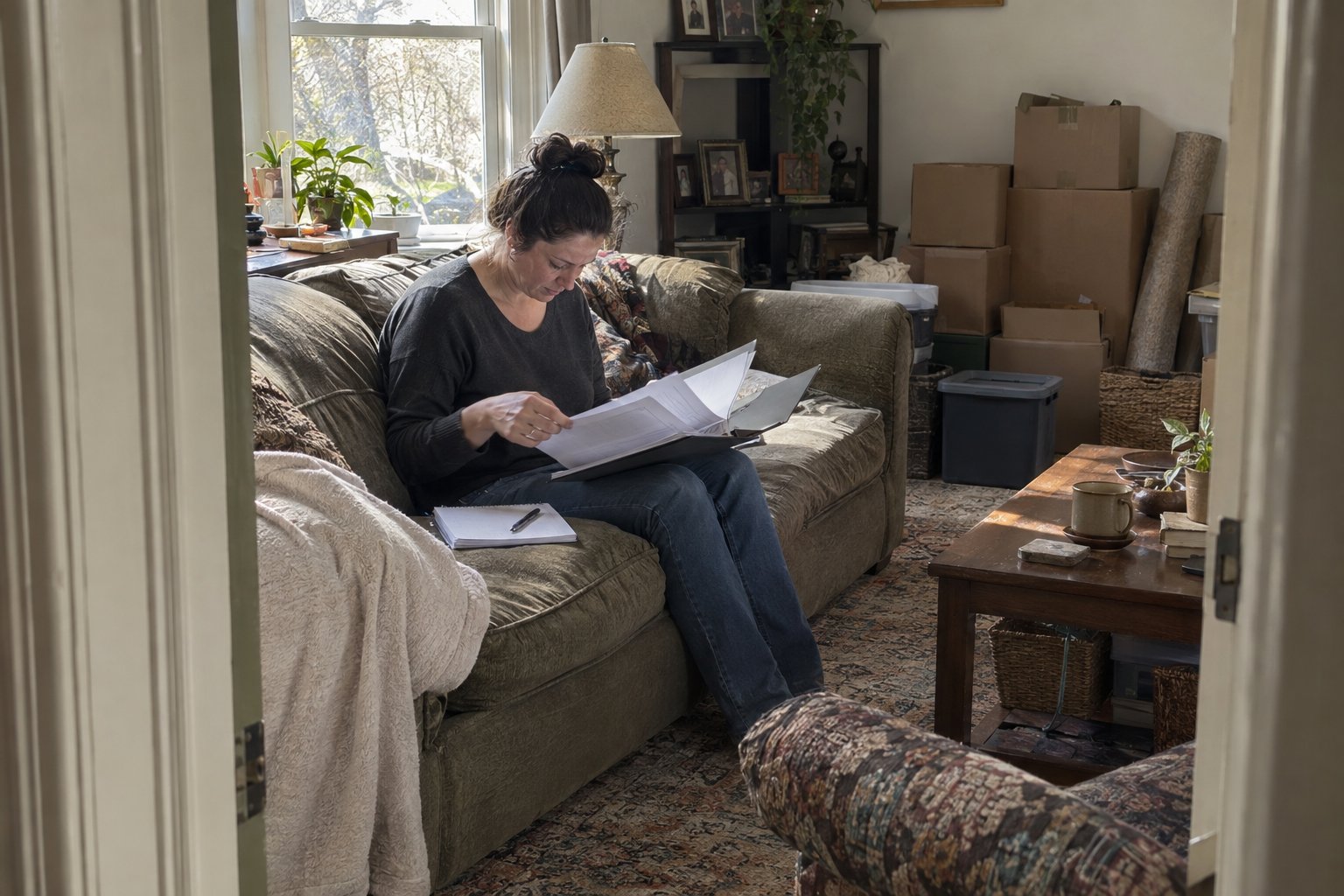
The living room is one of the most common spaces where people move items they no longer want simply because they did not take the time to evaluate them before the truck arrived. A sectional that barely fit in the last apartment, a coffee table that has seen better days, a bookshelf that wobbles — these are items that cost real money to move and that will occupy space in your new home whether you want them to or not. Before you begin wrapping a single piece of furniture, spend time doing a deliberate audit of everything in the room.
If you have dimensions for your new living room — or can visit and measure — compare them against your existing large furniture before the move. A sectional that works in a large open-plan space may be completely wrong for a smaller living room with a different layout. Moving oversized furniture that will not work in your new space costs you real money in labor and truck space. If something will not fit or will not work, now is the time to sell it, donate it, or arrange a separate pickup rather than loading it on the truck.
Bookshelves in living rooms accumulate weight faster than almost anything else in the home. A single standard bookshelf can hold several hundred pounds of books, DVDs, board games, and miscellaneous items. Packing all of that without reviewing it first is a significant labor investment. Pull everything off shelves and evaluate it category by category: books you will realistically re-read, media you still use, and items that have genuine sentimental or practical value. Donate the rest to local Nashville libraries, thrift stores, or charity organizations. Every box you eliminate is a box you do not have to carry, load, transport, and unpack.
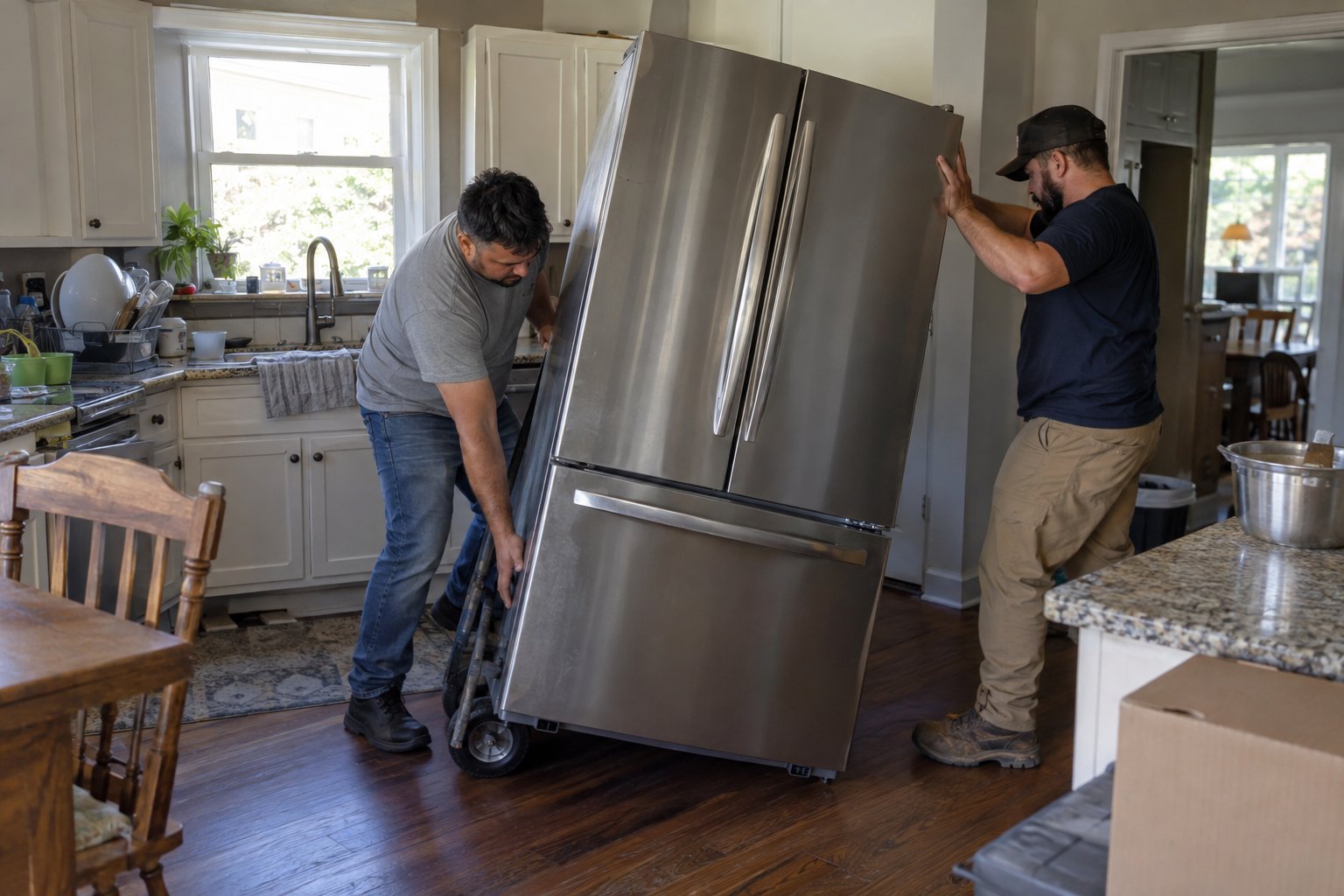
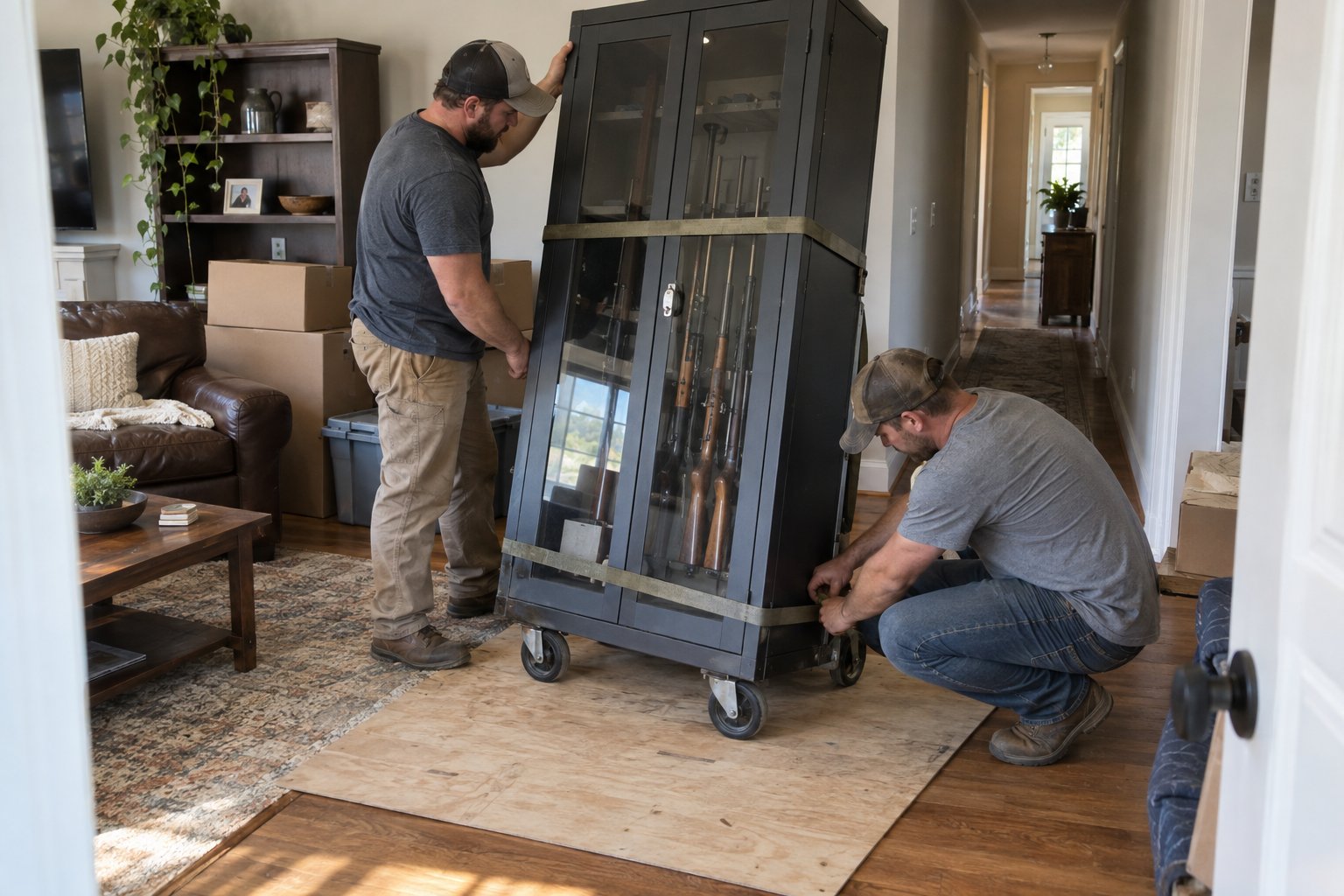
Large living room furniture — sofas, sectionals, armchairs, entertainment centers, and coffee tables — represents some of the most physically demanding work in any home move. These pieces are heavy, awkward to maneuver through doorways and hallways, and easy to damage if not prepared correctly. Professional movers use specific techniques and materials to protect both the furniture and the home during transit.
Before any large piece of furniture moves an inch, identify every component that can be removed. Sectional sofas separate into individual pieces — detach them and move each section independently. Shelving units with removable shelves should have every shelf taken out and wrapped separately. Entertainment centers with doors, glass panels, or removable components should be broken down as far as possible. Coffee tables with removable legs or glass tops should have those components removed, wrapped, and transported separately. Each bolt, screw, and fastener that comes out should go directly into a labeled zip-lock bag taped to the piece it belongs to.
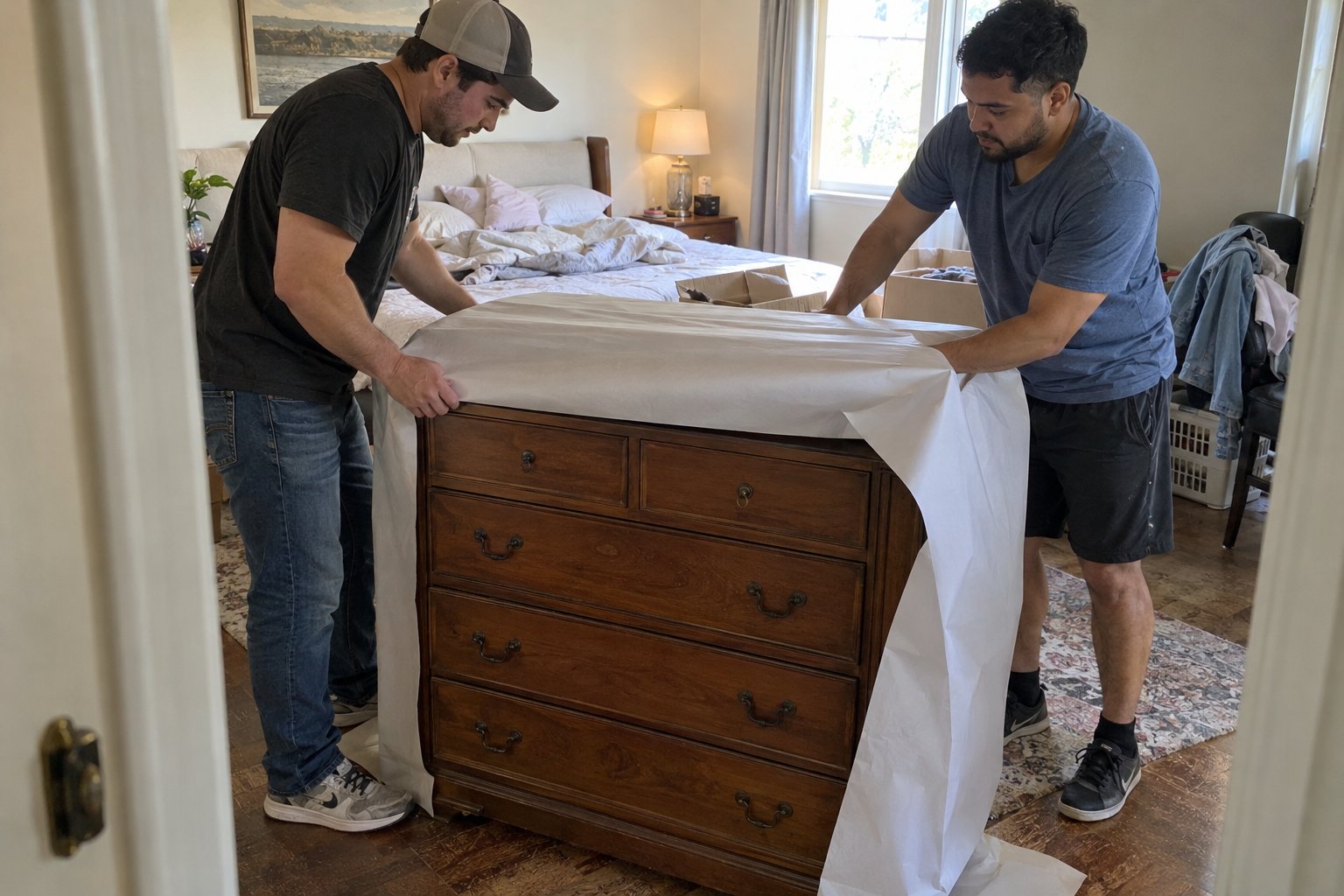
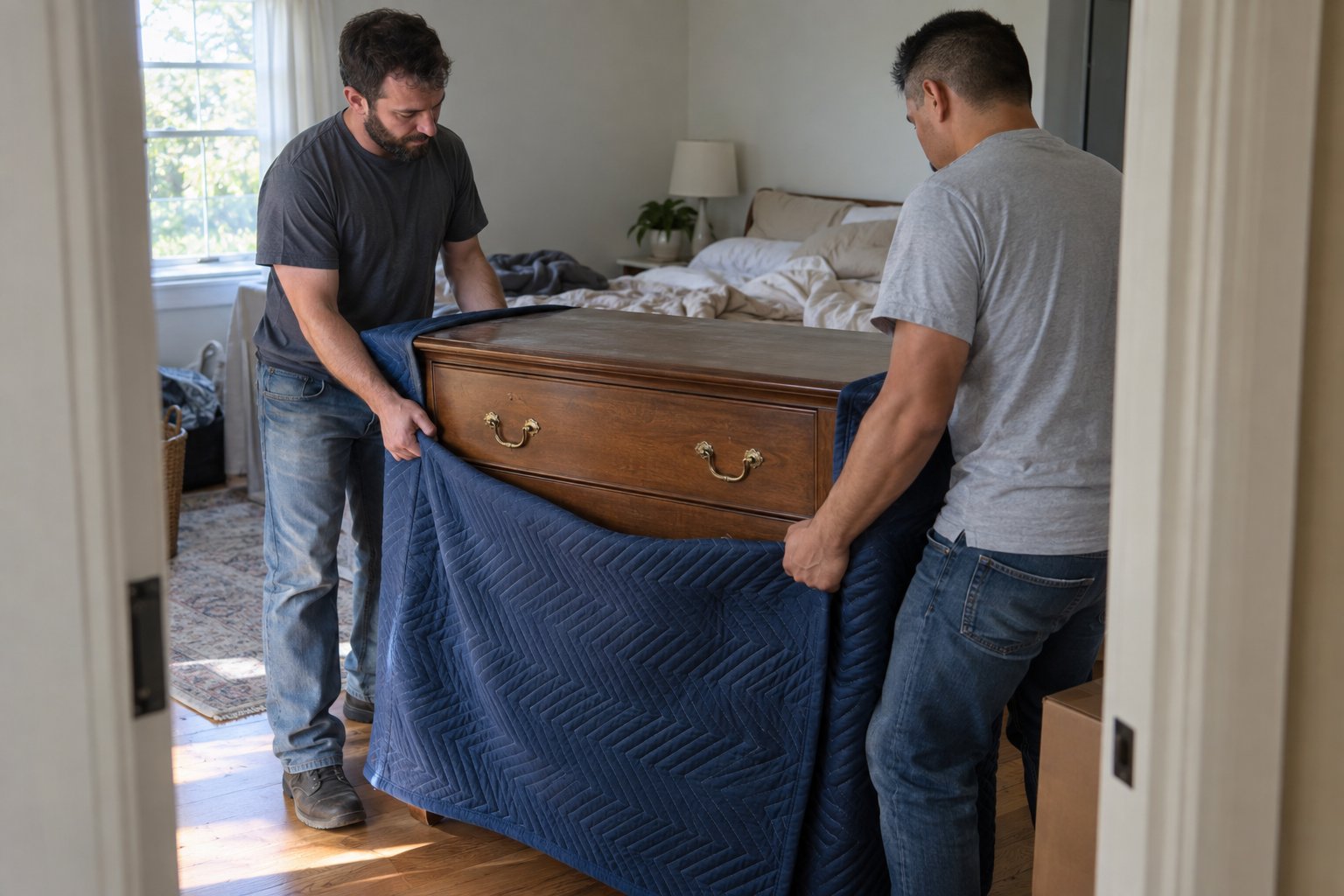
Fabric sofas and upholstered chairs should be wrapped in moving blankets to protect them from dirt, moisture, and scuffing during loading and transport. Stretch wrap — the clear plastic film used by professional movers — is applied over the blankets to hold them in place and keep the upholstery clean. Do not apply stretch wrap directly to fabric upholstery without a blanket layer underneath; the plastic can leave residue or cause fabric to sweat during transport. Hard-surface furniture — wood tables, lacquered cabinets, painted pieces — should have corner protectors on any exposed edges before blankets are applied.
One of the most avoidable moving day problems is discovering that a sofa or sectional will not fit through a doorway, stairwell, or hallway after the truck has already arrived. Measure the width and height of every doorway, hallway, and staircase between the living room and the exit before moving day. Compare those measurements against the diagonal of your sofa and the dimensions of any other large pieces. In older Nashville homes particularly, doorframes can be narrower than modern standards. If a piece genuinely will not fit, plan ahead: remove door hinges to gain an inch, or arrange for a furniture hoisting service if needed.
The television and entertainment system is typically the most expensive and fragile part of any living room move. A large flat-screen television is particularly vulnerable — the screen can crack from lateral pressure, vibration, or being laid flat without adequate support. Getting this part of the move right requires more preparation than most people give it.
If you kept the original manufacturer box for your television, use it — it is designed precisely for this purpose and provides the correct foam inserts for your screen's dimensions. If you do not have the original box, a flat-screen TV moving box (available at moving supply stores) is the next best option. Never lay a flat-screen television face-down or flat on its back without purpose-built support — the internal panel can crack under its own weight. Transport the television upright, secured so it cannot tip, and padded on all sides with moving blankets.
Before you disconnect a single cable from your receiver, gaming console, streaming device, or sound system, photograph every connection point from multiple angles. Take close-up photos of the back of each device and the cable routing between them. This documentation takes five minutes and saves hours of frustration when you are reassembling the system in your new home. Label each cable with masking tape and a marker — receiver power, HDMI 1, subwoofer left — so that reassembly is straightforward even weeks after you packed. Coil cables individually, secure with twist ties, and pack them in a clearly labeled bag or small box that travels with the television.
Gaming consoles, receivers, soundbars, and streaming devices should each be wrapped individually in bubble wrap and packed in snug boxes with cushioning on all sides. Do not mix heavy items with fragile electronics in the same box. If you have original packaging for any components, use it. Remove any discs from gaming or Blu-ray systems before packing. Pack remote controls and small accessories in a separate labeled bag so they do not get lost in the chaos of moving day.
Living rooms tend to accumulate the most decorative and sentimental items in the home — framed photographs, artwork, sculptures, decorative vases, mirrors, and collections of various kinds. These items are often irreplaceable and require more individual attention than general household items.
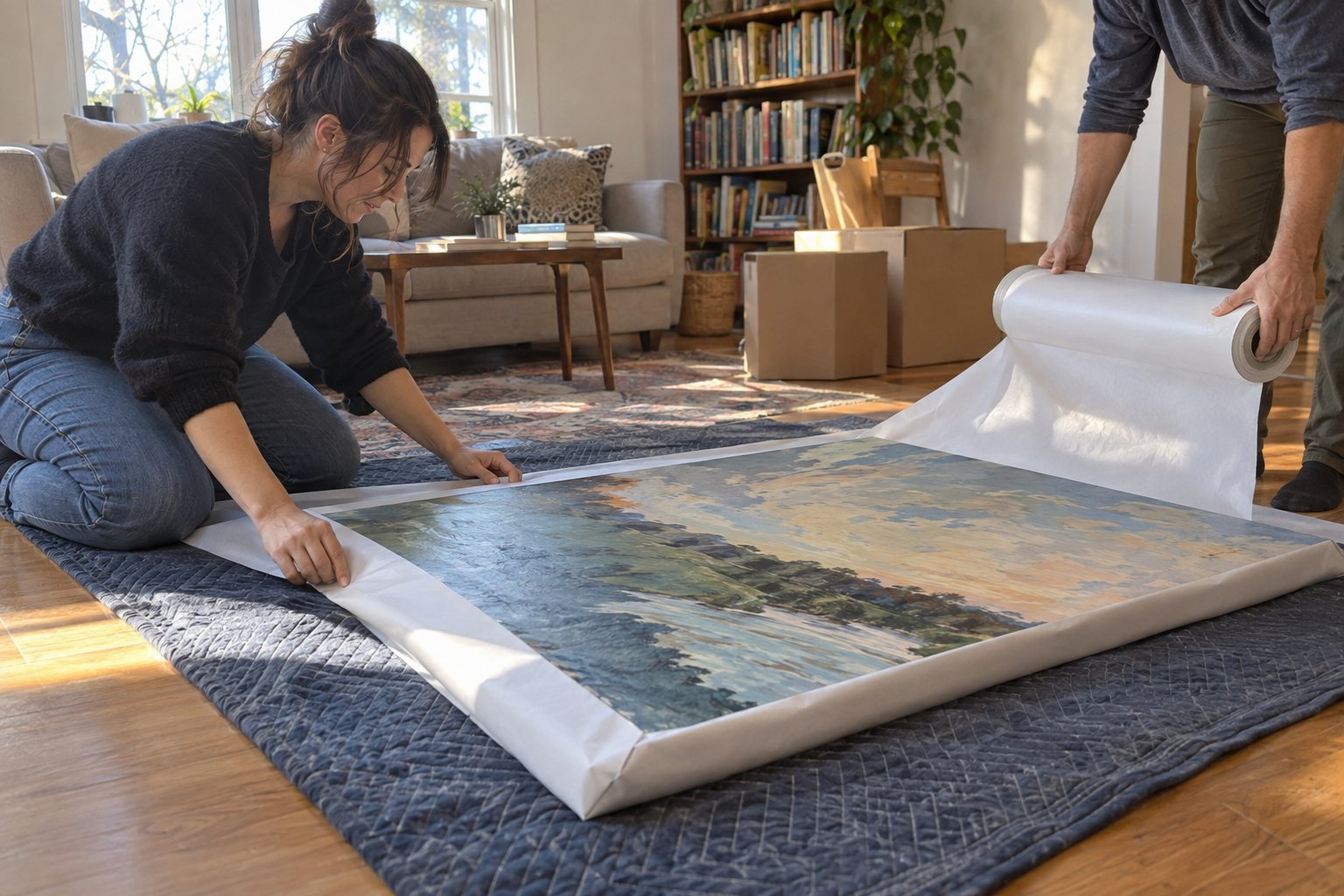
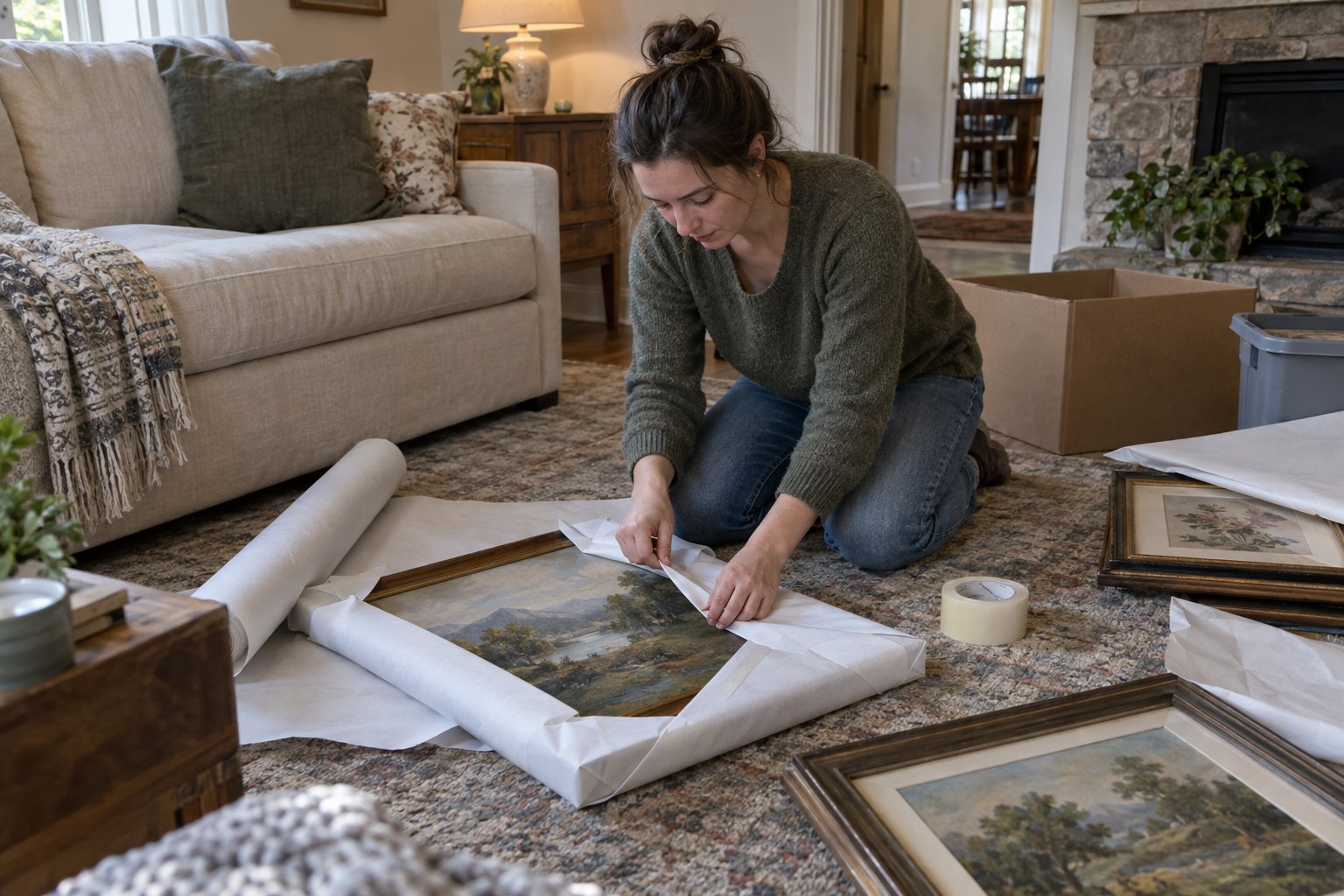
Framed prints, canvases, and mirrors should be wrapped in packing paper first, then bubble wrap, with corner protectors on all four corners. Picture boxes — long, flat boxes designed specifically for framed artwork — are the correct container for most framed pieces. Pack artwork vertically in the box, never flat. Fill any empty space in the box with crumpled packing paper so the frame cannot shift during transit. Mark every artwork box clearly with "FRAGILE — DO NOT LAY FLAT" on all sides. Mirrors follow the same protocol; larger mirrors may require custom crating if they are valuable or very large.
Wrap each decorative item individually in two to three sheets of packing paper, regardless of how sturdy it looks. Pack heavier items at the bottom of boxes and lighter, more fragile items on top. Fill every gap in the box with crumpled paper so nothing can shift — a box where items move during transport is a box where things break. Do not overload boxes with decorative items; a box of breakables should be light enough to handle comfortably. Label every box with its contents and destination room so it can be placed correctly without being opened unnecessarily.
The way you approach unloading and setting up your living room has a direct impact on how functional and comfortable the space feels in the first days after the move. A little advance planning makes the difference between a room that comes together quickly and one where boxes sit for weeks because no one knows where anything goes.
If at all possible, visit your new living room in advance and sketch out a furniture placement plan. Knowing where the sofa, television, and main seating pieces will go before movers arrive means you can direct large furniture into position immediately rather than placing it randomly and moving it again later. Large living room furniture is the hardest thing to reposition once the room fills up — getting it right on the first placement saves significant effort. Mark the floor with painter's tape if it helps you visualize the layout.
Focus on the items that make the room livable first: the sofa and seating, the television, and any lighting. Electronics and seating give you a functional space to decompress after moving day, which matters more than people realize. Books, decorative items, and artwork can wait until the major furniture is in place and you have a sense of how the room will actually feel. Give yourself several days of living in the space before making final decisions about where wall art will hang or where shelving will be positioned — the way light moves through the room at different times of day affects everything.
Start by detaching the individual sections of the sectional — most sectionals separate into two to four independent pieces, each of which is far more manageable than the assembled unit. Measure every doorway, hallway, and stairwell the sofa will pass through before moving day and compare those measurements against the dimensions of each section. For tight doorways, remove the door from its hinges to gain an extra inch or two of clearance. Wrap each section in a moving blanket secured with stretch wrap to protect the upholstery and the walls during maneuvering. If a section genuinely will not fit through a doorway at any angle, a furniture hoisting service or window removal may be the only option — plan for this before moving day, not during it.
The original manufacturer box with its custom foam inserts is the safest option for transporting a flat-screen television. If you no longer have it, purchase a flat-screen TV moving box sized to your television's dimensions from a moving supply store. Never lay a flat-screen TV face-down or on its back without purpose-built support — the internal display panel can crack under its own weight. Transport the television upright, padded on all sides with moving blankets, and secured so it cannot tip during transit. Remove any wall-mount brackets from the back of the set before packing, and transport the mount hardware separately in a labeled bag.
Pack books in small boxes only — a standard book box should hold no more than thirty to forty pounds, which fills surprisingly quickly. Never pack books in large boxes; a large box of books becomes impossible to safely carry and is a common cause of box collapse and back injuries on moving day. Pack books with spines against the box wall and pages facing inward, or lay them flat in layers. Fill any empty space in the box with crumpled packing paper so books cannot shift. Before packing, take the opportunity to honestly evaluate your collection — books you will not re-read are heavy, space-consuming items to move for no practical reason, and local Nashville libraries and thrift stores accept donations regularly.
Wrap the piece in packing paper first, then a layer of bubble wrap, and apply corner protectors to all four corners before placing it in a picture box or mirror box. Picture boxes are flat boxes designed specifically for framed artwork and mirrors and are available at moving supply stores in a range of sizes. Pack the piece vertically inside the box — never flat — and fill all empty space with crumpled paper so the frame cannot move. Mark every side of the box clearly with 'FRAGILE — DO NOT LAY FLAT.' For very large or highly valuable mirrors and artwork, custom wooden crating provides the highest level of protection and is worth the investment.
The right answer depends on what your living room contains and how comfortable you are with the physical demands involved. A living room with a large sectional, a heavy entertainment center, a big-screen television, and significant artwork or décor represents a real challenge — professional movers have the equipment, blankets, and technique to move these items without damage to the furniture or the home. For a more modest setup with manageable furniture and limited breakables, a well-organized self-move with enough help is entirely feasible. The most important factor in either case is preparation: disassembling what can be disassembled, packing fragile items correctly, and measuring doorways in advance will prevent the vast majority of living room moving problems before they happen.
Whether you’re moving a home, apartment, office, or just a few heavy items, We Haul Nashville is ready to help make the process easier.