Written by:
Pierce J.
Published:
July 11, 2026
Learn how to move a dining room the right way — from auditing your furniture to packing china, protecting tables, and getting set up fast at your new home.
Knowing how to move a dining room is something most people underestimate until they are standing in front of a solid wood table that weighs well over two hundred pounds, surrounded by chairs that do not stack, a china cabinet full of fragile pieces their grandmother left them, and a sideboard that will not fit through the doorway without removing the legs. The dining room looks simple on the surface — a table, some chairs, maybe a buffet or a hutch — but it is one of the rooms most likely to produce damaged furniture and broken heirlooms when it is not packed and moved deliberately.
This guide walks you through how to move a dining room from start to finish: how to audit what is actually worth moving, how to disassemble and protect your dining table, how to handle chairs and upholstered seating, how to pack a china cabinet and its contents safely, how to move a sideboard or buffet without damage, and how to get your dining room set up at your new home without a week of chaos. Whether your dining room is a formal space with a twelve-seat table, a full china collection, and a built-in hutch, or a compact area with a four-top table and a few open shelves, these steps will carry you through the move without the breakage and frustration that dining room moves so often produce.
Before you wrap a single chair leg or disassemble a single table, spend real time evaluating everything in your dining room. The dining room is a space where furniture accumulates by default — pieces inherited, purchased for a larger home, or kept out of habit rather than genuine use. Moving all of it by default costs money in labor, materials, and truck space. The audit is where you recover that cost before anything leaves the house.
A large dining table is one of the most expensive items to move by sheer size and weight. Before you commit to moving yours, evaluate its condition and its fit for your new home. A table with a warped leaf, a cracked pedestal base, or a veneer surface that is already lifting is worth reconsidering — moving will not improve any of those problems, and a table in poor condition may not justify the effort and cost of transport. If your new home has a smaller dining area, confirm measurements before moving day to avoid discovering on arrival that the table you moved does not fit the room it was intended for.
Dining chairs wear out unevenly. A set of six chairs may include two with wobbly joints, one with a stained cushion beyond saving, and one with a cracked leg. Moving a partial set of mismatched chairs you intend to replace soon anyway is a genuine cost in truck space and labor. Decide before moving day which chairs are making the move and which are being donated, sold, or discarded. This is also the right moment to evaluate upholstered dining chairs that are stained or worn — reupholstering before or after a move is often more cost-effective than moving a chair you are already unhappy with.
China cabinets and sideboards often hold items that have not been used in years — serving platters for dinner parties that no longer happen, duplicate sets of dishes, crystal that was a gift and was never the right style. China and crystal are among the most labor-intensive items to pack correctly and among the most likely to be damaged in transit if packing is rushed. An honest audit before packing begins will tell you which pieces are genuinely worth the care they require and which are reasonable candidates for donation or gifting to family members before the move.
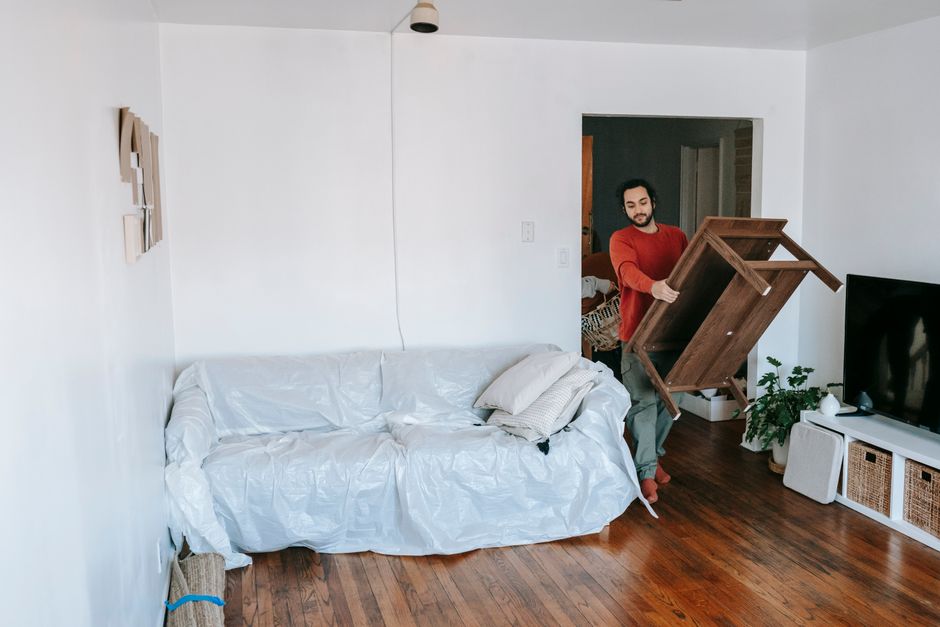
A dining table is almost always the largest and heaviest single piece in the dining room, and it requires specific preparation before it goes on the truck. Moving a table without proper disassembly and protection is one of the most reliable ways to arrive at your new home with a scratched surface, a broken leg, or a damaged extension mechanism.
If your table has extension leaves, remove them before the move and wrap each one individually in moving blankets or furniture pads. Store leaves flat — never upright leaning against a wall — where they cannot tip or flex under their own weight during transit. Label each leaf so you know which end is which and which leaf belongs to which position if the table uses multiple leaves of different sizes. Extension slides and hardware that come apart should be bagged and taped directly to the underside of the table so they are not lost in transit.
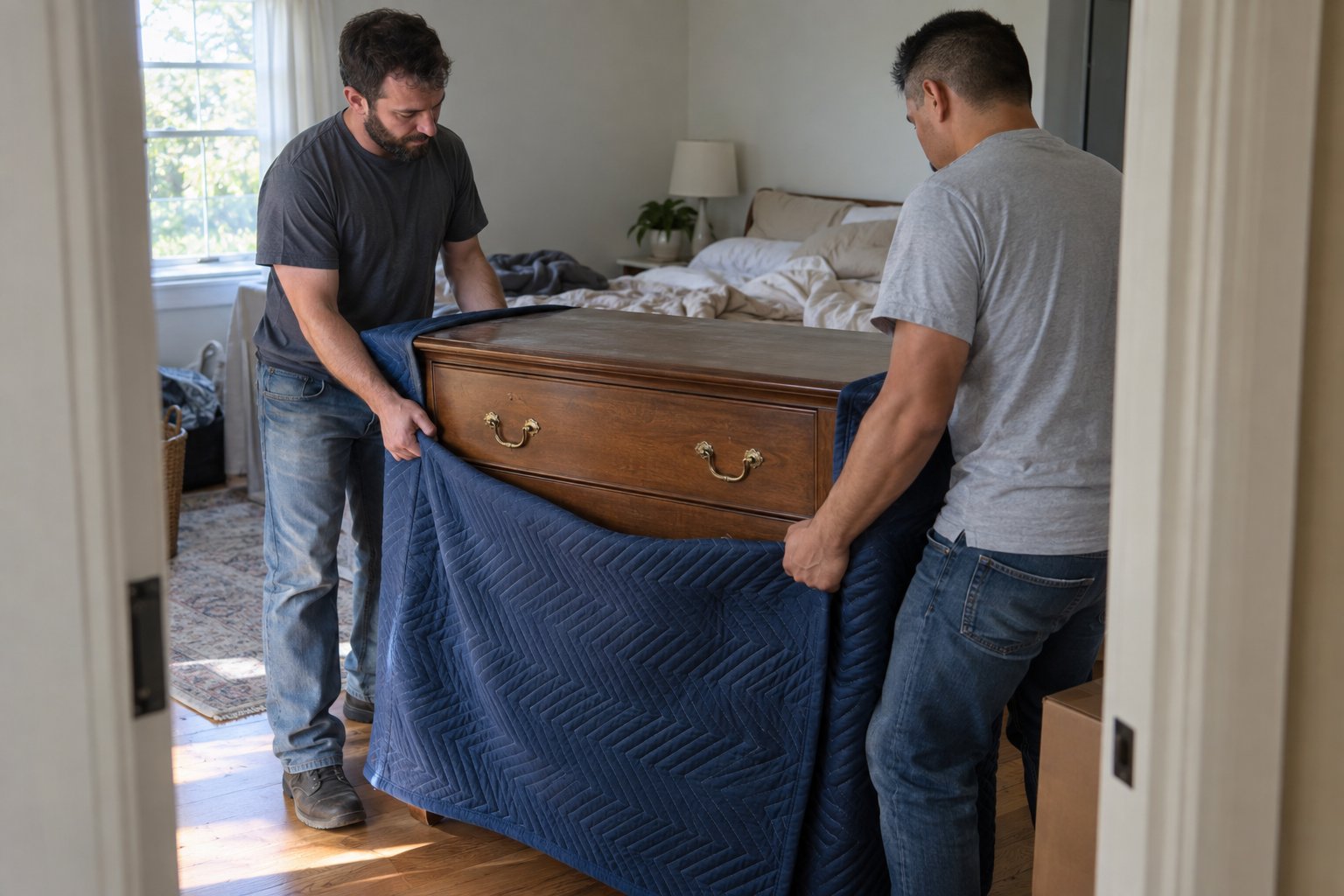
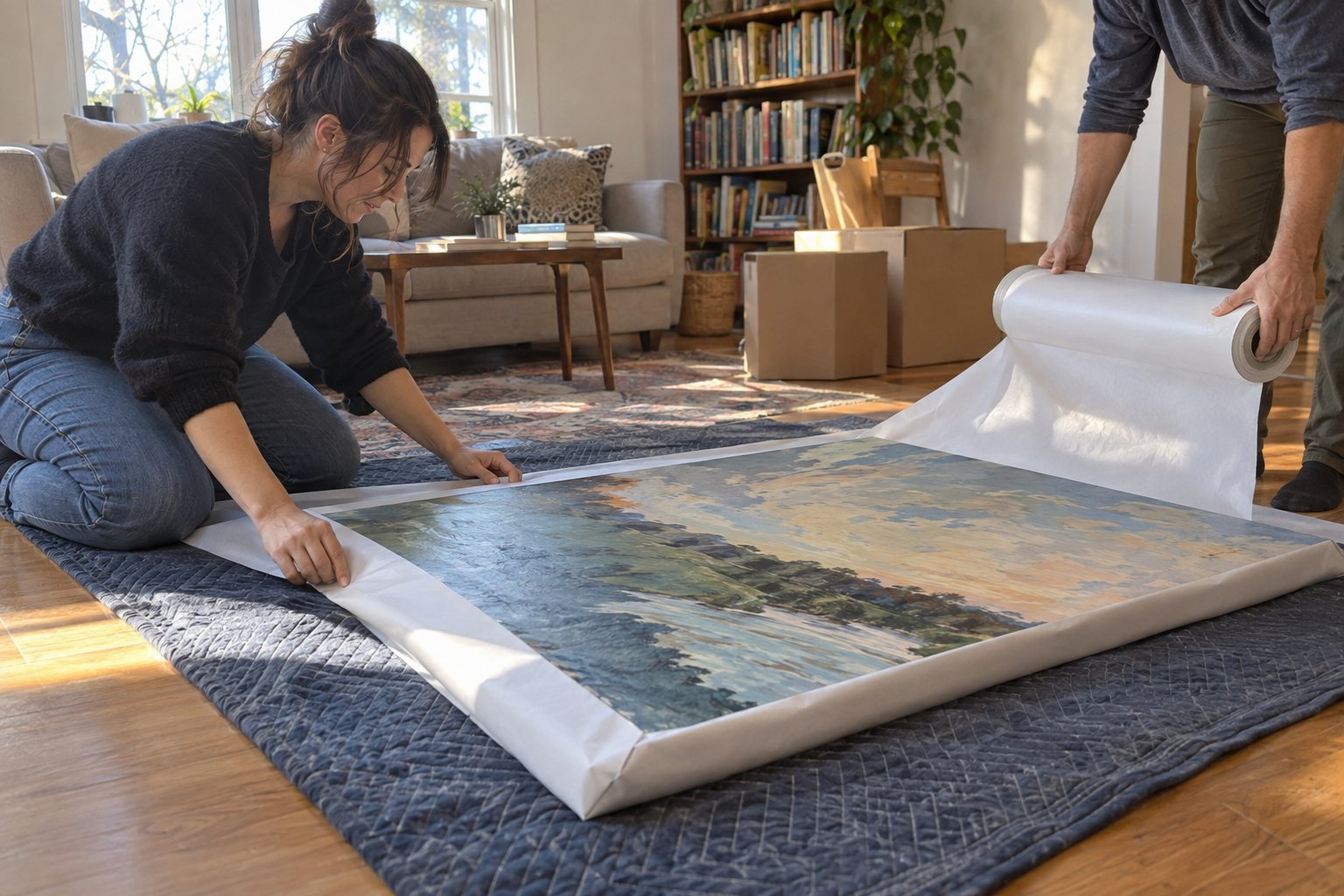
The tabletop surface is the most vulnerable part of any dining table — scratches, gouges, and pressure dents from contact with other items during transit can ruin a finish that took years to maintain. Cover the top with moving blankets or thick furniture pads and secure them with stretch wrap or packing tape applied only to the blanket, never directly to the wood surface. Tape on bare wood or finished veneer can lift the surface when removed. If your table has a glass top, remove it entirely, wrap it separately in furniture blankets, and transport it padded vertically rather than flat, where it is more resistant to breakage from pressure.
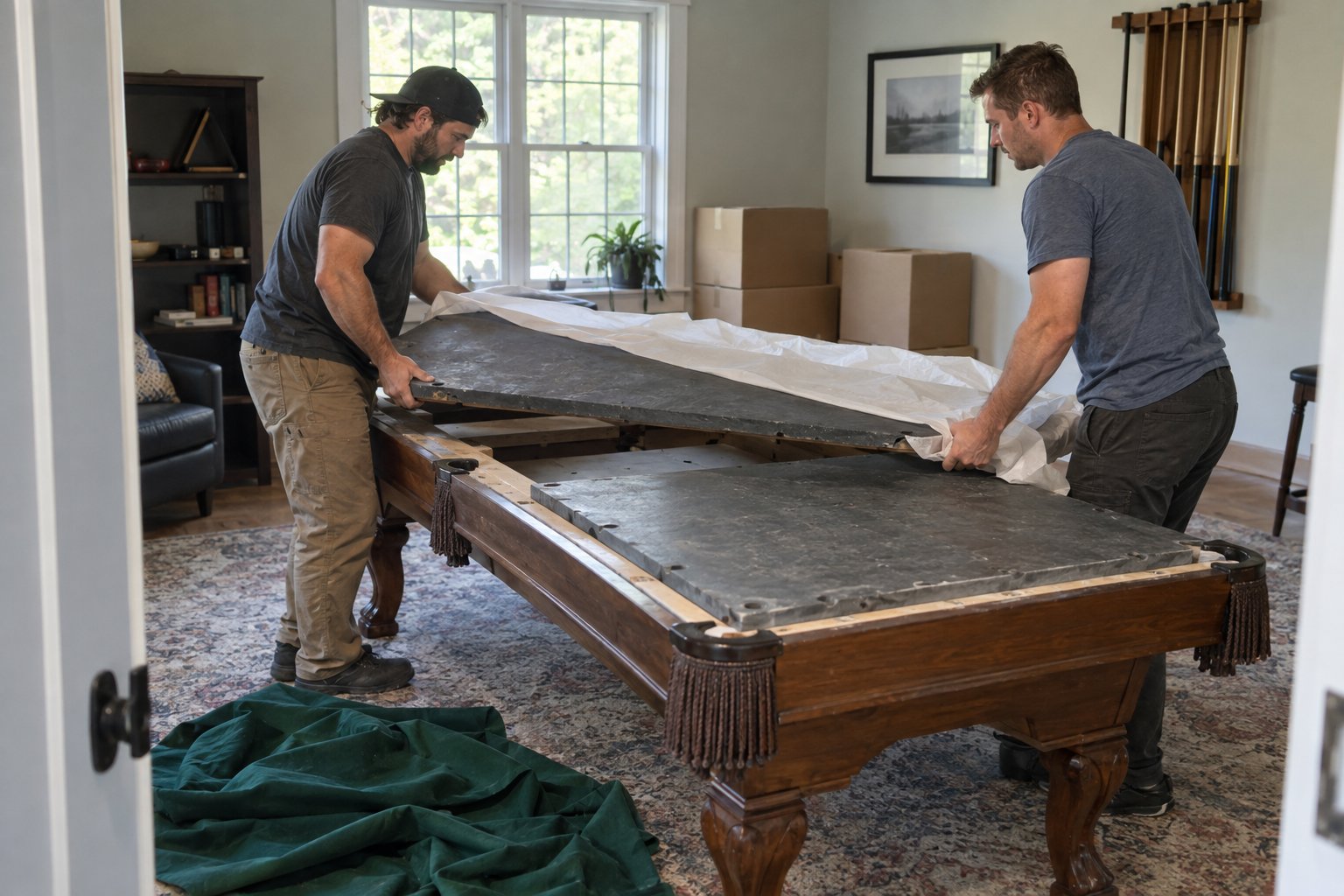
Most dining tables allow leg removal for transport. If your table legs unscrew or bolt off, remove them before the move. Wrap each leg individually in moving blankets and bundle them together. Keep all hardware — bolts, nuts, washers, and any alignment pins — in a labeled zip-lock bag taped securely to one of the legs so nothing is separated in transit. A table with legs removed loads more safely onto the truck, takes up less vertical space, and is significantly easier to move through doorways and stairwells.
A china cabinet is two separate moving challenges in one: the cabinet itself, which is typically tall, heavy, and top-heavy, and its contents, which are among the most fragile items in the home. Treating them as one problem — wrapping a few plates and hoping for the best — is exactly how heirlooms get broken in transit.
A china cabinet should never be moved with its contents inside. Even if the doors latch securely, items inside a cabinet shift during loading, transit, and unloading. The glass doors of most china cabinets are not designed to contain items under the lateral forces of a moving truck. Empty the cabinet entirely before it is moved, and plan to pack all contents separately in dedicated dish packing boxes with cell dividers and generous cushioning material.
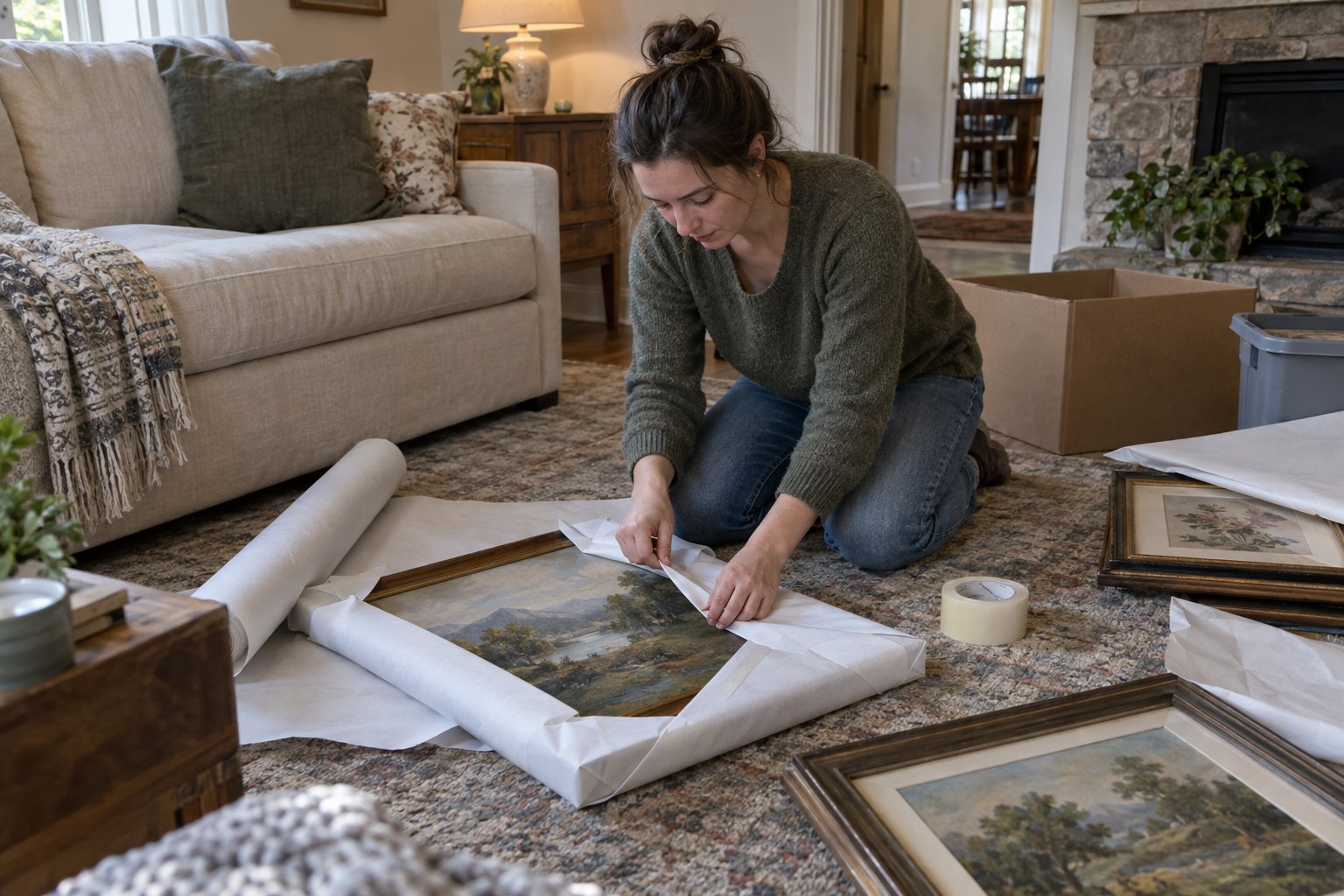
One of the most counterintuitive but well-established rules of packing china is to pack plates vertically — on their edges — rather than flat and stacked. Plates packed vertically distribute impact loads across the full rim of the plate rather than concentrating force on the flat surface, making them substantially more resistant to the shocks and vibrations of transit. Wrap each plate individually in packing paper or bubble wrap before placing it vertically in a cell-divided dish pack box. Fill any remaining space in the box with packing paper to eliminate movement. Mark the box fragile on all sides and indicate which direction is up.
Stemware and crystal are among the most difficult items to move without breakage because the stem — the narrow connection between the bowl and the base — is the point of greatest fragility. Wrap each glass from the base up, tucking packing paper inside the bowl as well as around the outside. Use cell-divided boxes designed for stemware rather than improvising with standard boxes. Never stack wrapped glasses more than two layers deep. Mark every stemware box fragile and keep it away from heavy items in the truck.
Once emptied, remove glass shelves and doors where possible, wrap them individually, and transport them padded and upright. If the cabinet has a hutch top that separates from a base, separate the two pieces — moving them as one tall combined unit dramatically increases the risk of tipping during loading and transit. Wrap the exterior of both pieces in moving blankets and secure with stretch wrap. Because china cabinets are often veneer over particleboard, moisture and impact during transit can cause lasting damage; keep the cabinet away from the truck walls where metal contact can leave marks.
Sideboards and buffets are heavy, low-to-the-ground furniture pieces that can be deceptively difficult to move because of their width and the way their weight is distributed. Most sideboards do not disassemble easily, which means they need to navigate through doorways and down hallways as a single unit.
Before moving day, measure every doorway, hallway, and stairwell the sideboard or buffet will need to pass through — both at your current home and at your new home. A sideboard that is wider than the doorway it needs to pass through is a problem that needs to be solved before the movers arrive, not during the move. In some cases, removing door hinges to gain an extra inch or two of clearance is the solution. In others, the piece may need to exit through a different opening entirely.
Remove all drawers before moving the main cabinet body — this removes significant weight and eliminates the risk of drawers sliding open during transit and catching on doorframes or the truck wall. Wrap each drawer individually in stretch wrap or moving blankets to protect its finish. Remove any knobs, handles, or pulls that could snag on other items and bag them separately, labeling which piece they came from. If the sideboard has interior shelves that can be removed, take them out as well.
How you approach setup on arrival matters as much as how you packed. A dining room that is set up thoughtfully on day one means you have a functional space for meals immediately — which matters especially in those first days when the rest of the house is still in boxes.
Get the dining table reassembled and in its final position before you start unpacking china and glassware. A table that is in place gives you a working surface for the unpacking process itself — somewhere to set items as you unwrap them and inspect them before they go into the china cabinet. Confirm the table is level before considering it done; an unlevel table is a persistent daily annoyance and in some cases an indicator that the floor surface has a significant slope worth knowing about.
Unpack china, crystal, and stemware carefully and inspect each piece as you unwrap it. Document any damage immediately — photographs taken before the boxes leave the moving area are useful if you need to file a claim with your moving company. Do not place damaged pieces into the china cabinet assuming you will deal with them later; that is how broken items sit forgotten on shelves for years. Decide at the time of unpacking which pieces survived intact, which are damaged, and which need to be discarded.
A dining room move done correctly means your table is assembled, your chairs are arranged, and your china is back in the cabinet within a day of arrival. It takes planning and deliberate packing, but the result is one of the most satisfying spaces to walk into in a newly moved home — set, functional, and ready for the first meal.
In most cases, yes. Dining tables — especially large ones — are significantly easier to move safely when the legs are removed. Removing the legs reduces the table's overall footprint, makes it easier to navigate through doorways and stairwells, and allows it to be placed flat on the truck where it is less likely to tip or shift during transit. Most dining table legs either unscrew or bolt off with standard tools. Keep all hardware in a labeled zip-lock bag taped directly to one of the legs so nothing is separated. If your table has a pedestal base that does not easily detach, protect the base with moving blankets and position the table carefully on the truck to avoid leverage stress on the pedestal during movement.
The key rule for packing china plates is to pack them vertically — on their edges — rather than flat and stacked on top of one another. Plates packed vertically distribute shock and vibration across the full rim rather than concentrating force on the flat surface, making them far more resistant to breakage in transit. Wrap each plate individually in packing paper or bubble wrap before placing it in a cell-divided dish pack box. Fill any empty space in the box with crumpled packing paper to eliminate movement inside the box. Use boxes specifically designed for dishes rather than standard moving boxes, mark every side fragile, and indicate which direction is up. Never overfill a dish box to the point where it cannot close without pressure on the contents.
No. A china cabinet should always be fully emptied before it is moved. Even if the cabinet doors latch securely, the items inside will shift during loading, transit vibration, and unloading — and the glass doors of most china cabinets are not designed to contain items under the lateral forces generated during a move. Moving a loaded china cabinet also makes it substantially heavier and increases the risk of tipping, which is a safety concern for the movers and a damage risk for the cabinet itself. Pack all china, crystal, and glassware separately in properly padded boxes before the cabinet is moved.
Cover the tabletop with moving blankets or thick furniture pads before the table goes on the truck. Secure the blankets with stretch wrap or packing tape applied only to the blanket itself — never apply tape directly to a wood or veneer surface, as adhesive can lift the finish when removed. If your table has a glass top, remove it entirely, wrap it separately in moving blankets, and transport it padded and in an upright vertical position rather than flat, where it is more vulnerable to breakage from pressure. Avoid placing other items on top of a blanketed table during loading, as even padded weight can dent soft wood surfaces under the vibration of a moving truck.
Stemware and crystal glasses are fragile primarily at the stem — the narrow connection between the bowl and the base — which is the point most vulnerable to impact and torsion during transit. Wrap each glass individually, starting from the base and working upward, and tuck packing paper inside the bowl as well as around the outside. Use cell-divided boxes specifically designed for stemware rather than packing glasses loose in a standard box. Never stack wrapped glasses more than two layers high in a single box. Mark the box fragile on all sides and indicate which direction is up. Load stemware boxes on top of heavier items in the truck and never stack weight on top of them during transit.
Whether you’re moving a home, apartment, office, or just a few heavy items, We Haul Nashville is ready to help make the process easier.