
Written by:
Pierce J.
Published:
July 9, 2026
Learn how to pack and move a home bar safely — from bottles and glassware to furniture and refrigeration units. A complete guide from We Haul Nashville.
Knowing how to move a home bar is one of those moving challenges that looks manageable from a distance and becomes genuinely complicated up close. A home bar is one of the most fragile-dense spaces in any home — a concentrated combination of glass bottles, delicate stemware, heavy furniture, refrigeration units, and a surprising amount of accumulated accessories that do not pack neatly into any standard moving box. Pour it all wrong and you arrive at your new home with broken glassware, shattered bottles, and a cabinet that smells like a distillery. Handle it right and your bar is up and functional within hours of the last box hitting the floor.
This guide walks you through how to move a home bar from start to finish: how to audit your collection before a single thing is packed, how to transport full and open bottles of liquor safely and legally, how to protect wine glasses, cocktail glasses, and decanters that could not survive even moderate impact, how to move the bar furniture itself, and how to get your bar set up at your new home without a week of chaos. Whether your setup is a single rolling cart with a few bottles or a fully built-in wet bar with a kegerator, under-counter refrigeration, and two hundred bottles of spirits, these steps will carry you through the move without the breakage and frustration that home bar moves so often produce.
Before you pack a single bottle or wrap a single glass, spend time doing a real audit of everything in your bar setup. A home bar accumulates things quietly — bottles purchased for one cocktail recipe and never finished, duplicates from gifts, mixers past their prime, glassware that has been chipped but not quite discarded. Moving all of it by default costs real money in weight, volume, packing materials, and time. The audit is where you recover that cost before the truck ever arrives.
Open bottles of spirits are the first thing to evaluate honestly. A bottle of whiskey that is two-thirds empty but not a regular pour in your house is genuinely not worth the packing effort, the weight on the truck, or the risk of breakage in transit. Be realistic about what you actually drink. Bottles that are less than a quarter full — especially of spirits you rarely touch — are reasonable candidates for finishing before the move or gifting to neighbors rather than wrapping in paper and boxing up.
Wine presents a different consideration. If you have a wine collection of any size, temperature and vibration during transit matter. Wines should be evaluated against the length and conditions of the move. For a short local Nashville move, most wines travel adequately in a padded wine shipper box or a purpose-built wine carrier. For anything longer or in extreme heat, consider whether storage at a climate-controlled facility while you settle in makes more sense than moving the collection on the truck with everything else.
Glassware is one of the most expensive things to pack by effort-to-value ratio when it is glassware you do not actually use. The set of champagne flutes opened once, the rocks glasses you never reach for, the specialty cocktail glasses for a drink no one in the household makes — evaluate each category before committing to wrapping and boxing it. Stem glassware in particular breaks under stress and requires more packing material per piece than almost anything else in the home. If you have glassware you do not love, a move is the right moment to part with it rather than wrapping it carefully and unpacking it into a new cabinet where it will sit equally unused.
Bottles of spirits are heavy, glass, and filled with liquid — three qualities that make them genuinely difficult to move without risk. A single broken bottle in a box does not just destroy that bottle; it soaks everything around it, adds weight and mess, and depending on the spirits involved, can damage cardboard and surrounding items extensively. Packing bottles correctly is not optional.
Liquor store boxes with cardboard divider inserts are among the best packing containers available for moving bottles — and they are often available free. Liquor stores receive heavy shipments regularly and are generally willing to set aside their divider-equipped boxes for anyone who asks. These boxes are sized for standard spirit bottles and designed to keep glass separated. If you cannot source divider boxes, you can purchase cell-kit inserts separately and place them in standard medium boxes.
Before placing any bottle in a box, wrap each one individually in at least two full sheets of packing paper, starting from the base and rolling upward to cover the neck and cap entirely. For bottles with fragile wax seals or decorative labels you want to protect, add a layer of bubble wrap over the packing paper before placing in the divider slot. Fill any remaining air space in the box with crumpled paper so bottles cannot shift. Every box should be packed tight enough that nothing moves when you shake it gently side to side.
Open bottles — anything with a stopper, cork, or partially used original cap — should be transported upright at all times. A bottle of spirits on its side in a box is a leak waiting to happen. If you are transporting open bottles on a moving truck, place them in a sealed plastic bin rather than a cardboard box. If a cap works loose, a plastic bin contains the spill entirely. Label that bin clearly, keep it accessible, and make sure it is not placed under heavy items that could shift the contents during transit.
If your move crosses state lines, be aware that transporting personal alcohol collections between states is subject to state laws that vary considerably. Most states permit individuals to transport reasonable quantities of alcohol for personal use, but some have restrictions worth verifying before you load the truck. Moving companies operating interstate moves may decline to transport alcohol due to their own liability policies — confirm this with your mover before moving day so there are no surprises at load time.
Bar glassware — wine glasses, champagne flutes, martini glasses, rocks glasses, highballs, decanters, and specialty cocktail glasses — is among the most breakage-prone inventory in any home. The combination of thin glass, stem geometry, and the vibration of a moving truck creates real risk even when packing is done carefully. There is no shortcut here: every piece needs individual wrapping, appropriate box structure, and deliberate placement.
Each glass gets its own wrapping — full stop. Do not nest unwrapped glasses inside each other on the assumption that they will pad one another. They will not. Use packing paper — not newspaper, which transfers ink — and wrap each glass by placing the base at the corner of a sheet, rolling diagonally to the rim, and tucking the paper into the interior of the glass at the finish. For stemware, give the stem an additional dedicated wrap before rolling the body, since the stem is the single most vulnerable point.
Decanters deserve special handling. Wrap them in two full layers of packing paper, then add a layer of bubble wrap, paying particular attention to the neck. Pack decanters upright in small boxes and fill all surrounding space tightly. Never place a decanter in a box where it can move even slightly.
Use small to medium boxes for glassware only — never large boxes that will become too heavy or that allow glasses to shift over a longer span. Line the bottom of every box with a two-inch layer of crumpled packing paper before placing the first piece. Place the heaviest glasses on the bottom layer and the most delicate stemware on top. Fill every gap with crumpled paper so that nothing moves when the box is closed and lifted. Write FRAGILE — GLASSWARE — THIS SIDE UP on all four sides and the top of every box. Do not assume your mover will know from one label on one face — label all sides.
Bar furniture ranges from freestanding rolling carts that disassemble easily to fully built-in cabinetry with plumbing, under-counter refrigeration, and hundreds of pounds of integrated storage. The approach differs significantly depending on what you have.
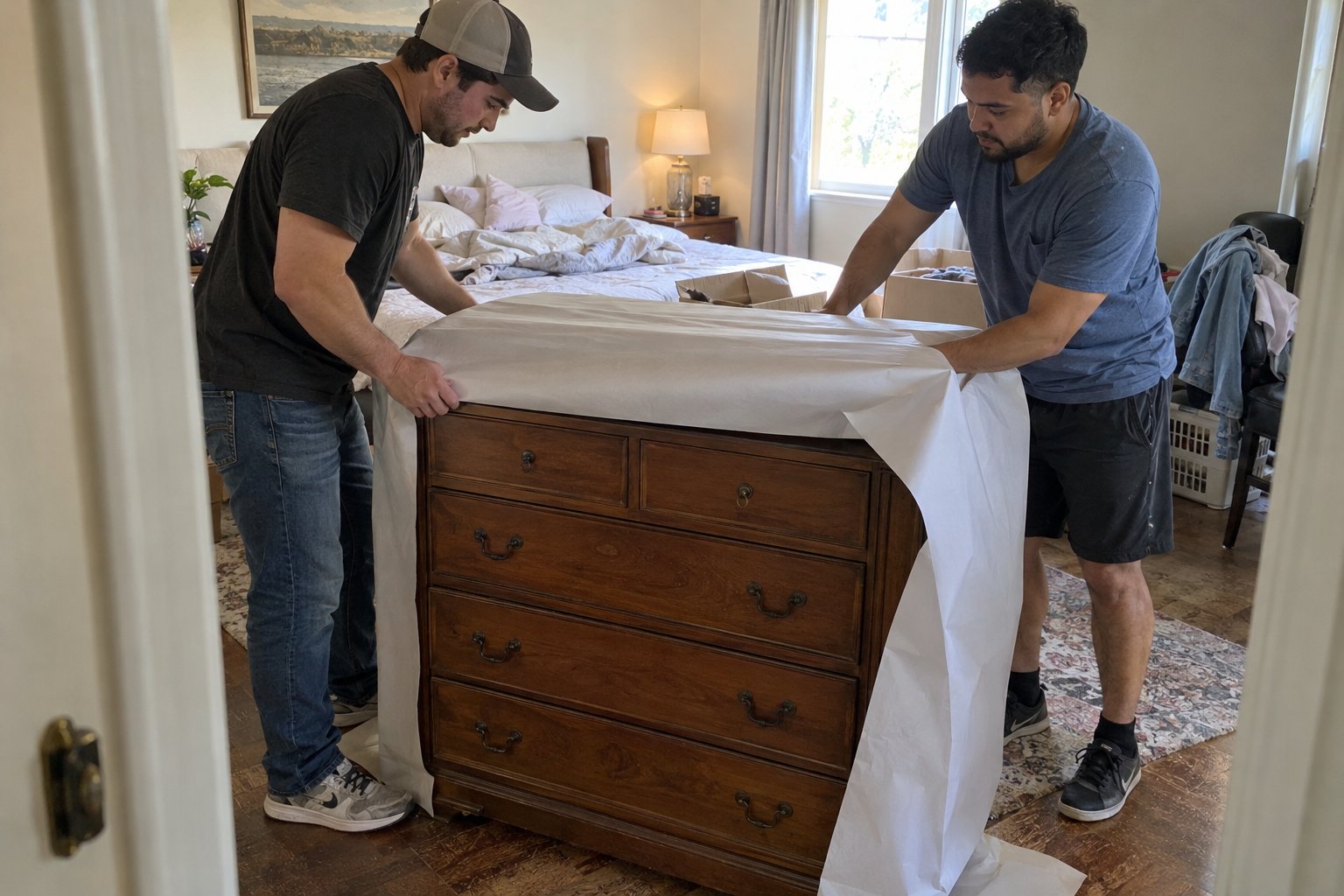
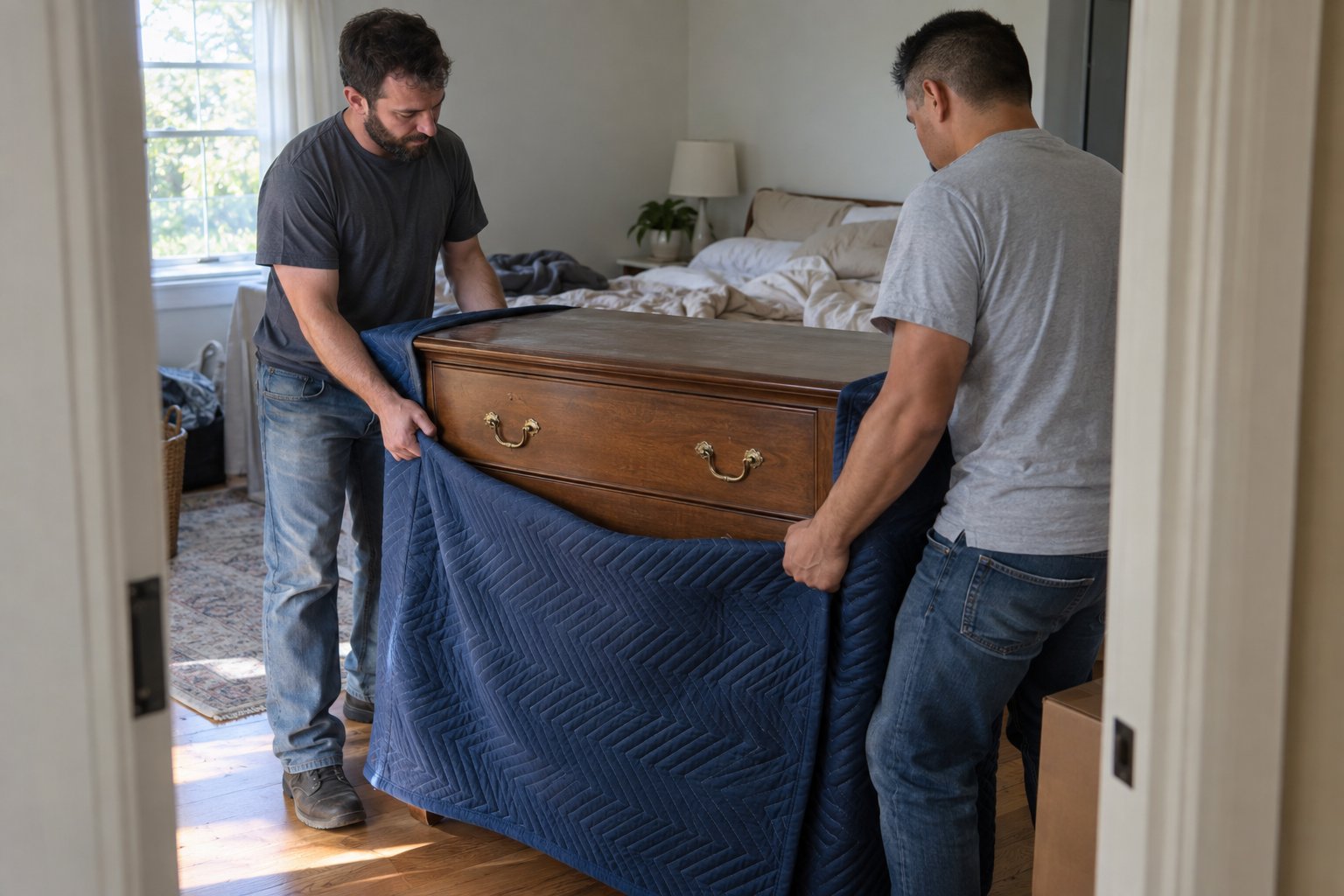
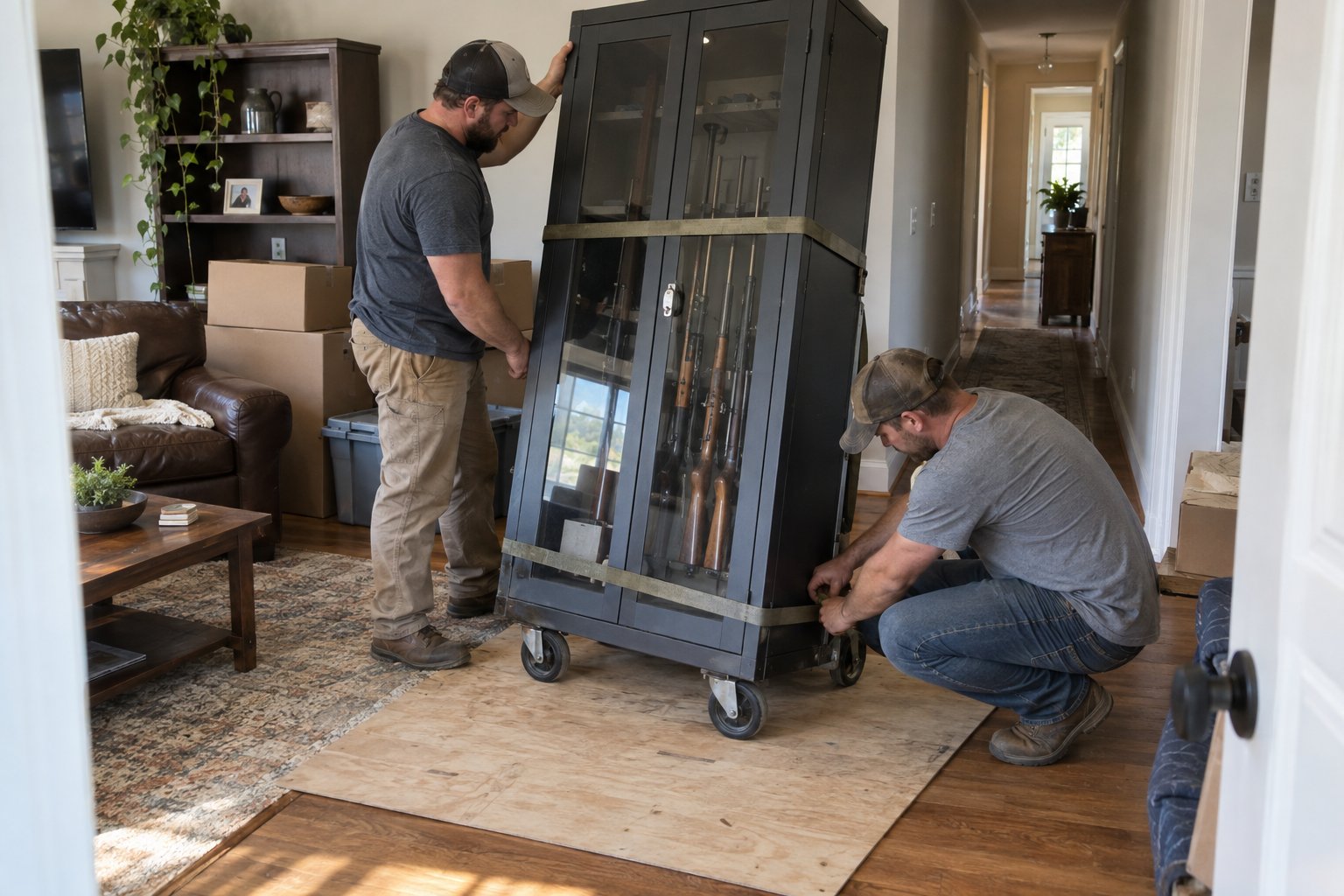
Rolling bar carts should be emptied completely before being moved — never roll a loaded cart onto a truck. The weight distribution shifts during loading and transit, bottles shift, and wheels catch on ramps and door transitions. Empty the cart, fold or remove any shelves that detach, protect glass shelves individually with bubble wrap and cardboard, and move the cart frame separately. For bar cabinets with doors, tape doors closed with painter's tape or use stretch wrap around the exterior — never tape directly onto finished wood surfaces.
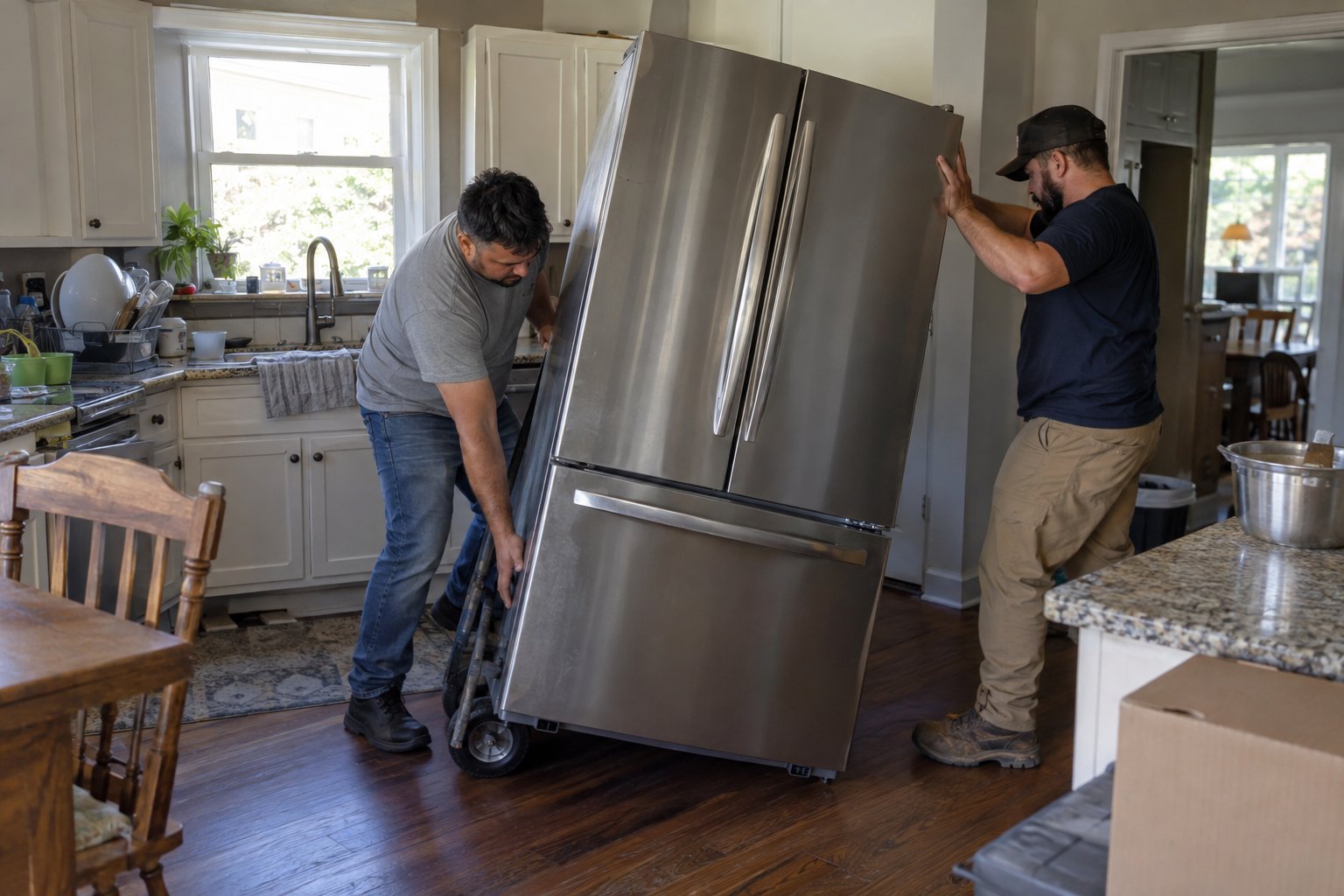
Under-counter bar refrigerators and kegerators require the same preparation as any refrigeration unit: empty the contents completely, defrost if applicable, clean the interior, and allow the unit to reach room temperature before loading it. Most manufacturers recommend keeping refrigeration units upright during transport to protect the compressor. If you must tilt a unit, keep the tilt minimal and allow the unit to stand upright for several hours before plugging it in at the new home. Check your unit's manual for specific guidance — this varies by model and compressor design.
Kegerators with CO₂ tanks require special attention. Compressed gas cylinders should be disconnected, capped, and transported in an upright, secured position. Do not transport a CO₂ cylinder on its side or in an enclosed vehicle without ventilation. If you are uncertain how to safely disconnect and transport the tank, consult a professional or your local homebrew or draft equipment supplier before moving day.
Once the truck is unloaded and the furniture is in position, resist the urge to unbox everything immediately. A systematic approach to bar setup saves time and reduces the chance of breakage during unpacking.
Start with the furniture placement. Confirm where the bar cabinet, cart, or built-in will live before unpacking a single bottle or glass. Adjusting a fully loaded bar cabinet after the fact is significantly harder than moving an empty one. Once furniture is in final position, unpack glassware first — inspect each piece as it comes out of the box, place it directly into its cabinet home, and discard packing paper as you go. Unpack bottles last, organizing by category as you go rather than pulling everything out and sorting later.
Keep the first-night essentials kit concept in mind for your bar setup: if you entertain the evening after a move or simply want a functional drink available after a long moving day, set aside one bottle, one glass, and any mixers you need before packing. Carry those in your personal vehicle rather than the truck. It is a small thing that makes the first night in a new home noticeably better.
Yes, in most cases you can transport open personal bottles of liquor on a moving truck for a local or in-state move. The key requirements are proper containment — open bottles should be packed upright in a sealed plastic bin rather than a cardboard box, so that any leakage from a loose cap or stopper is fully contained. For interstate moves, laws governing personal transport of alcohol vary by state, and many professional moving companies have their own policies about transporting alcohol. Confirm with your mover before moving day and check the destination state's guidelines if you are crossing state lines with a significant collection.
Each piece of stemware should be wrapped individually in packing paper — not newspaper — starting at the base and rolling diagonally to the rim. Give the stem an additional dedicated wrap before rolling the body, as the stem is the most vulnerable point on any wine glass. Place wrapped glasses in small boxes lined with a layer of crumpled paper on the bottom, never in large boxes where they can shift. Place heavier glasses on the bottom layer and the most delicate stemware on top. Fill all gaps with crumpled paper until nothing moves when the box is closed, and label all four sides and the top: FRAGILE, GLASSWARE, THIS SIDE UP.
Most under-counter refrigerators and kegerators should be transported upright whenever possible to protect the compressor. When a refrigeration unit is laid on its side, compressor oil can migrate into the refrigerant lines, which can cause damage when the unit is restarted. If your move requires tilting the unit, keep the tilt minimal and always allow the unit to stand fully upright for several hours — ideally at least four — before plugging it in at the new home. Check your unit's manual for model-specific guidance, as recommendations vary by manufacturer and compressor design.
Liquor store boxes with built-in cardboard divider inserts are the best option for moving spirit bottles — they are designed specifically to keep glass bottles separated and upright, they are sturdy enough for the weight, and they are appropriately sized for standard bottle dimensions. Most liquor stores receive regular shipments and are willing to set aside divider-equipped boxes for customers who ask. If you cannot source them locally, wine shippers and cell-kit divider inserts are available at moving supply stores and online retailers. Avoid using large boxes without dividers — bottles will shift and contact each other during transit regardless of how well they are individually wrapped.
A CO₂ cylinder from a kegerator must be fully disconnected and capped before the move. Transport compressed gas cylinders upright and secured so they cannot fall or roll. Do not transport a CO₂ cylinder in an enclosed vehicle without adequate ventilation, and do not lay the cylinder on its side. If you are not comfortable disconnecting the tank yourself, your local draft equipment supplier or homebrew shop can typically assist. Confirm with your moving company whether they have policies about transporting compressed gas cylinders on their trucks — some carriers have restrictions that require you to make separate arrangements for the tank.
Whether you’re moving a home, apartment, office, or just a few heavy items, We Haul Nashville is ready to help make the process easier.