
Written by:
Pierce J.
Published:
July 14, 2026
Learn how to move a home library the right way — from auditing your collection and packing books safely to protecting shelving and getting every volume to your new home undamaged.
Knowing how to move a home library is something most book lovers do not think through carefully until they are standing in front of floor-to-ceiling shelving, hundreds — sometimes thousands — of volumes, and the slow, sinking realization that books are among the heaviest things in any home by weight-to-volume ratio. A home library looks manageable from a distance. Get close enough to start lifting boxes and the picture changes fast. Improperly packed book boxes collapse, over-weight boxes injure people, and shelving units that seemed indestructible in place arrive at the new home with cracked panels if they are not disassembled and padded correctly. Understanding how to move a home library means approaching it with a plan before a single box is taped shut.
This guide walks you through how to move a home library from start to finish: how to audit your collection before you pack a single shelf, how to pack books so the boxes are safe to carry and the spines arrive undamaged, how to disassemble and protect freestanding and built-in shelving, how to handle rare or oversized volumes that need special treatment, and how to get your library set up and organized at your new home without weeks of chaos. Whether your library is a dedicated room lined with custom built-ins and thousands of volumes, or a single large bookcase in the living room with a couple hundred titles, these steps will carry you through the move without the back injuries, box failures, and disorganized piles that book moves so often produce.
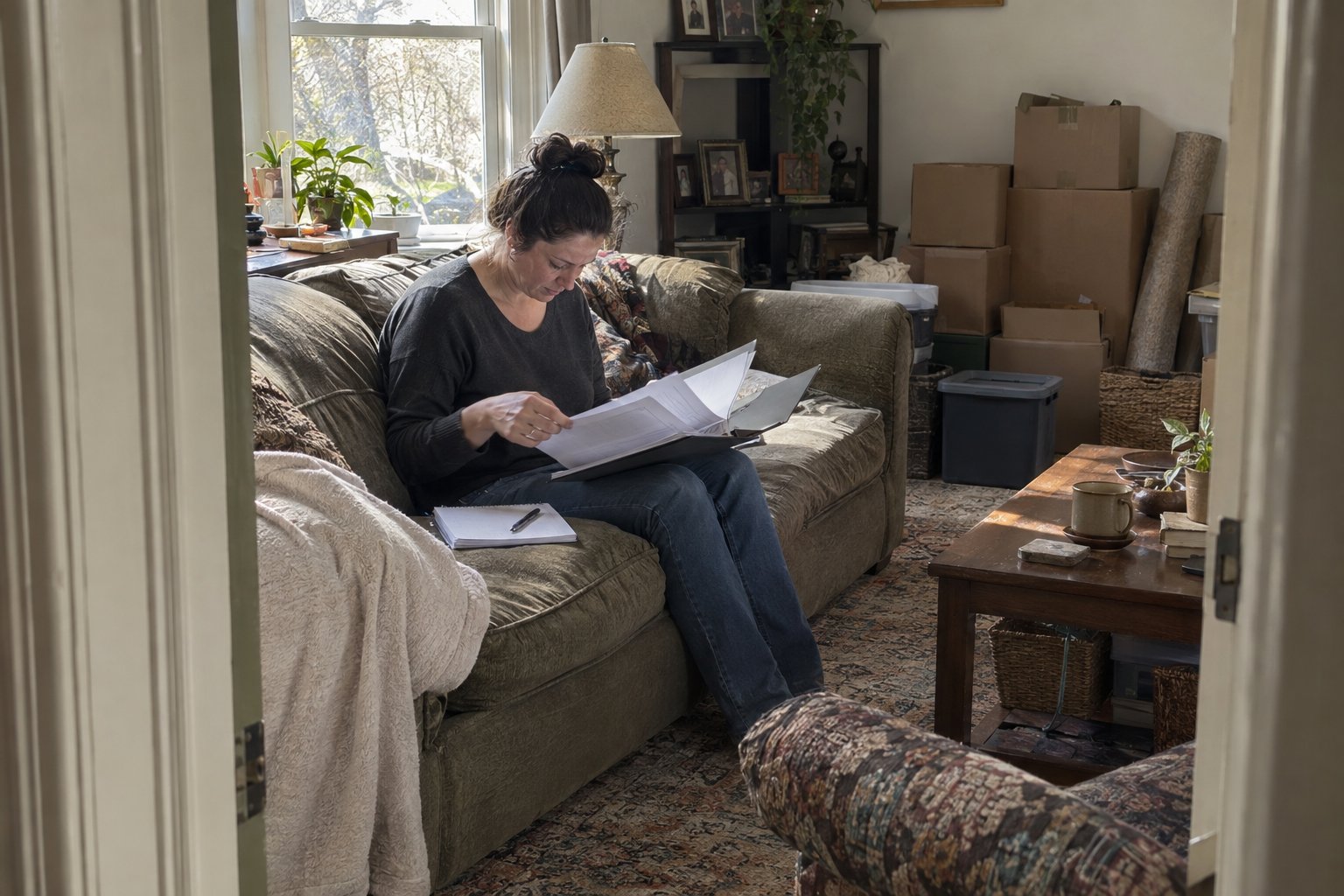
Before you pull a single book off the shelf, spend real time evaluating your collection. A home library is one of the most common sources of unnecessary moving weight. Books accumulate quietly — purchased at different stages of life, received as gifts, held onto out of sentiment rather than genuine intention to reread, or kept in duplicate without anyone noticing. Moving all of it by default costs real money in labor, truck space, and the very real physical strain that comes from carrying boxes that weigh forty to sixty pounds each up and down stairs. The audit is where you recover that cost before the move ever starts.
Go through every shelf honestly. Pull books you have not opened in years and have no concrete plan to read again. Identify duplicates — titles you own in multiple editions without a clear reason. Set aside textbooks from fields you no longer work in. Children's books your kids have outgrown, travel guides for destinations you visited a decade ago, and outdated reference books are all candidates for donation rather than relocation. Libraries, used bookshops, school donation programs, and online book-sale platforms can take most of what you edit out, and donating before the move is almost always easier than donating after you have carried the boxes to your new home and then tried to get them back out.
Within any large collection, there are typically a small number of books that require genuinely different handling — first editions, signed copies, large-format art books, antique volumes, or anything with sentimental value that cannot be replaced. Identify these before packing begins. They should not go into standard moving boxes with regular packing. They travel separately, with extra protection, and ideally with you in the vehicle rather than on the moving truck. Knowing which books fall into this category before packing day prevents them from being swept into a general box during a rushed packing session.
Packing books correctly is the most important physical skill in any library move. Books are deceptively heavy. A box that seems fine half-full will become dangerous when packed to the top. The goal is manageable weight, protected spines, and boxes that will not fail mid-carry.
The single most important rule of packing books is to use small boxes. A standard small moving box — roughly 1.5 cubic feet — packed with books will weigh thirty to forty pounds when full. A medium or large box packed with books can exceed seventy or eighty pounds and becomes a genuine injury risk for anyone carrying it. Use small boxes exclusively for books. If you have only medium or large boxes available, fill the bottom third with books and fill the remaining space with lighter items such as linens, clothing, or packing paper.
There are three acceptable ways to orient books in a box, and one that damages them. Packing books flat in stacked layers is safe and efficient for most titles. Packing books upright with the spine facing down — the way they sit on a shelf — also works well. Packing books upright with the spine facing up is acceptable for short moves with secure packing. What you want to avoid is packing books with the pages facing down and the spine facing up: this strains the binding over the course of a move and can cause pages to pull away from the spine on older or heavily used books. For rare or fragile volumes, wrap each one individually in packing paper before placing it in the box.
Any empty space in a book box allows the contents to shift in transit. Fill gaps with crumpled packing paper, foam wrap, or soft items. When you close and seal the box, it should feel firm — contents should not move when you press on the top or shake it gently. Label every book box clearly on the side (not the top) with the destination room and a general description of the contents. If you have organized by subject, author, or section of the library, label accordingly so reassembly at the new home is faster.
Shelving is the other major challenge in a library move. Books are straightforward once you know the weight rules. Shelving units — especially large, tall, or custom-built ones — require their own planning.
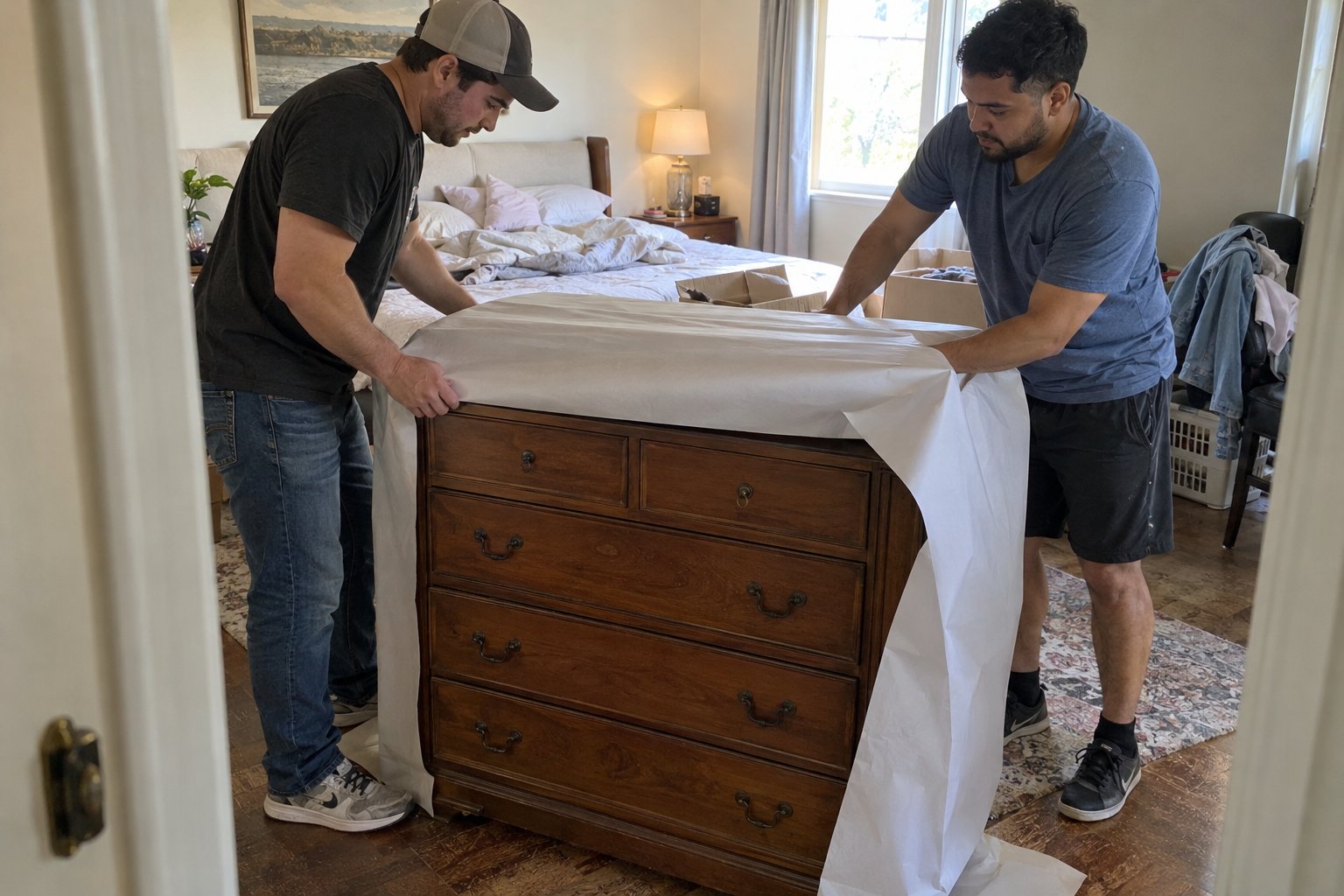
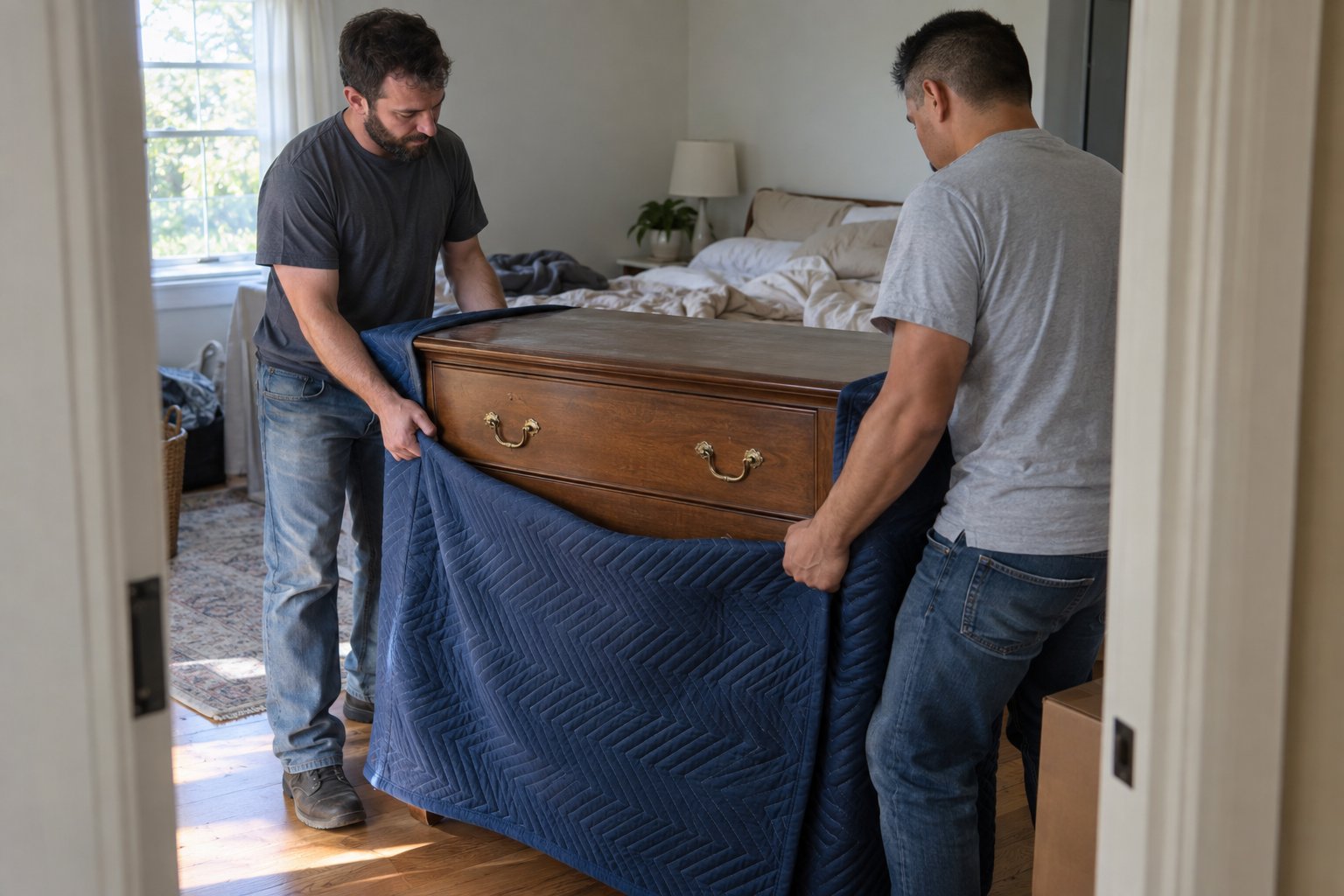
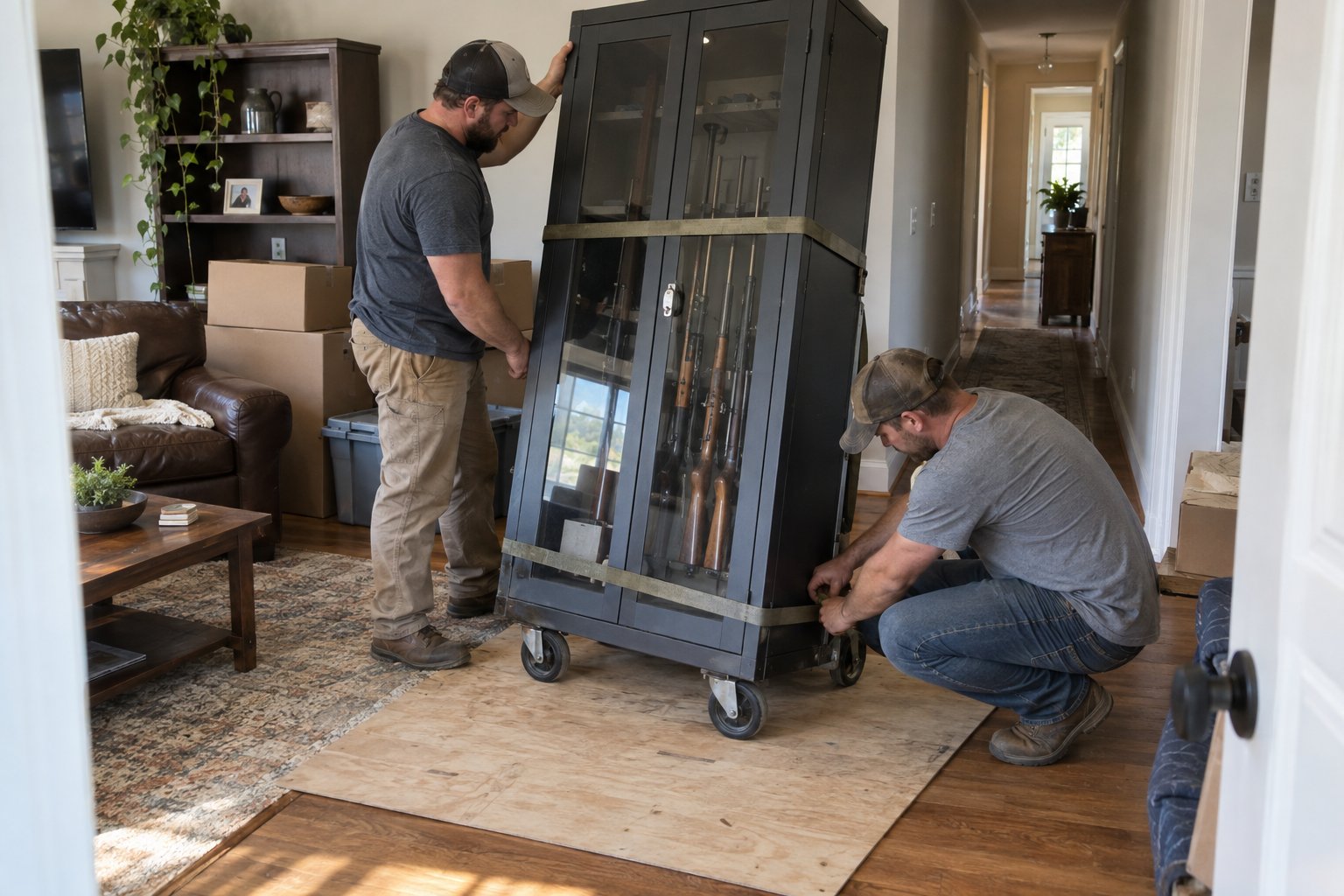
Most freestanding bookcases, even solid wood units, should be disassembled for a move rather than moved assembled. A tall bookcase moved assembled puts enormous lateral stress on the joinery at the base and can crack panels, loosen dowels, or cause the unit to rack out of square. Remove all adjustable shelves, place them flat in a protected stack, and label each one with a piece of painter's tape so you know where they go. Remove any back panels if they are attached by clips rather than fixed. Wrap the main carcass in moving blankets and secure with stretch wrap. Keep all hardware — screws, pins, cam locks — in a labeled zip-lock bag taped directly to the largest piece.
If your library includes true built-in shelving — units constructed into the wall as part of the architecture — those do not move with you unless you have made a specific arrangement with a carpenter or your moving plan includes removal and reinstallation. Do not assume built-ins can be removed intact without professional help; most are attached to wall studs, have scribed trim pieces, and may be painted or caulked into place. If you do intend to relocate built-ins, plan that well in advance with a qualified contractor, not the morning of the move.
Large bookcases that seem immovable in their current location often become problems at doorways, around corners, and on staircases. Before move day, measure the height and width of every doorway, hallway corner, and staircase the shelving will need to pass through — both at the origin and the destination. A freestanding unit that is too tall to pass through a doorway upright will need to be tilted, and that requires knowing the clearances in advance rather than discovering them with a fully loaded truck in the driveway.
Standard packing works well for most collections. Rare books, large-format art books, and genuinely irreplaceable volumes need extra consideration.
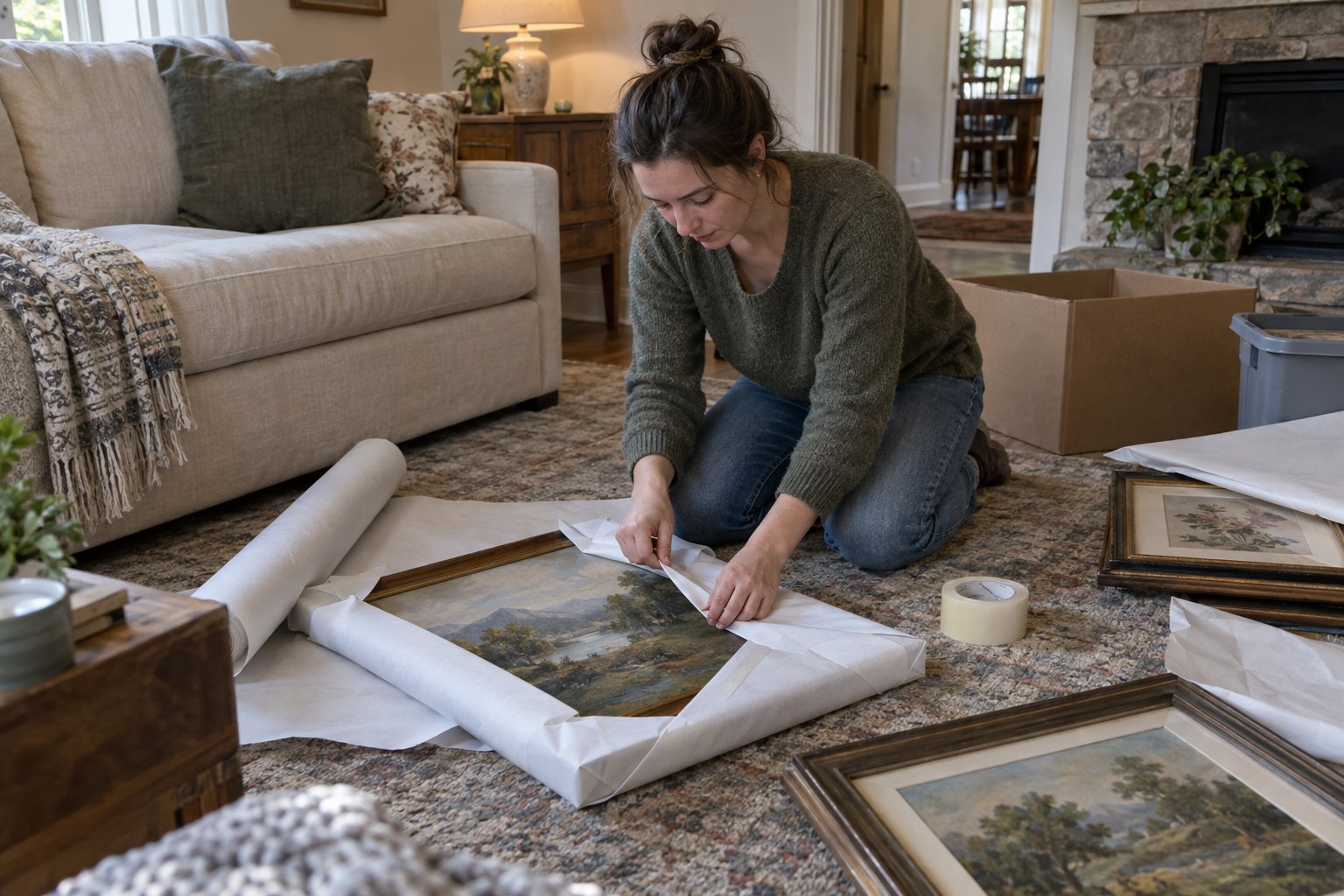
First editions, signed copies, antique volumes, or anything of significant monetary or personal value should be wrapped individually in acid-free tissue paper or clean packing paper, then placed in a small box with padding on all six sides. Do not pack rare books tightly against other books — they should be surrounded by cushioning material that prevents any pressure on covers or spines. If a book has a fragile dust jacket, wrap the jacket separately with tissue before placing it around the book. For very valuable collections, consider transporting them personally in a climate-controlled vehicle rather than on the moving truck.
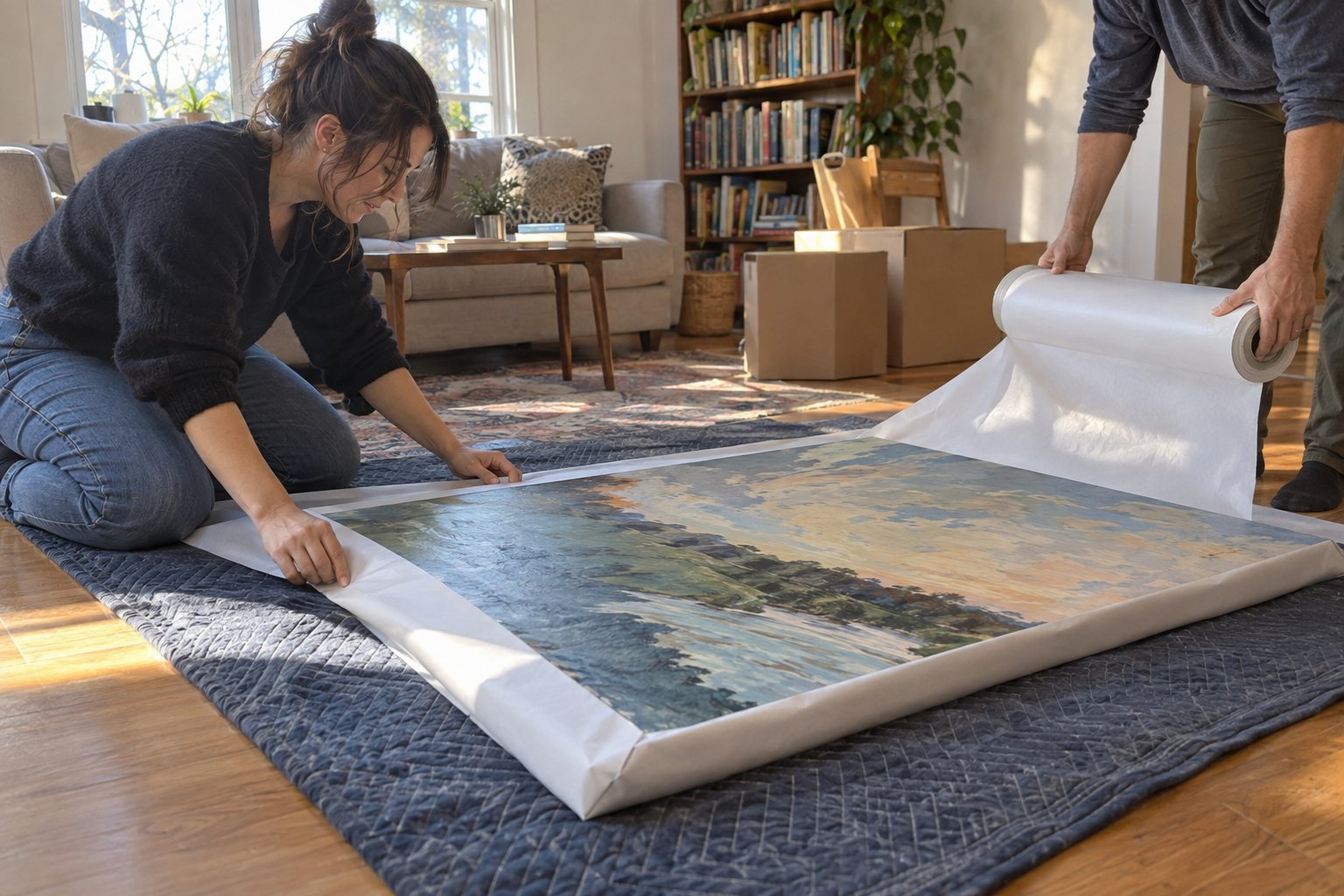
Large-format art books, oversized reference volumes, and coffee-table books do not fit well in standard book boxes and should be packed flat in larger boxes — with other flat, lightweight items rather than stacked with heavy books on top. Pressure on the spine of a large-format book during transit can crack the binding, especially on heavily illustrated volumes where the pages are dense and the spine carries significant load. Pack these flat, with padding between each volume, and mark the boxes as fragile.
The unpacking and setup phase of a library move is where the time invested in labeling and organization during packing either pays off or costs you. If boxes are labeled clearly by subject, author, or original shelf location, reassembly is methodical and relatively fast. If boxes were packed without labeling during a rushed packing session, plan for a full day or more of sorting before anything goes back on the shelves.
Get all shelving units reassembled and placed in their final positions before opening a single book box. Unpacking books before the shelves are ready means stacking them on the floor, which creates a second handling step and significantly increases the chance of a book being set aside, stepped on, or misplaced. Reassemble freestanding units using the hardware bags and photographs from disassembly. Confirm that each unit is level and stable before loading it — an unanchored bookcase on an uneven floor can tip, and a fully loaded bookcase that tips is a serious safety hazard.
A move is one of the best natural opportunities to improve the organization of a library. As you unpack each box, place books in rough groupings on the shelves rather than simply filling shelves in the order boxes arrive. Final organization — alphabetical by author, grouped by subject, or arranged by how you actually use the collection — can happen once everything is off the floor. Trying to achieve perfect organization in one pass while simultaneously carrying boxes is more work than doing a rough placement first and a final sort afterward.
Always use small boxes for books. A small moving box packed with books will typically weigh thirty to forty pounds when full — already a substantial load. Medium or large boxes filled with books can exceed seventy to eighty pounds and become a serious injury risk. If you only have larger boxes available, fill the bottom third with books and fill the remaining space with lighter items like linens or packing paper. The goal is a box that one person can carry safely without straining.
Pack books flat in stacked layers or upright with the spine facing down, the way they sit on a shelf. Avoid packing books with the pages facing down and the spine facing up — this puts strain on the binding and can cause pages to pull away from the spine, especially in older or heavily used books. For rare or fragile volumes, wrap each one individually in clean packing paper before placing it in the box. Fill any gaps in the box with crumpled paper so books do not shift in transit.
Yes, in most cases. Moving a tall freestanding bookcase assembled puts lateral stress on the joinery and can crack panels, loosen dowels, or cause the unit to rack out of square during transit. Remove all adjustable shelves, label them, keep all hardware in a labeled zip-lock bag taped to the largest panel, and wrap the main carcass in moving blankets. Photograph the assembled unit before disassembly if you have any uncertainty about how it goes back together.
Rare books — first editions, signed copies, antique volumes, or anything irreplaceable — should be wrapped individually in acid-free tissue paper or clean packing paper and placed in a small, well-padded box. Do not pack them tightly against other books. Cushion all six sides of the box. For highly valuable collections, consider transporting them with you in your vehicle rather than placing them on the moving truck, where temperature and humidity conditions are less controlled and the risk of shifting is higher.
Reassemble and position all shelving units before you open a single book box. Unpacking books before the shelves are ready forces you to stack them on the floor, which adds a second handling step and increases the risk of books being misplaced or damaged. Once shelves are in place, unpack boxes in rough groupings rather than trying to achieve perfect organization in one pass. Do a final sort — by author, subject, or however you use the collection — after everything is off the floor. This two-pass approach is significantly faster than attempting perfect placement box by box.
Whether you’re moving a home, apartment, office, or just a few heavy items, We Haul Nashville is ready to help make the process easier.