
Written by:
Pierce J.
Published:
July 15, 2026
Learn how to move a sunroom or screened porch the right way — from auditing furniture and decor to packing delicate items and protecting large pieces in transit.
Knowing how to move a sunroom or screened porch is something most people do not think through carefully until they are standing in front of a wicker sectional that has never been disassembled, a collection of potted plants in ceramic planters that weigh forty pounds each, a ceiling fan installed directly into a sloped glass roof, and a pile of outdoor accessories that seemed simple until someone had to figure out how to pack them. A sunroom or screened porch looks like a casual, low-stakes space. Get close enough to start moving it and the picture changes fast. Oversized furniture that was assembled in place will not fit back through the door without disassembly, ceramic and glass décor breaks easily without proper padding, and the weather-resistant materials that make porch furniture feel permanent turn out to be deceptively awkward to transport. Understanding how to move a sunroom means approaching it with a plan before a single cushion comes off a seat.
This guide walks you through how to move a sunroom or screened porch from start to finish: how to audit your furniture and décor before you move anything, how to disassemble and protect large seating pieces, how to handle plants and planters safely, how to pack lighting and ceiling fans, how to manage the small accessories and textiles that accumulate in these spaces, and how to get your outdoor living area set up and functional at your new home without weeks of disorder. Whether your sunroom is a fully enclosed four-season room with climate control, comfortable upholstered seating, and a full set of built-in shelving, or a screened porch with a couple of wicker chairs, a bistro table, and a few hanging plants, these steps will carry you through the move without the breakage, damage, and frustration that porch moves so often produce.
Before you move a single piece of furniture or wrap a single planter, spend real time evaluating everything in the space. Sunrooms and screened porches are among the most reliable rooms in any home for quiet accumulation — furniture purchased for a previous porch that does not fit the current one, décor held onto out of habit, duplicate plant stands, outdoor rugs that have seen better days, and cushions that were replaced a season ago but never discarded. Moving all of it by default costs real money in labor, truck space, and packing materials. The audit is where you recover that cost before anything leaves the house.
Sunroom and porch furniture is often the first category where people move too much. Wicker, rattan, and aluminum sectionals are large, awkward to wrap, and difficult to protect in transit. Before committing to moving a large seating set, consider whether it is genuinely worth the labor cost and the risk of damage. Furniture that is already showing significant weather wear, fading, or structural looseness at the joints is often better donated or sold locally than moved across town or across the state. Set a realistic standard: if you would not buy it again today at its current condition, it is probably a candidate to leave behind.
Plants are among the most complicated items to move from a sunroom or porch. Large ceramic or concrete planters are extremely heavy, fragile, and difficult to pack without professional crating. Established plants may or may not survive a move depending on species, season, and transit conditions. Before you commit to moving every plant in your sunroom, evaluate each one honestly. Small, hardy indoor plants in lightweight plastic pots are generally worth moving. A forty-pound ceramic urn with a mature plant that has been in the same spot for three years is a more complicated calculation — one worth making before moving day rather than on it.
Outdoor cushions, throw pillows, outdoor rugs, lanterns, candles, and decorative items accumulate in these spaces over multiple seasons. Sort through everything before packing. Cushions that have absorbed moisture, mildew, or odor should not travel to your new home. Outdoor rugs that are faded or worn are inexpensive to replace and not worth carrying. Small decorative lanterns, string lights, and accessories are worth keeping only if they are in good condition and genuinely used. Editing this category down before packing begins saves significant time and box count.
Packing sunroom and porch furniture correctly is the most important physical task in this kind of move. These pieces are often large, irregularly shaped, and made from materials — wicker, rattan, wrought iron, aluminum — that do not respond well to contact damage during transit. The goal is full surface protection, manageable piece sizes, and secure loading so nothing shifts on the truck.
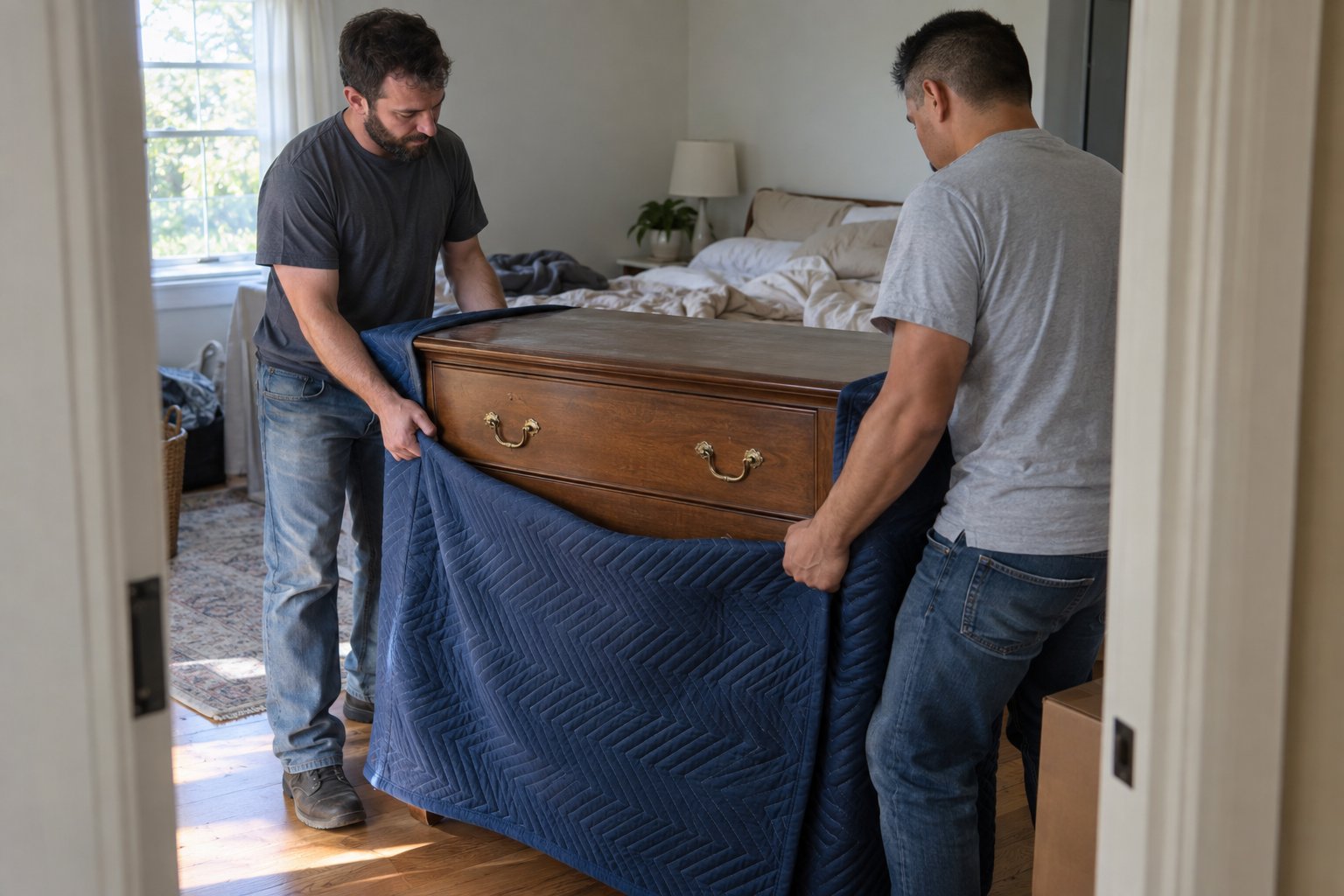
Most wicker and rattan sectionals are modular — individual pieces that connect or sit flush against each other. Separate every module before moving. Do not attempt to carry or load connected sections as a single unit. Wrap each module individually in moving blankets or furniture pads, secured with stretch wrap. Pay particular attention to corners and woven edges, which are the most vulnerable points on wicker furniture. A corner that catches on a door frame during a move can unravel a significant section of weave.
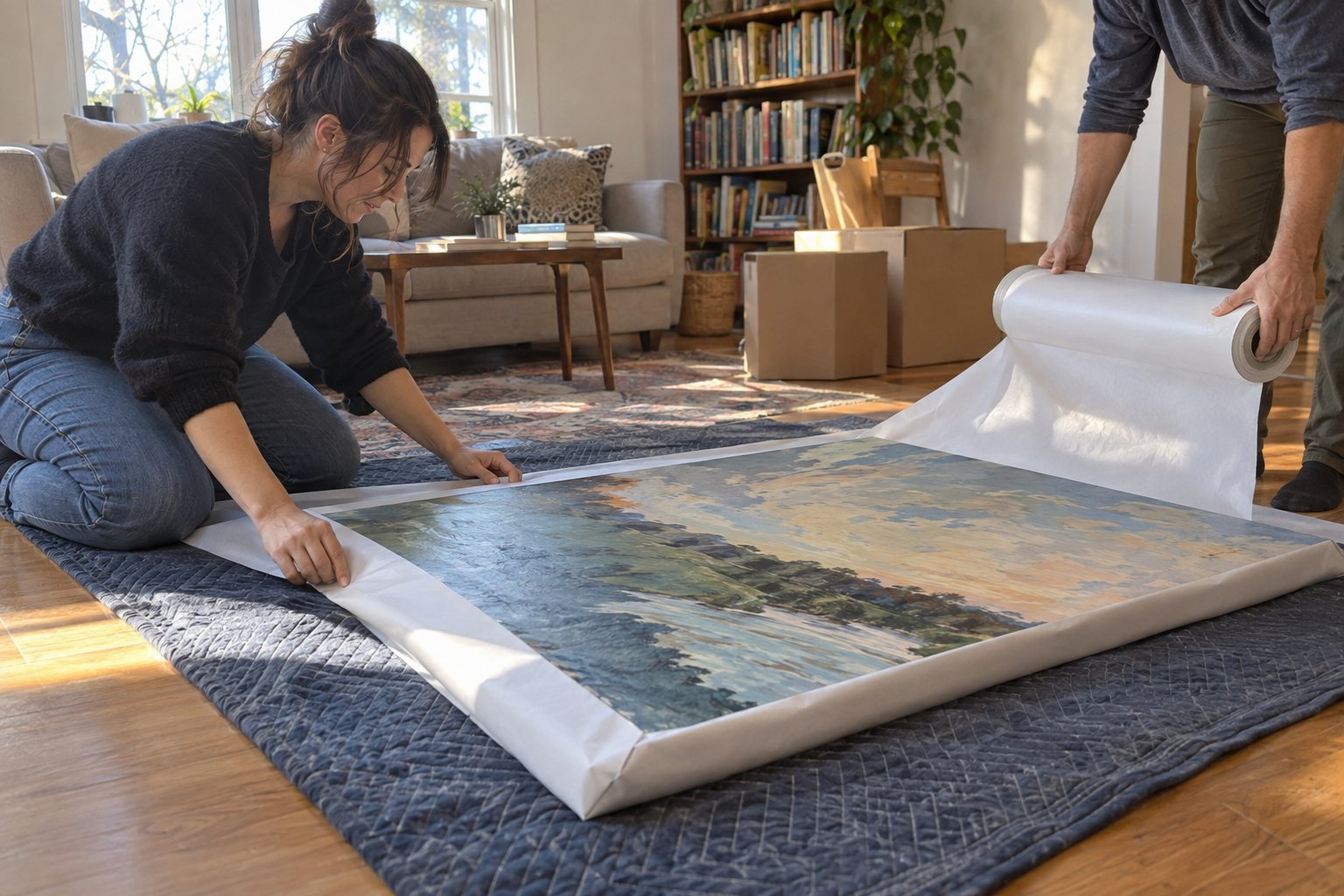
Glass table tops are among the most commonly broken items in any porch or sunroom move. Remove every glass top from its base before the move. Do not transport glass tops lying flat on the truck bed — glass is significantly stronger when transported on edge, like a framed painting standing upright. Wrap each top in moving blankets, then in stretch wrap, and load it vertically against a padded wall or between mattresses. Label it clearly so no one places anything on top of it during loading or unloading.
Wrought iron patio furniture is extremely heavy and has sharp edges and decorative details that can puncture other items or scratch surfaces during transit. Wrap iron pieces thoroughly in moving blankets and load them carefully — ideally with no other items resting directly against unwrapped surfaces. Aluminum furniture is lighter but bends more easily than iron. Avoid stacking heavy items on aluminum frames in the truck.
Plants require more planning than almost any other category of sunroom contents. They are living things with specific environmental needs, and the moving process — darkness, temperature swings, being jostled, going without water for a day or two — is genuinely stressful for most species. Approach plant moving with a clear plan made well before moving day.
About two weeks before your move, stop repotting any plants you plan to take. Freshly repotted plants have disturbed root systems that handle transit stress poorly. Trim back any overly long or fragile branches that might snap during the move. Switch any plants in heavy ceramic or terracotta pots to lightweight plastic nursery pots if you plan to move them — it significantly reduces weight and the risk of a broken planter. Water plants normally up until two or three days before the move, then allow them to dry slightly so soil is not waterlogged and heavy during transit.
Empty ceramic and terracotta planters should be wrapped individually in multiple layers of packing paper or bubble wrap, with additional cushioning inside the pot itself — crumpled paper works well. Pack them upright in boxes, never on their sides, and fill all gaps with packing material. Do not stack heavy items on top of boxed planters. Very large ceramic or concrete planters may require custom crating or may simply be better left behind — the replacement cost of a large planter is often less than the cost of the labor and materials required to move it safely.
Whenever possible, transport living plants in your personal vehicle rather than on the moving truck. Moving trucks are not climate controlled, can become extremely hot in summer or cold in winter, and expose plants to extended darkness during transit. If you must move plants on the truck, load them last so they come off first, minimize transit time, and check on them as soon as possible after arrival. Give plants a day or two to acclimate to their new environment before returning them to their normal sunlight and watering routine.
Sunrooms and screened porches often include ceiling fans, pendant lights, string lights, and other electrical fixtures that require specific handling before and during a move.
If you own the home and plan to take ceiling fans or hardwired light fixtures with you, have a licensed electrician disconnect them before moving day. Do not attempt to disconnect hardwired fixtures yourself unless you are qualified to do so. Once disconnected, remove blades from ceiling fans and pack them flat in a box cushioned with packing paper. Wrap the motor housing and canopy in moving blankets. Keep all hardware — screws, mounting brackets, blade arms — in a labeled zip-lock bag taped to the largest component. Take a photograph of the installation before disassembly if there is any uncertainty about reassembly.
String lights should be coiled loosely — not tightly — and packed in a box without heavy items on top of them. Tight coiling damages the wire insulation over time and can cause bulbs to crack. Plug-in pendant fixtures and table lamps should be packed with bulbs removed and wrapped separately. Lamp shades should be nested together — smaller inside larger — with packing paper between each shade, or packed individually in a box cushioned on all sides.
The sequence in which you unpack a sunroom matters. Resist the impulse to open boxes and place items before the larger furniture is positioned and the space is understood.
Start by placing all large furniture pieces in their approximate final positions before unwrapping anything else. Sunrooms and porches often have specific traffic flow requirements — you need to know where the sectional lands before you know where the side tables, plant stands, and rugs go. Once the large pieces are in position, reassemble any modular furniture, replace glass table tops, and reinstall ceiling fans before unpacking any boxes of accessories or décor.
Return plants to the space last, after you have identified where the natural light falls at different times of day. A plant that thrived in a south-facing sunroom may need to be positioned differently in a new space with different sun exposure. Give yourself a few days to observe the light before committing plants to permanent positions.
Unpack textiles — cushions, pillows, rugs, throws — after furniture and plants are in place. This is the finishing layer of the room and benefits from being placed deliberately rather than unpacked in a rush. A sunroom or screened porch that is set up thoughtfully rather than reassembled in a hurry will feel like home far more quickly — and that, in the end, is the point of doing it right.
Whenever possible, transport plants in your personal vehicle rather than on the moving truck. Moving trucks are not climate controlled and can become dangerously hot in summer or cold in winter, both of which can kill or severely damage plants during transit. If you must use the truck, load plants last so they come off first, and minimize the time they spend in the truck. Hardy, low-maintenance species — succulents, snake plants, pothos — handle truck conditions better than tropicals or large established specimens.
Remove every glass top from its base and transport it on edge — vertically — rather than lying flat. Glass is significantly stronger in this orientation. Wrap the top thoroughly in moving blankets and then stretch wrap, and load it upright against a padded truck wall or secured between mattresses. Never place items on top of a glass table top during loading or unloading. Label the wrapped piece clearly on both sides so everyone handling it knows what it is.
Empty the planter completely and allow it to dry before packing. Wrap the outside in multiple layers of packing paper or bubble wrap, and fill the interior with crumpled packing paper to prevent the walls from cracking under pressure. Pack upright in a sturdy box, never on its side, and fill all gaps around the planter with additional cushioning. Very large or heavy planters — particularly concrete — may be better left behind or sold locally, as the labor and materials required to move them safely often exceed the cost of replacement.
Yes. Most wicker and rattan sectionals are made up of individual modular pieces that should be separated before moving. Moving connected sections as a single unit puts strain on the joints and connection points, increases the risk of corner and edge damage when navigating doorways, and makes loading and unloading far more difficult. Wrap each module individually in moving blankets secured with stretch wrap, paying extra attention to corners and woven edges, which are the most vulnerable points.
A licensed electrician should disconnect any hardwired ceiling fan or light fixture before moving day. Do not attempt to disconnect hardwired fixtures yourself unless you are trained and qualified to do so safely. Once professionally disconnected, remove the fan blades and pack them flat in a cushioned box, wrap the motor housing in moving blankets, and store all mounting hardware in a labeled zip-lock bag taped to the main component. Photograph the installation before disassembly to simplify reassembly at the new home.
Whether you’re moving a home, apartment, office, or just a few heavy items, We Haul Nashville is ready to help make the process easier.